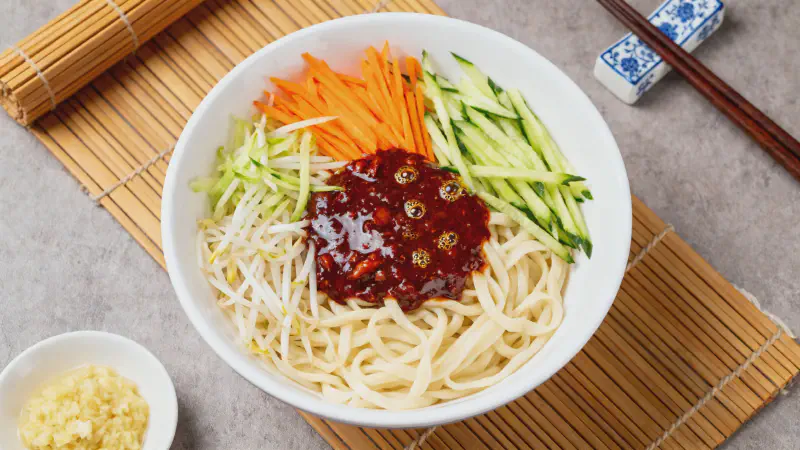
Authentic Beijing Zhajiangmian: A Good Bowl of Sauce Defines Half of Beijing’s Flavor
Hello everyone! Today we’re recreating a classic representative of northern Chinese noodles — authentic Beijing Zhajiangmian. The soul of a genuine bowl of zhajiangmian lies entirely in that spoonful of “zhajiang paste”: rich savory aroma, crispy meat dices, and perfect separation of sauce and oil. Homemade versions often end up with a weak sauce flavor or a greasy, cloying taste. I will share three core secret tips to help you simmer a flavorful, tender, and oil-separated authentic zhajiang paste right at home!
First, Take a Look at This Bowl of Flavorful Beijing-Style Zhajiangmian!
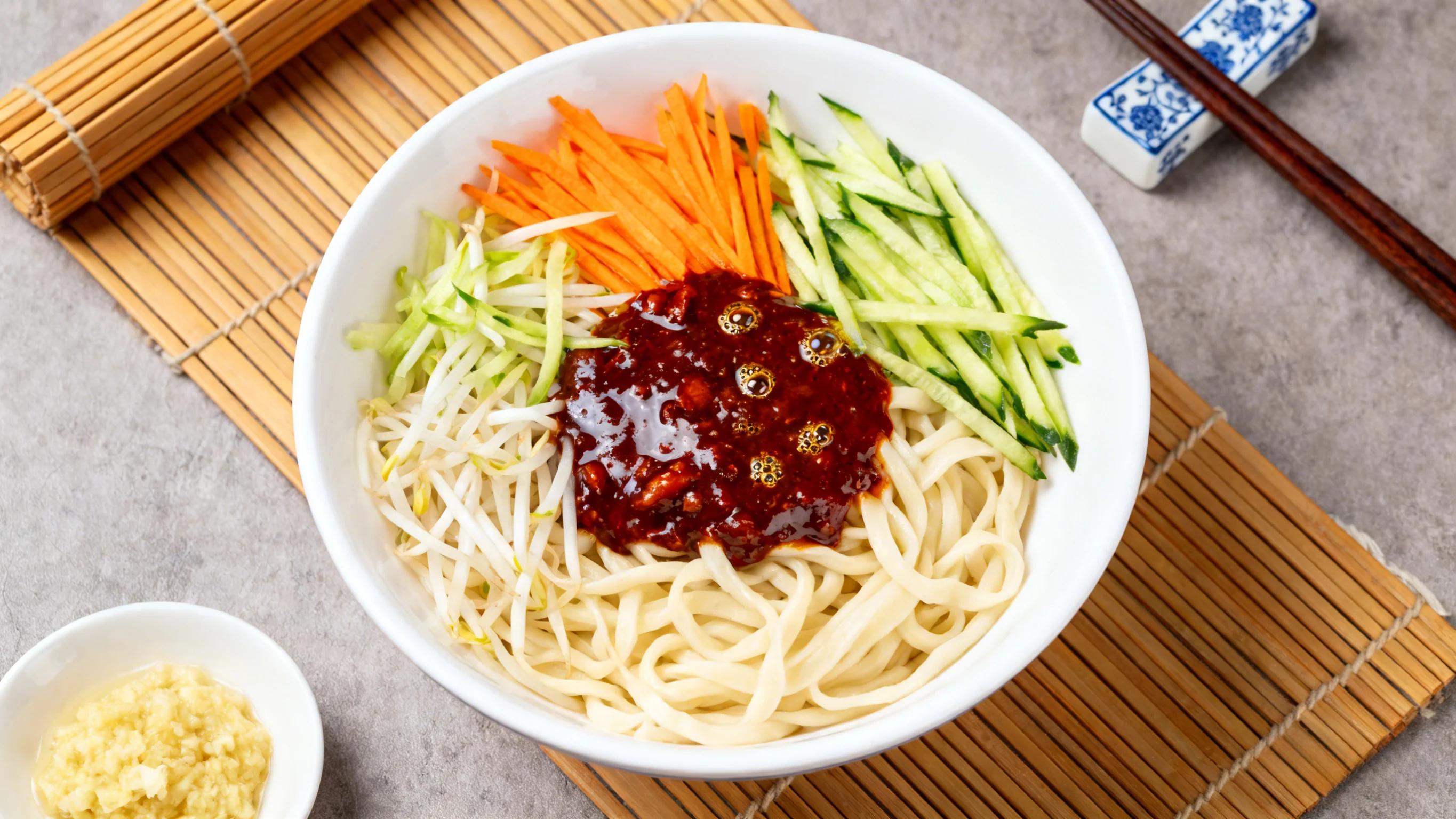 Chewy noodles topped with colorful “toppings”, a spoonful of deep red glossy zhajiang paste in the center, garnished with crisp green cucumber shreds and white garlic paste — truly appetizing.
Detailed Cooking Steps
Step 1: Prepare Pork and Sauce (Secret Tip 1: Separate Fat and Lean, Dice Precisely)
- Key to Choosing Pork: Pork belly with a 4:6 fat-to-lean ratio is best. Fat provides fragrance, while lean meat adds texture.
- Knife Skill Requirement: Separate fat and lean parts before dicing both into 0.5cm cubes. Processing them separately allows precise control over the stir-frying degree of the fat dices.
- Sauce-Thinning Technique: Dry soybean paste has a hard texture and must be thinned slowly with hot water. Add a small amount of water first, mash with the back of a spoon, then gradually add more water to make a smooth, grain-free sauce.
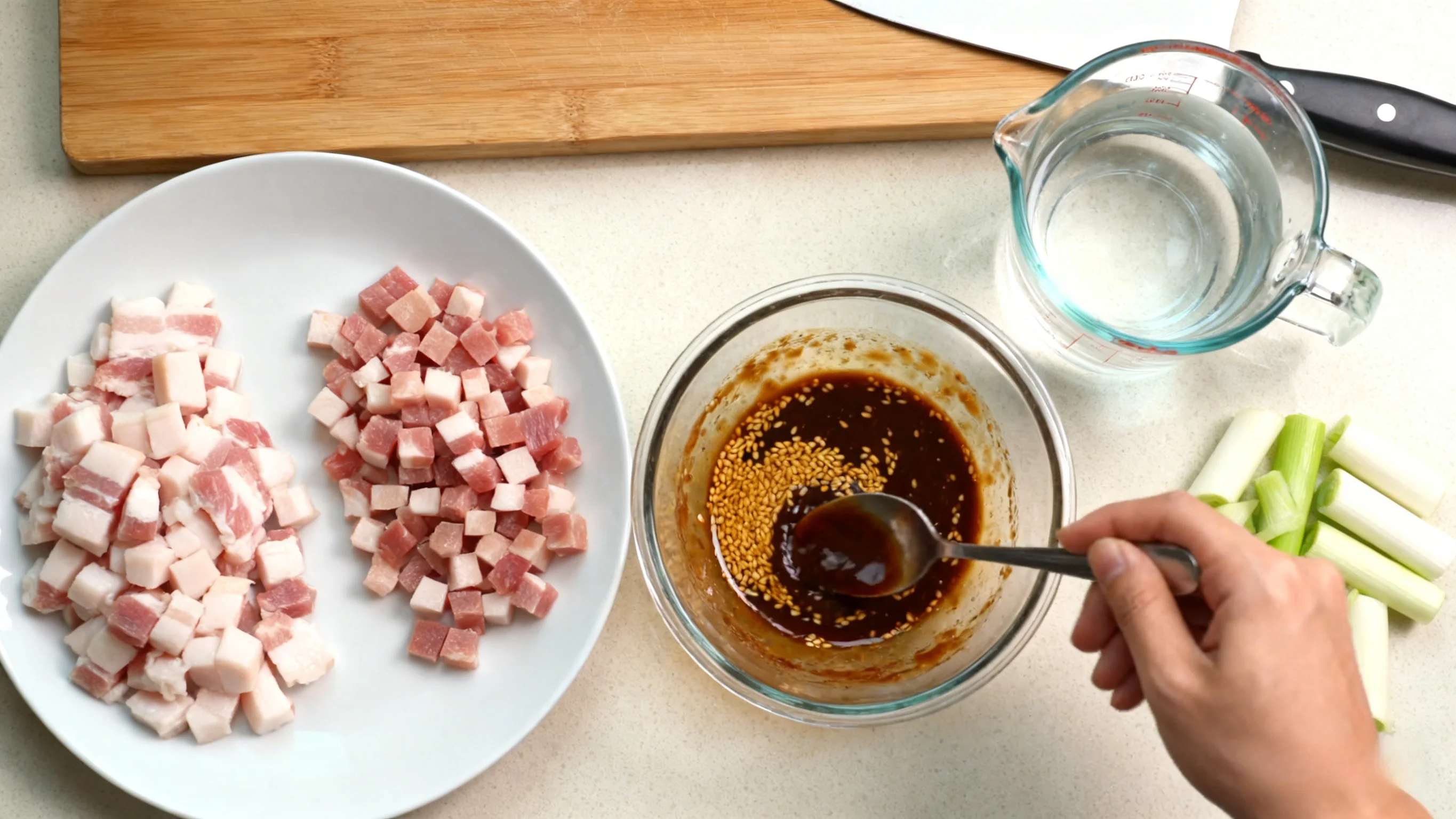 Separating fat and lean dices, and patiently thinning the dry soybean paste with hot water, are the foundations of great flavor.
Step 2: Make Scallion Oil and Stir-Fry Pork Dices (Secret Tip 2: First Make Scallion Oil, Then Stir-Fry Fat Dices Thoroughly)
- Make Compound Scallion Oil: Add scallion whites and ginger slices to cold oil, fry on low heat until golden brown. The fresh aroma of vegetable oil, the richness of lard, and the fragrance of scallions and ginger combine to create a compound base oil.
- Stir-Fry Fat Dices First: Remove the fried scallion and ginger residue, then add the fat dices. Stir-fry patiently over medium-low heat to render the lard until the fat dices turn golden, shrink slightly, and become crispy in texture.
- Stir-Fry Lean Dices Next: At this point, the pan is filled with a blend of animal fats. Add the lean dices and stir-fry until they change color, the surface turns slightly crispy, and the meat juices and aroma are locked in.
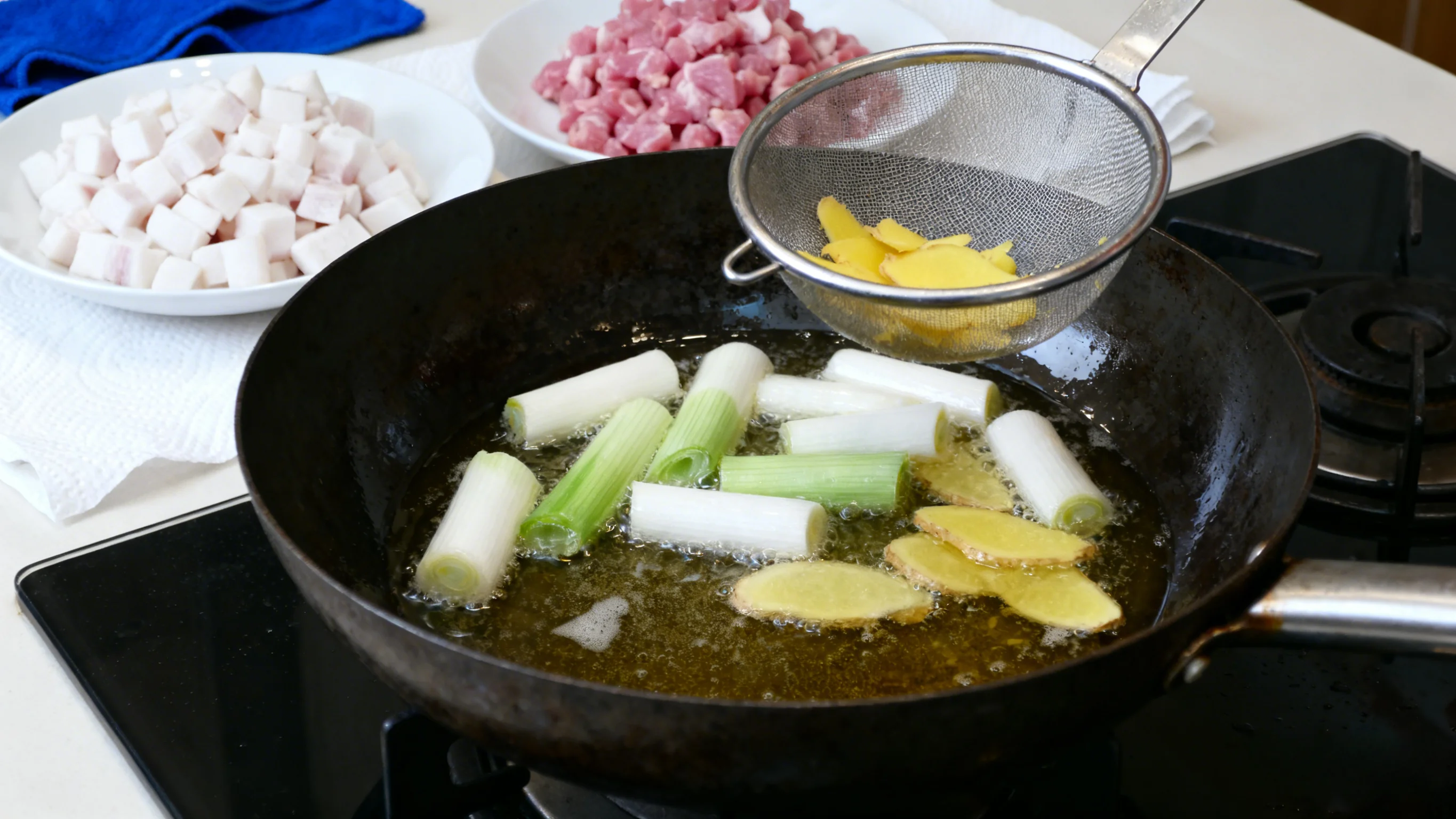 Stir-frying fat dices first to release oil and aroma, then stir-frying lean dices to set their shape is the key to making meat dices crispy and tender without being dry.
Step 3: Add Sauce and Simmer Slowly (Secret Tip 3: Simmer on Low Heat, Patience is Key)
- Combine Sauce and Meat: Pour all the prepared sauce into the pan and stir well with the pork dices.
- Turn to Lowest Heat Setting: This is the real start of “simmering” the sauce. The heat must be extremely low to maintain a gentle bubbling state in the sauce.
- Stir Continuously: Hold a spatula and gently stir from the bottom of the pan to prevent the sauce from sinking to the bottom and burning. This process requires plenty of patience.
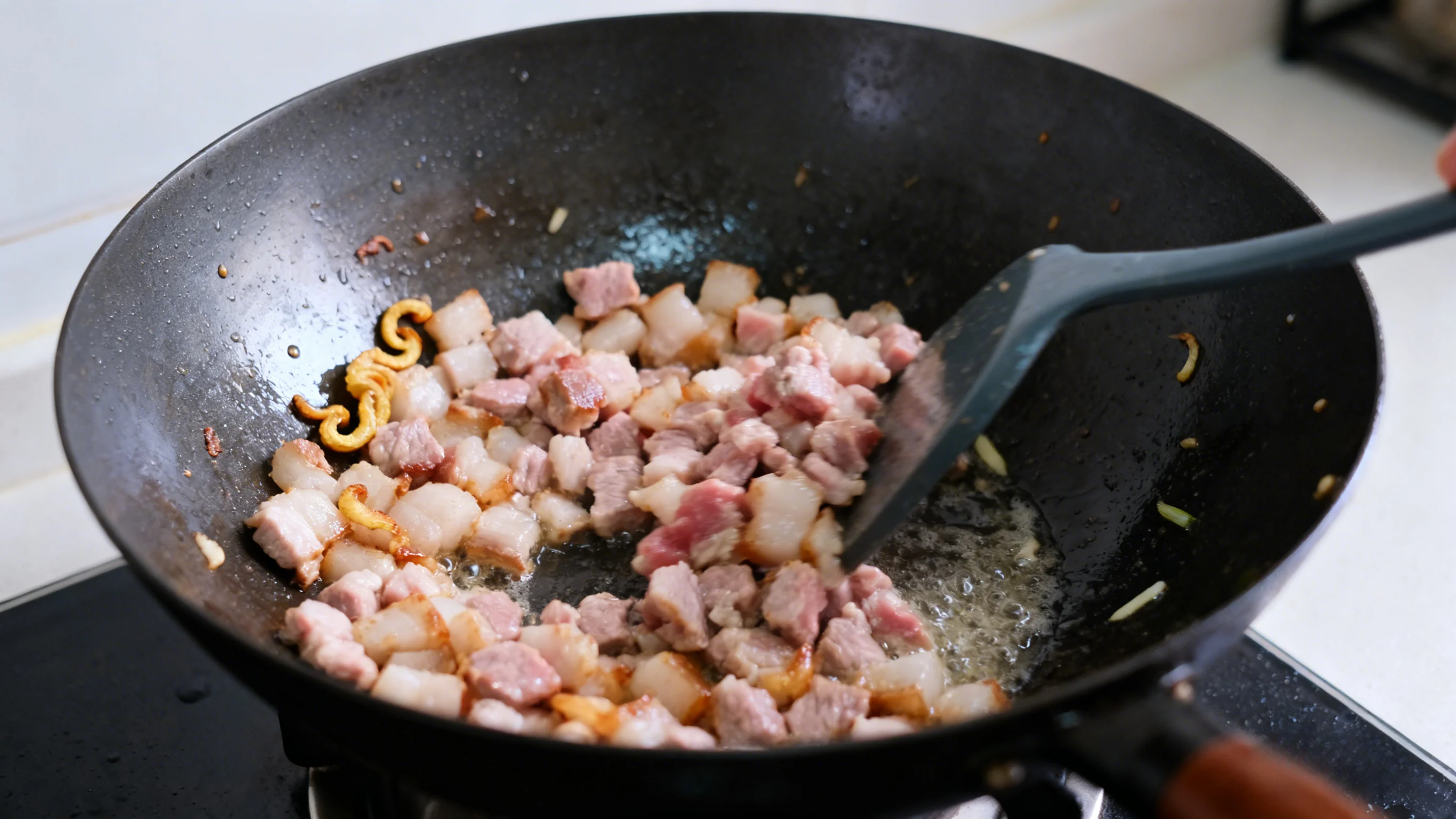 Simmering on low heat allows the moisture in the sauce to evaporate slowly, and the flavor compounds to fully release and combine with the oil.
Step 4: Season and Reduce Sauce
- Add cooking wine, white sugar, and 13-spice powder (to enhance the compound aroma).
- Maintain the lowest heat and continue simmering for about 30-40 minutes.
- Sign of Success: You will see the sauce change from cloudy to deep red and glossy, a layer of translucent oil floats on the surface, and a clear separation of oil and sauce can be seen when you stir with a spoon.
- The finished zhajiang paste will have meat dices fully coated in the sauce, showing an attractive dark red color with a mellow and rich aroma.
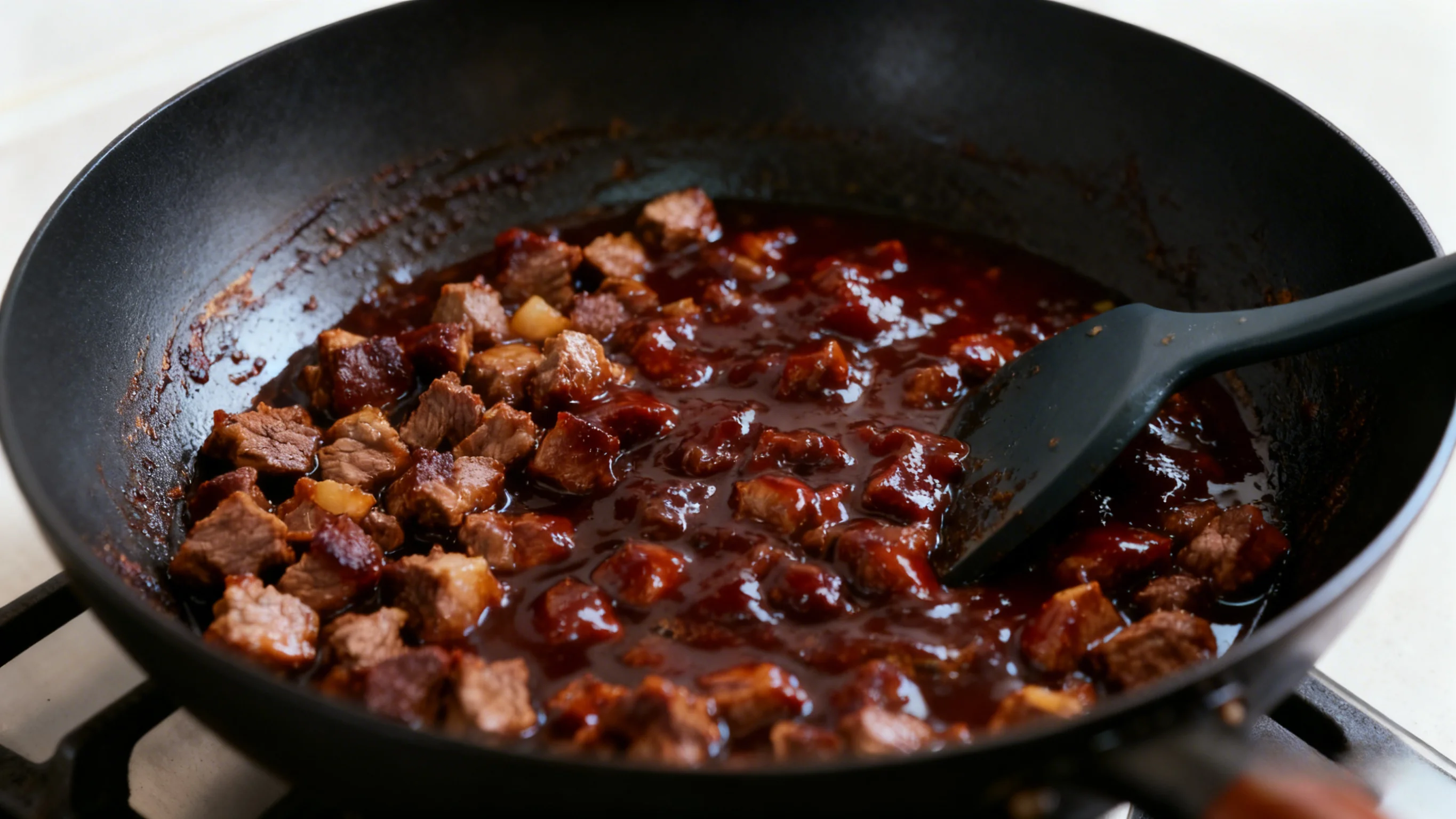 Simmering until oil and sauce separate completely and the sauce turns deep red and glossy is the ultimate sign of a perfect zhajiang paste.
Step 5: Prepare Toppings and Cook Noodles
- Topping Requirements: Traditional “noodle toppings” emphasize variety, but home cooks can simplify the process. Cucumber shreds add crispness, blanched carrot shreds and mung bean sprouts add a sweet flavor, and soybeans add extra texture.
- Noodle Cooking Technique: Use a large pot of boiling water over high heat, cook noodles until just done (about 80-90% cooked).
- Chill with Ice Water: Immediately transfer the cooked noodles to ice water to make them contract instantly, resulting in an extremely chewy and smooth texture.
- Drain thoroughly and toss with a little cooked oil to prevent sticking.
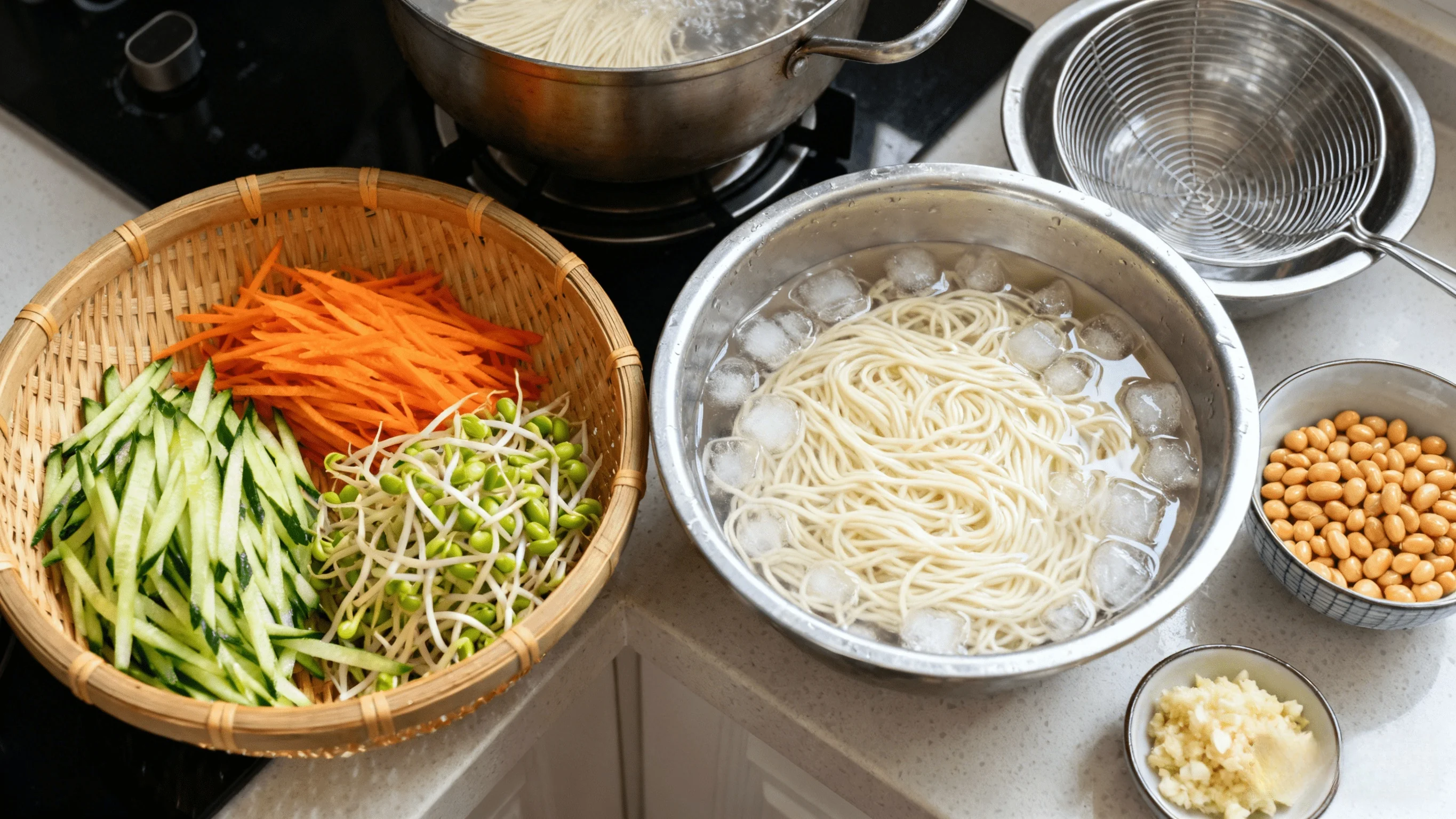 Colorful toppings not only look appealing but also provide rich textures and nutrients. Chilling noodles in ice water is the secret to chewy noodles.
Step 6: Assemble and Serve
- Place chewy noodles in a large bowl.
- Arrange various shredded toppings neatly around the edge of the bowl — for a more authentic presentation, they can be served in separate small dishes.
- Spoon several ladles of hot zhajiang paste in the center of the noodles.
- Don’t forget to add a spoonful of soulful garlic paste.
- Mix vigorously before eating to fully combine the sauce, toppings, and noodles.
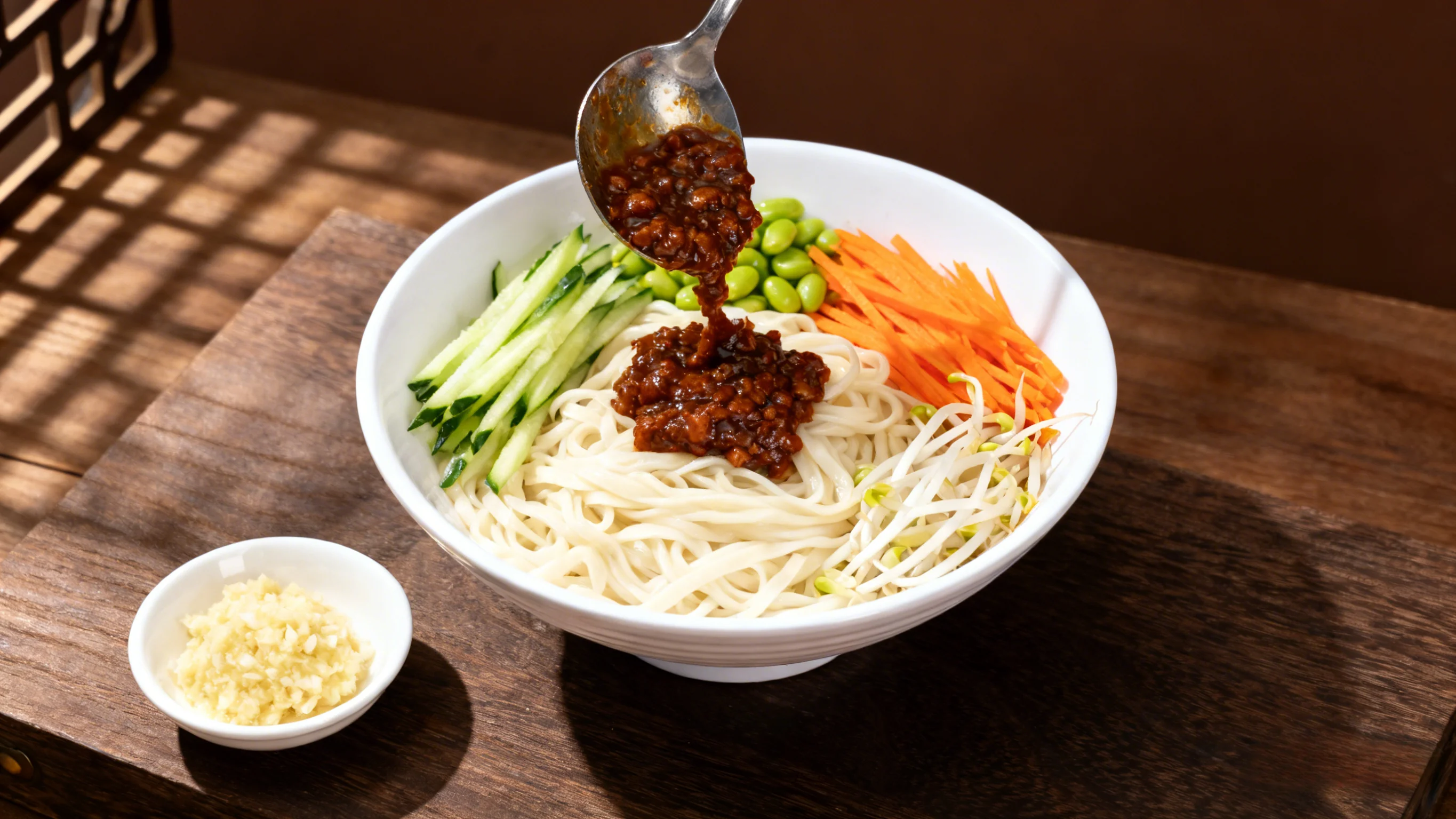 The process of mixing the sauce, toppings, and garlic paste with the noodles is full of ritual and anticipation for the deliciousness.
Three Exclusive Core Secret Tips
🎯 Secret Tip 1: Separate Fat and Lean Dicing + Thin Sauce with Hot Water
- Layered Texture: Fat dices become crispy after thorough stir-frying, providing rich oil aroma; lean dices retain their granular texture, offering a satisfying chew. Separating them allows precise control over the texture of each component.
- Science Behind Thinning Sauce: Dry soybean paste is a fermented product — hot water dissolves its solid particles better and releases its savory aroma. Meanwhile, hot water activates enzymes in the paste, enhancing the depth of flavor during simmering.
- Avoid Raw Sauce Flavor: Fully thinned sauce prevents the formation of undissolved lumps and the unpleasant raw sauce taste during cooking.
🎯 Secret Tip 2: Compound Scallion Oil Base + Step-by-Step Meat Stir-Frying
- Foundation of Flavor Pyramid: Simmering scallions and ginger in oil at low temperature infuses the oil with their aromatic compounds, creating a complex flavor base. Adding lard enriches the base with the mellow taste of animal fat.
- Thoroughly Stir-Fry Fat Dices: Rendering all the oil from the fat dices not only makes the dices crispy and non-greasy but also provides the key fat component that combines with the sauce to create a mellow texture.
- Lock in Meat Juices: Stir-frying lean dices quickly in hot oil seals their surface, locking in internal moisture and umami, preventing them from becoming dry and tough during long simmering.
🎯 Secret Tip 3: Simmer on Lowest Heat + Cook Until Oil-Sauce Separation
- True Meaning of “Simmering”: The “simmering” here does not refer to deep-frying, but rather slow cooking the sauce in a large amount of oil over minimal heat. This allows moisture to evaporate gradually, and the sauce to undergo a deep cooking process similar to frying.
- Maillard Reaction: Long gentle heating promotes the Maillard reaction between amino acids and sugars in the sauce, producing complex roasted, savory, and umami flavors that cannot be achieved by high-heat quick stir-frying.
- Principle of Separation: Once moisture evaporates completely, the solid components (protein, starch, etc.) in the sauce naturally separate from the oil. The floating oil layer acts as a carrier of aroma and a source of smooth texture when mixing with noodles.
Advanced Techniques and Variations
🌟 Ultimate Ingredient Selection:
- Sauce Choice: Liubiju dry soybean paste is a classic among classics with a pure savory aroma. It can be paired with Tianyuan Sauce Garden sweet soybean paste to balance the flavor and add a subtle sweetness.
- Meat Upgrade: In addition to pork belly, adding some pork neck meat or pork shoulder meat can enhance the chewy texture of the lean parts.
- Oil Tip: Traditionally, a few drops of small-milled sesame oil are added at the end to elevate the aroma with a finishing touch.
🌟 Flavor Variations:
- Vegetarian Zhajiang: Replace meat dices with shiitake mushroom dices, dried tofu dices, and peanut crumbs for a unique vegetarian flavor.
- Lamb Zhajiang: Substitute pork with minced lamb for a stronger, bolder flavor that caters to northern Chinese tastes.
- Seafood Zhajiang: Add dried shrimp and scallop shreds during simmering to boost the umami layer of the sauce.
🌟 Noodle Selection and Preparation:
- Hand-Rolled Noodles are King: Homemade medium-thickness round hand-rolled noodles have the chewiest texture and hold the sauce best.
- Pulled Noodles or Sliced Noodles: Wide noodles have a larger surface area, can coat more sauce, and provide a more satisfying eating experience.
- Add Salt to Noodle Water: Adding a pinch of salt to the boiling water makes noodles chewier and gives them a subtle base flavor.
Frequently Asked Questions (FAQ)
Q: I always worry about the sauce sticking to the bottom of the pan and burning during simmering. What should I do? A: This is the most common problem. Solutions are: 1. Turn heat to the lowest setting possible; 2. Use a thick-bottomed pan (cast iron or heavy-duty stainless steel pans are ideal); 3. Stir frequently, gently scraping the bottom of the pan every 1-2 minutes; 4. You can add a small amount of hot water midway to prevent over-drying, but this will extend the simmering time.
Q: Can I make a large batch of zhajiang paste for storage? A: Absolutely yes, and the flavor will improve over time. After making the zhajiang paste, while it’s still hot, transfer it to a clean glass jar that has been scalded with boiling water and dried thoroughly. Pour a layer of oil over the surface of the paste, then seal the jar tightly. It can be stored in the refrigerator for 2-3 weeks. When ready to eat, scoop out the required amount and reheat it. The flavor of the sauce becomes more integrated after a few days of storage.
Q: What if I don’t like eating fat? A: You can replace pork belly with pork front leg meat (70% lean, 30% fat). Add a little more oil at the beginning of cooking since the leaner meat releases less oil. The flavor will lack some of the richness from animal fat, but it will be healthier.
Cultural Heritage and Satisfying Meal Experience
Zhajiangmian is not just a dish, but a microcosm of Beijing’s culinary culture. The diverse array of “toppings” reflects the traditional concept of “eating seasonal ingredients”; the rich bowl of sauce embodies the mellow flavor of everyday life; the hearty way of mixing and eating noodles showcases the straightforward and down-to-earth character of northern Chinese people.
A perfect bowl of zhajiangmian provides all-round satisfaction: the fullness from carbohydrates (noodles), the substantial protein from meat sauce, the freshness from vitamins (toppings), and the ultimate pleasure from the combination of oil and savory aroma. It’s not fancy, but it’s hearty, warm, and deeply comforting.