Cabbage, Pork, and Glass Noodle Stew: The One-Pot Philosophy for Winter
Hello everyone! Today, I’m sharing a “bedrock” dish from Northern Chinese winter tables—Cabbage, Pork, and Glass Noodle Stew. The essence of this dish lies in: tender, non-greasy pork, soft and sweet cabbage, and slippery noodles fully saturated with the essence of the meat broth. It seems simple, but achieving distinct layers of texture and a rich, harmonious flavor requires two key secrets. Master them, and you can easily recreate this heartwarming, substantial home-style dish!
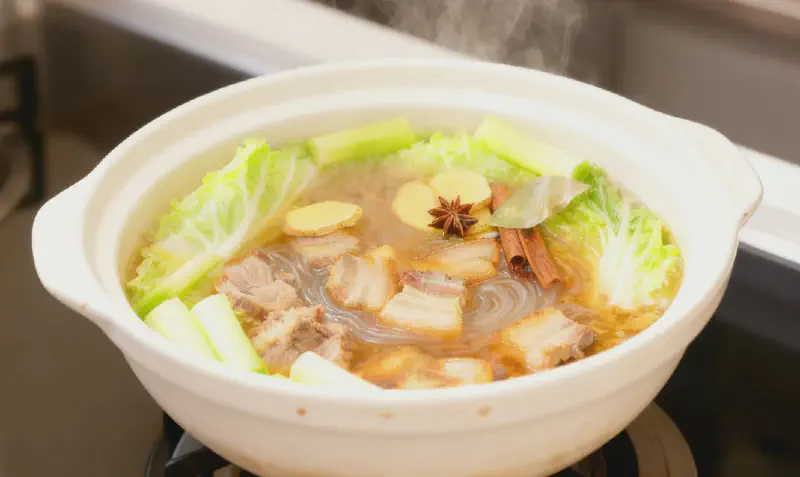
First, take a look at this pot of steaming, comforting stew!
 Tender pork belly, translucent glass noodles, and soft cabbage meld together in an amber-colored, rich broth. Steam rises gently, warming you from the inside out just by looking at it.
Detailed Step-by-Step Instructions
Step 1: Prepare Ingredients (Separate Prep for Different Doneness)
- Preparing the Pork: Cut pork belly with the skin on, about 1cm thick. Collagen from the skin dissolves during braising, enriching the broth.
- Preparing the Cabbage: The white core and leafy parts must be separated. The core is thick and takes longer to cook; it needs to go in first. The leaves cook quickly; adding them later preserves their shape and sweetness.
- Preparing the Noodles: Soak glass noodles in warm water until just softened, not fully cooked. Retaining a bit of firmness allows them to perfectly absorb the broth during braising.
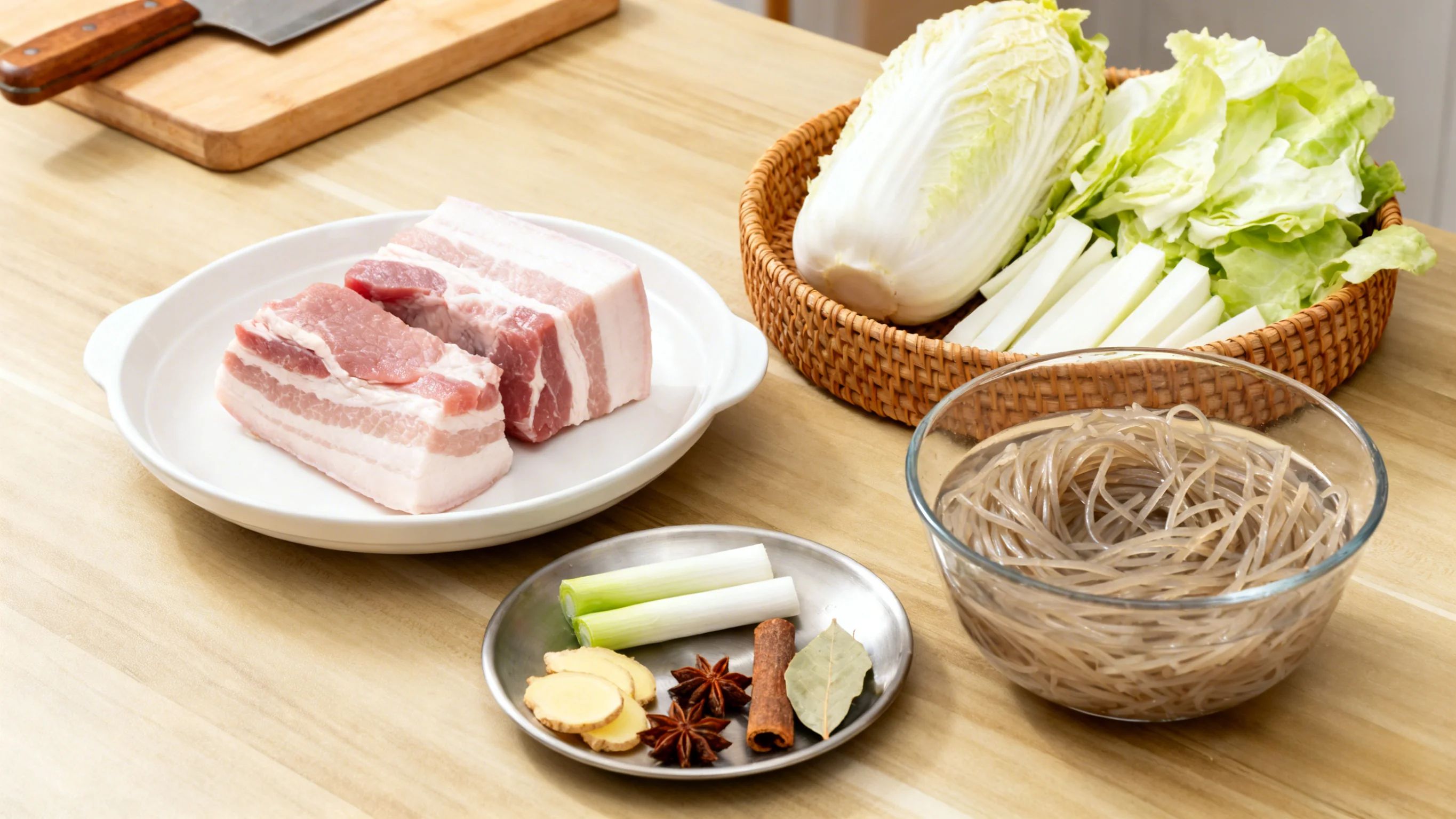 Preparing ingredients by category is the first step to a stew with rich textural layers.
Step 2: Render the Pork (Secret 1: Render Fat, Build Flavor Base)
- Use just a little oil, as the pork belly will release its own fat.
- Render patiently over medium heat until fat is released, edges curl slightly, and the surface turns golden brown.
- This step not only renders out excess fat (making the pork less greasy) but also creates Maillard reactions, providing a rich, meaty flavor foundation for the entire pot.
- Add all the aromatics and stir-fry until fragrant, infusing the oil with their flavors.
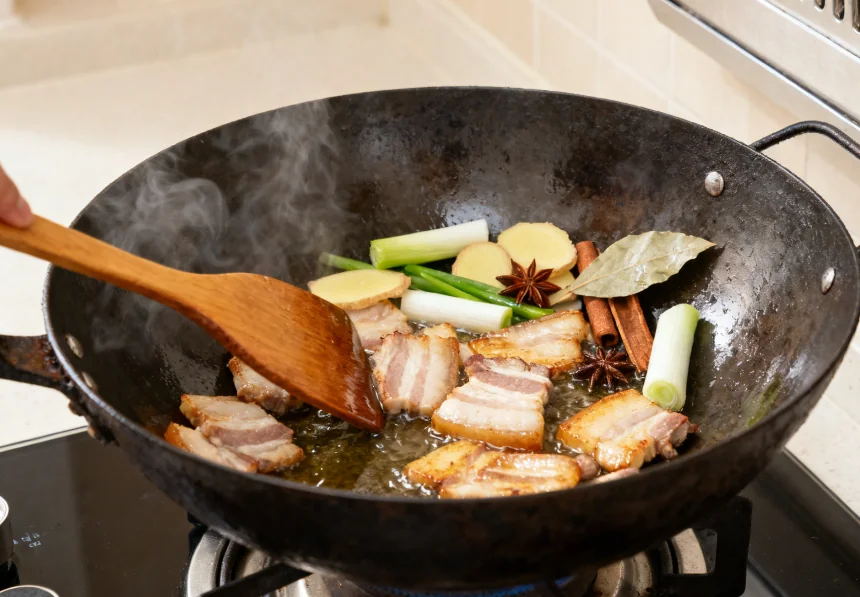 Rendering the pork belly until golden and fragrant is the soul of a rich, non-greasy broth.
Step 3: Season & Initial Braising
- Pour cooking wine around the edge; high heat removes any gaminess and releases aroma.
- Add light soy sauce, dark soy sauce, sugar, etc. Stir-fry to coat each piece of meat with color.
- Key: Must add plenty of hot water. Cold water would cause the meat to contract and toughen.
- Simmer over low heat for 25 minutes, allowing the pork’s proteins and fats to break down slowly, releasing umami and achieving a tender texture.
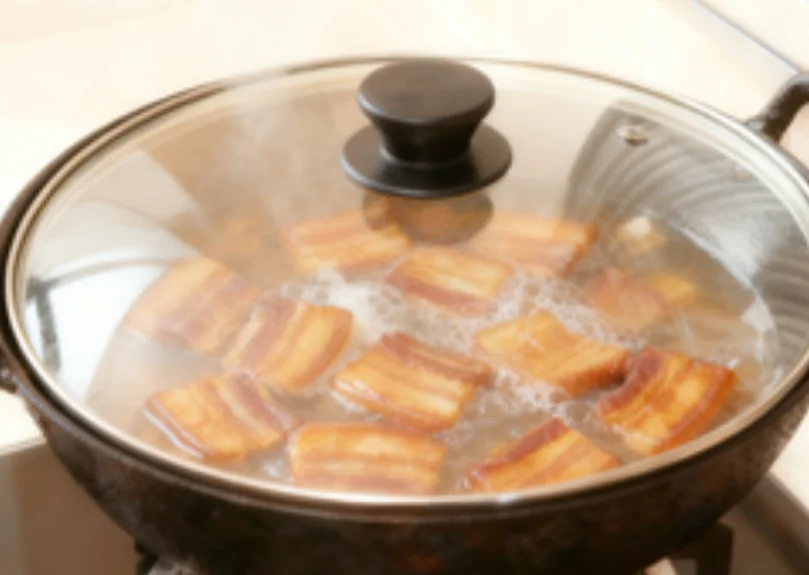 Adding hot water and simmering over low heat is the scientific principle for tender meat and a robust broth.
Step 4: Add Cabbage Core
- After 25 minutes, the pork should be mostly tender.
- Now add the sturdy cabbage core and continue simmering for 10 minutes.
- The cabbage core slowly softens in the meat broth, absorbing its deliciousness while releasing its own natural sweetness.
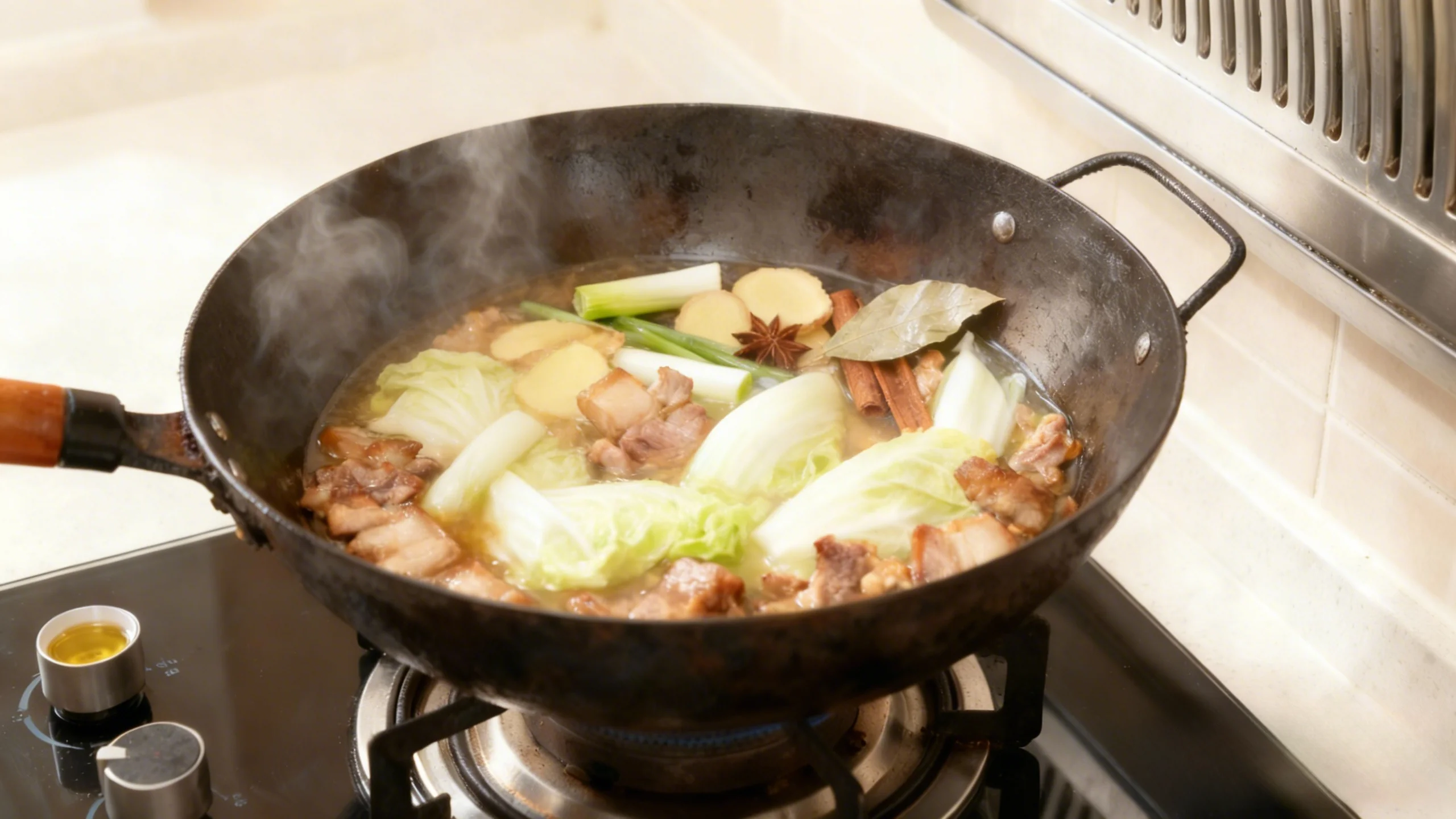 Adding the cabbage core first and simmering it sufficiently makes it tender, flavorful, and perfectly textured.
Step 5: Add Cabbage Leaves & Noodles (Secret 2: Timing Dictates Texture)
- Add the cabbage leaves and the softened glass noodles.
- Gently separate the noodles with chopsticks to immerse them fully in the broth.
- Exclusive Tip: Noodles must be added after the cabbage leaves and when the broth is already rich and flavorful. Adding them too early makes them mushy or even disintegrate; adding them when the broth is too thin means they won’t absorb enough flavor.
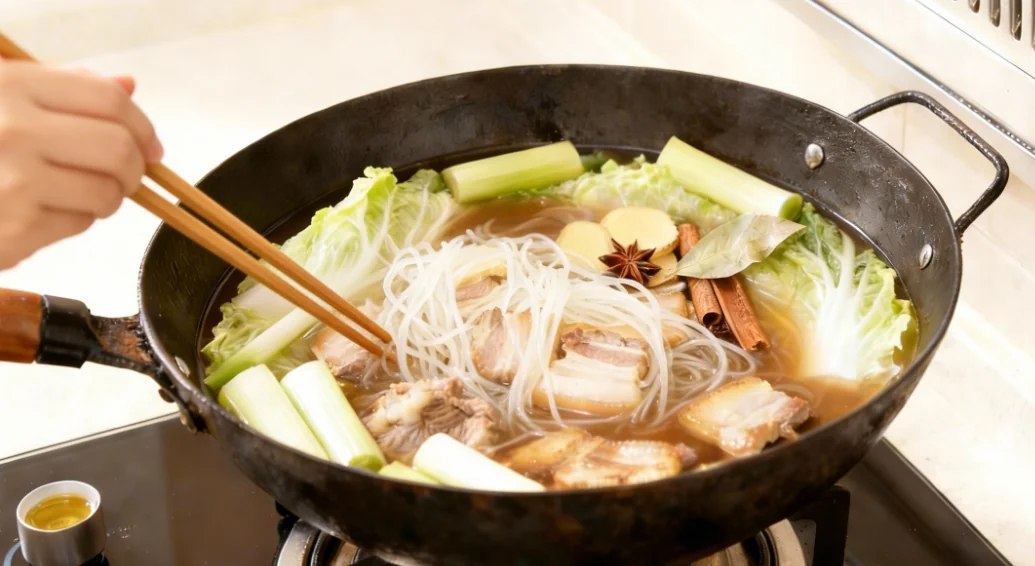 Adding the quick-cooking cabbage leaves and noodles last ensures each reaches its optimal texture with a short simmer.
Step 6: Final Simmer & Seasoning
- Cover and simmer over low heat for another 10-15 minutes.
- Watch for the noodles to become transparent, soft yet still slightly chewy, indicating they’ve absorbed the broth.
- Taste now and decide if salt is needed (soy sauces are already salty).
- Uncover, increase to medium-high heat to reduce the broth slightly, making it thicker and better at clinging to the ingredients.
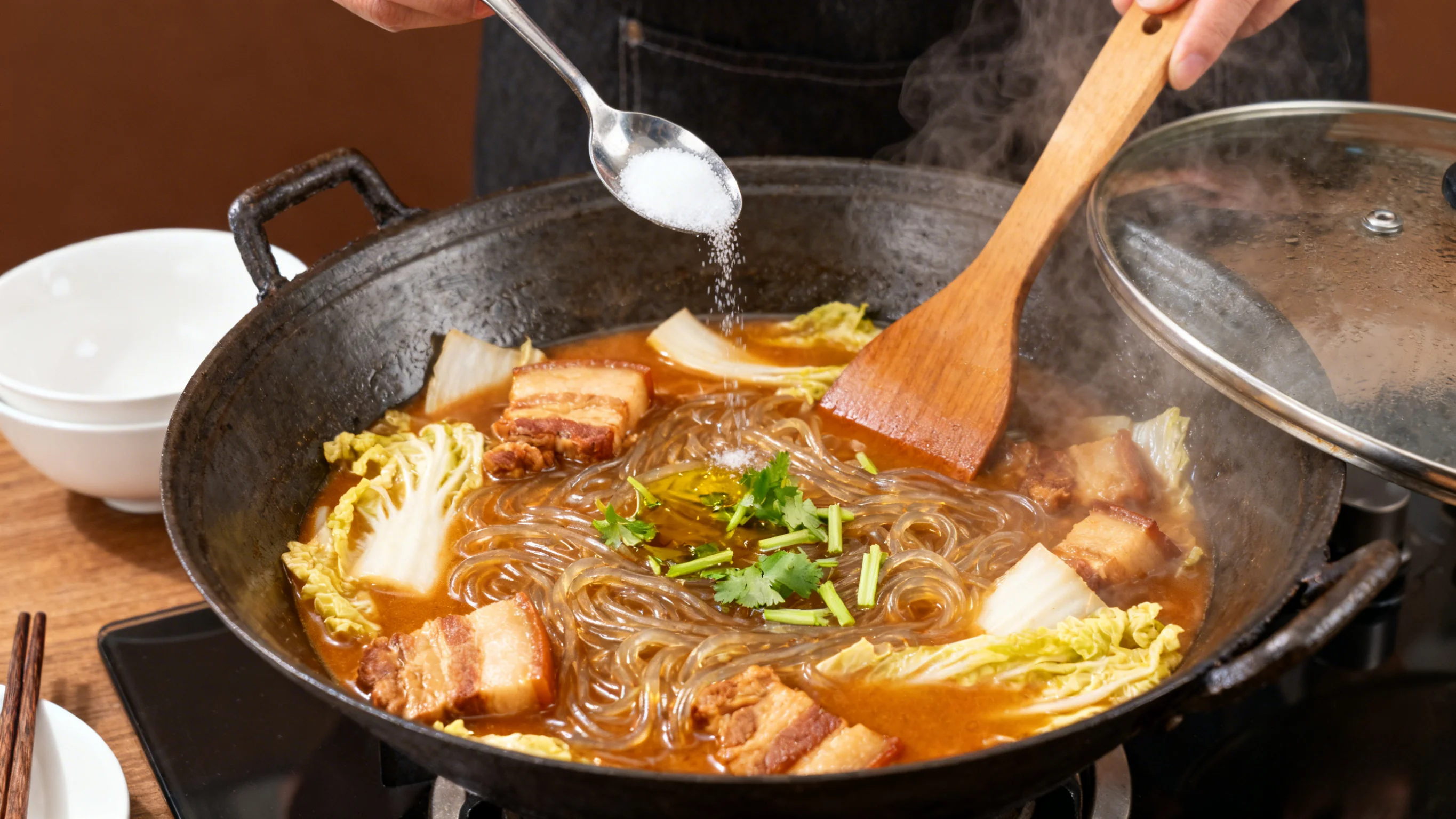 When the noodles have absorbed the broth and turned translucent, season and reduce the sauce to finalize the flavor integration.
Exclusive Two Core Secrets
🎯 Secret 1: Render First, Then Braise—Rich but Not Greasy
- The Magic of Rendering: Pork belly braised directly releases fat as “oil droplets” into the broth, which can taste greasy. Rendering first releases some fat and alters the molecular structure of the lard, allowing it to emulsify and blend better with other broth components (like soy sauce, spices), creating a rich而非油腻 (rich rather than greasy) mouthfeel. Meanwhile, the caramelized notes from rendering add irreplaceable depth to the broth base.
- The Secret of Hot Water: After rendering, the pork surface is hot. Adding cold water would cause the meat to contract sharply, tightening proteins and making it hard to tenderize. Adding hot water maintains the meat’s relaxed state, allowing heat to penetrate slowly for tender results.
🎯 Secret 2: Staggered Ingredient Addition—Each Finds Its Place
- Ingredient ‘Heat Tolerance Index’: Pork belly > Cabbage core > Glass noodles ≈ Cabbage leaves. Adding ingredients in this order ensures each gets the right cooking time, avoiding mushiness or undercooking.
- The ‘Golden Window’ for Noodles: The main component of glass noodles (especially sweet potato noodles) is starch. Adding them when the broth is already rich with meat flavor, fat, and seasonings (after about 30 minutes of braising) allows the starch granules to fully absorb these flavor compounds for optimal taste. Also, the broth’s consistency at this point is perfect for coating the noodles, making them slippery and glutinous without turning into a mushy clump.
Advanced Techniques & Variations
🌟 Ingredient Upgrades:
- Pork Cut: Besides pork belly, pork shoulder (picnic shoulder/coppa) is also excellent—well-marbled and stays tender with long braising.
- Noodle Choice: Sweet potato glass noodles are the classic—slippery, glutinous, and hold up well. Potato starch noodles are more transparent and chewy.
- Umami Boosters: Add a few dried shiitake mushrooms (soaked) or a small handful of dried shrimp to instantly elevate the umami layers.
🌟 Flavor Variations:
- Rich Bean Paste Version: After rendering pork, add 1-2 tbsp fermented soybean paste or sweet bean sauce, stir-fry until fragrant, then proceed. Enhances savory depth.
- Tangy Pickled Cabbage Version: Replace half the cabbage with Northeastern-style sauerkraut. The tanginess cuts through richness wonderfully, transforming it into “Sauerkraut, Pork, and Noodle Stew.”
- Spicy & Numbing Version: Add dried chili segments and a small spoon of Pixian doubanjiang (broad bean chili paste) when stir-frying aromatics. Sprinkle with Sichuan pepper powder before serving for a Sichuan twist.
🌟 One-Pot Wisdom Extended:
- Upgrade to Complete Meal: During the last 5 minutes of simmering, stick a few small steamed buns or cornbread pancakes along the pot’s inner wall, cover, and let them steam—main and side in one pot.
- Add Tofu: Add a few pieces of frozen tofu or firm tofu cubes. Their porous texture soaks up the delicious broth for a juicy burst.
- Add Potatoes: Add potato chunks to braise with the pork. Their fluffy texture contrasts nicely with the noodles’ slipperiness.
Frequently Asked Questions (FAQ)
Q: My noodles always stick to the bottom or turn mushy. What to do? A: This is usually a timing and heat issue. Ensure: 1. Noodles are only softened, not fully cooked when soaked. 2. When adding noodles, there’s enough broth at the bottom to cover them. 3. After adding noodles, maintain low heat and occasionally gently nudge them with chopsticks to prevent settling. Avoid high, rolling boils.
Q: The stewed broth is too oily. How to fix it? A: Two methods: 1. Be thorough during the rendering step; render out more of the pork’s own fat. You can even pour off some of the rendered lard for other uses. 2. After cooking, if there’s still too much surface oil, let the broth cool slightly, then skim off the top oil layer with a spoon.
Q: Can I make a big batch? Does it taste good the next day? A: Absolutely, and it’s even more delicious the next day! This dish is a “reheating-friendly” stew. After overnight soaking, the noodles and cabbage become even more flavorful, and the pork collagen slightly thickens the cooled broth, melding the flavors. When reheating, add a little water if the broth seems reduced.
Winter Dining Philosophy
This dish is more than just a meal; it’s an attitude toward life. In the cold season, being willing to spend time by the stove, watching a pot of ingredients slowly meld in the rising steam, is itself a warm ritual. It’s not refined, but it’s substantial enough; not complex, but comforting enough. Serving a steaming pot of stew is sharing not just food, but warmth and companionship.
Perfect Occasions to Enjoy
- ❄️ Cold Winter Dinner: Wind howls outside, warmth emanates from the pot inside—warming body and heart.
- 🏠 Family Gathering: Generous portions, hearty flavor—a朴实硬菜 (simple yet substantial dish) for hosting friends and family.
- 🍚 Lazy One-Bowl Meal: Has vegetables, meat, and a starch (noodles can partly substitute for carbs)—all in one bowl.
- 🔥 Gathering Around the Hearth: Chat while eating; the broth deepens in flavor the longer it simmers, the atmosphere grows warmer the more you talk.
Cabbage, Pork, and Glass Noodle Stew uses the humblest Northern ingredients to演绎 (enact) the most solid warmth. It teaches us: Deliciousness doesn’t require expense; warmth lies in sharing; and happiness, sometimes, is simply a pot of simmering time.