Cabbage Stir-fry with Pork: The “Crisp Magic” That Saves the Home Dinner Table
Hello everyone! Today, I’m sharing a quick home-style dish that almost every household makes, but doing it exceptionally well requires some clever thinking—Cabbage Stir-fry with Pork. The success criteria for this dish are straightforward: the cabbage should be crisp without releasing water, the pork should be tender and not dry, the two should quickly meld in the wok, with a savory, well-balanced flavor. I’ll share an exclusive “salt-brining dehydration method” for handling cabbage, helping you completely avoid watery stir-fries and easily achieve restaurant-level crisp texture!
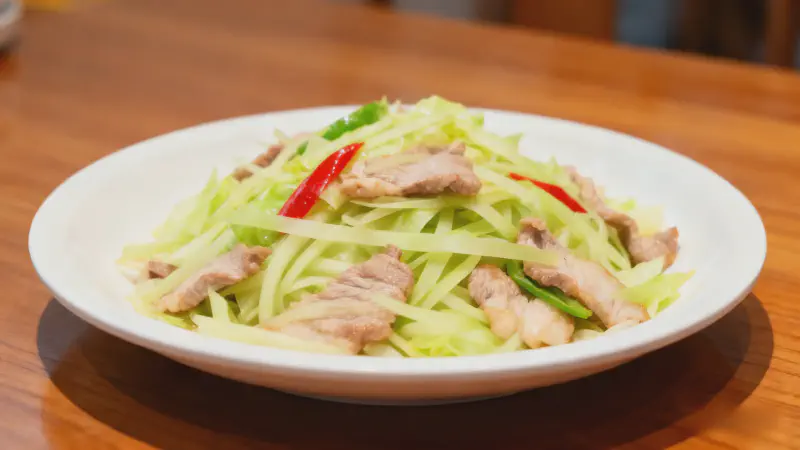
First, take a look at this plate of distinctly crisp and tender Cabbage Stir-fry with Pork!
 Tender pork slices perfectly combined with glossy, vibrant green cabbage strips, accented by bright red chilies and white garlic slices—refreshing colors, full of wok hei.
Detailed Step-by-Step Instructions (with Photos)
Step 1: Prepare Cabbage (Secret 1: Salt-brine & Dehydrate for Crispness)
- Cutting Technique: Wash cabbage, remove tough core, cut into even thick strips or chunks. Even cutting ensures uniform cooking.
- Core Operation: Place cut cabbage in a large bowl, sprinkle with ½ tsp salt.
- Mix Thoroughly: Use hands to repeatedly massage and mix, ensuring salt contacts every leaf.
- Let Rest: Let sit for 10 minutes. You’ll see water released at the bottom of the bowl, and the cabbage will soften.
- Squeeze Dry: This is the key step! Use hands to squeeze out as much moisture as possible from the cabbage.
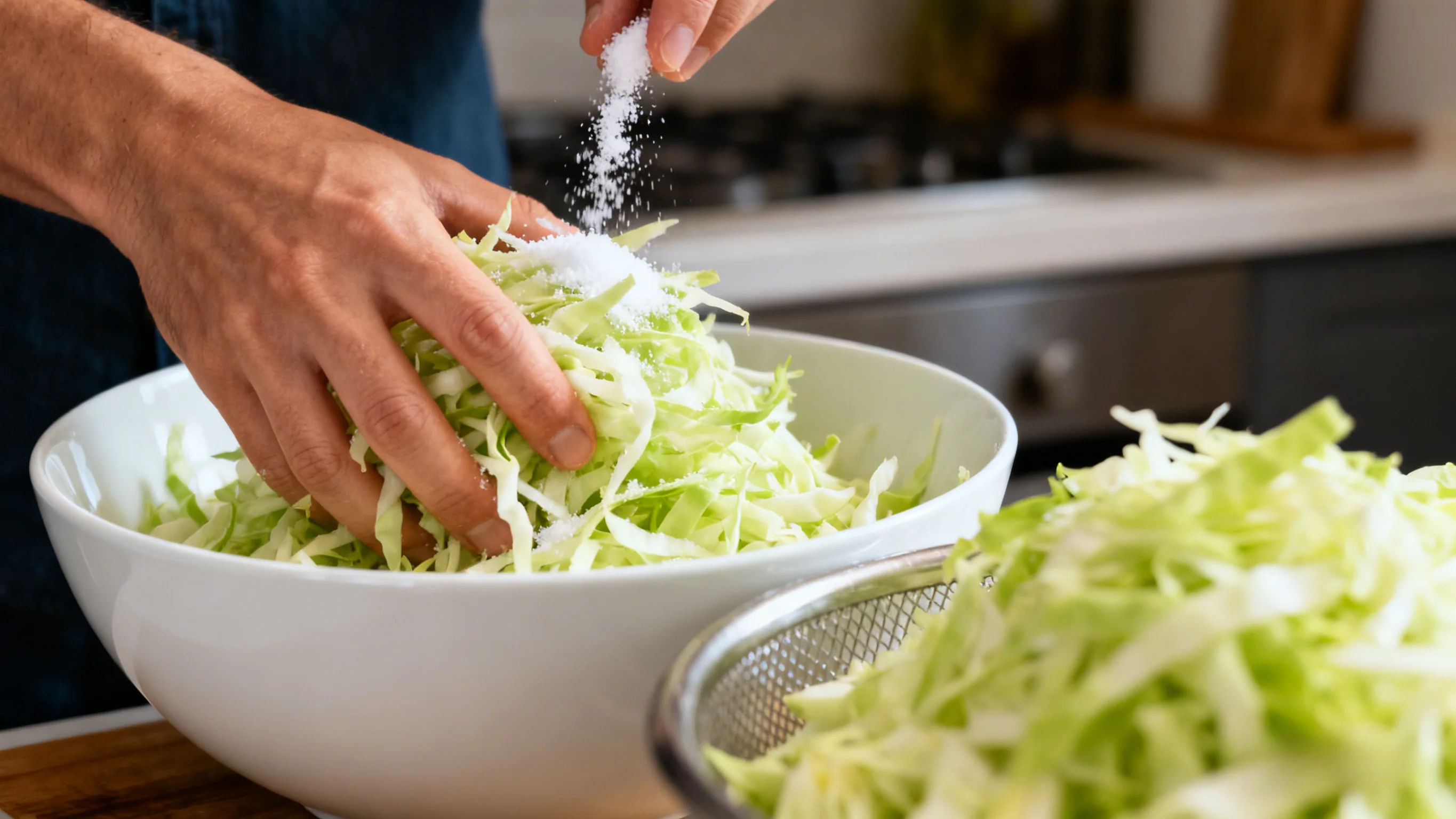 Salting and then squeezing dry uses osmotic pressure to remove excess moisture from the vegetable, ensuring a dry stir-fry—a scientific method.
Step 2: Velvet & Marinate Pork (For Tenderness)
- Slice Thin Against the Grain: Cutting through muscle fibers is the foundation for tender meat.
- Season & Mix: Add light soy sauce, cooking wine, sugar. Mix well for flavor penetration.
- Velvet to Lock Moisture: Add cornstarch, mix to form a protective coating.
- Seal with Oil: Finally, drizzle with cooking oil and mix. This helps slices separate easily when added to the wok.
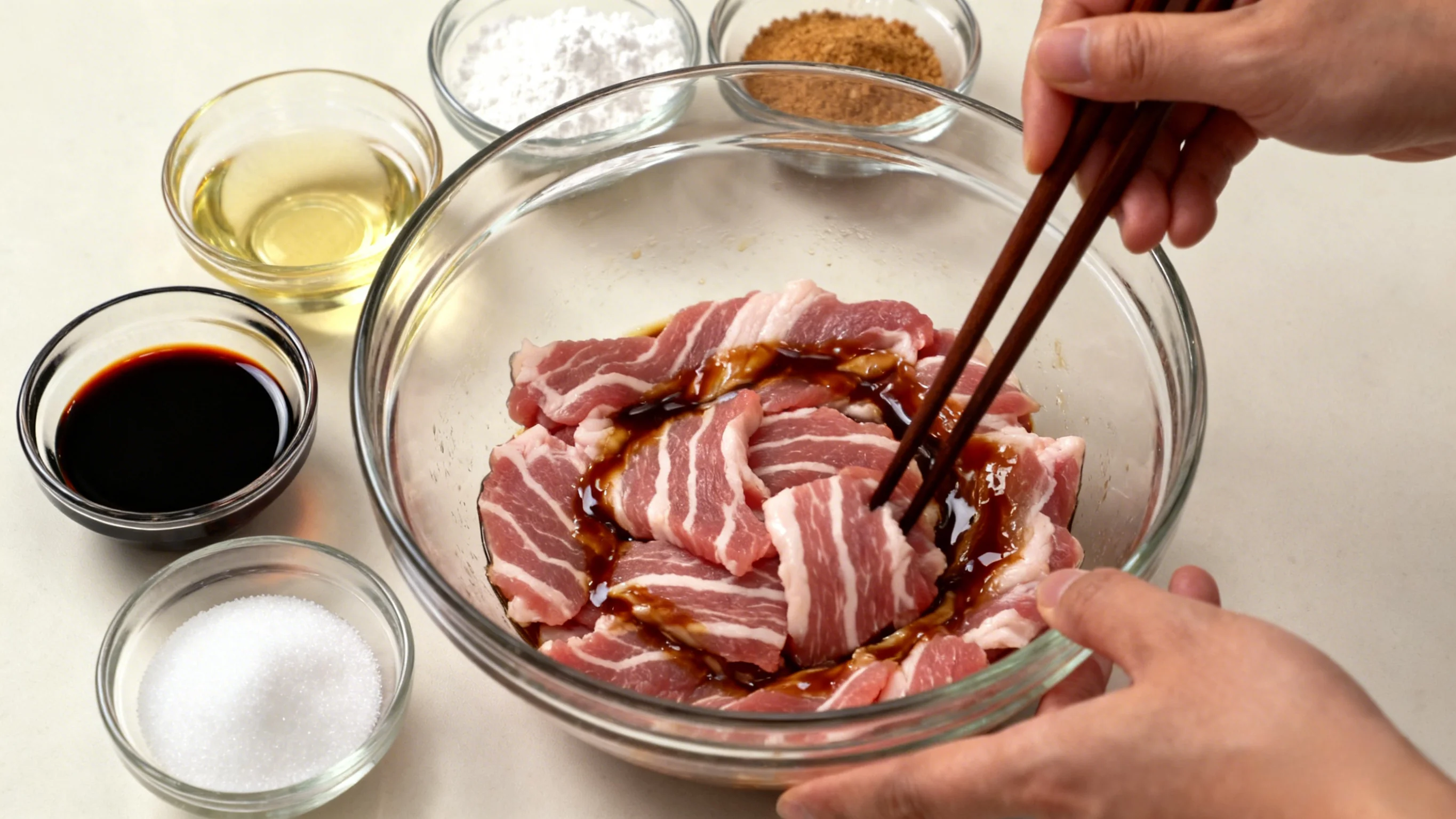 “Slice against grain + cornstarch + seal with oil” is the golden formula for tender meat in Chinese stir-fries.
Step 3: Prepare Aromatics & Sauce
- Green onion, ginger, garlic, chilies are the classic combo, providing complex aroma.
- Exclusive Tip: Pre-mix light soy sauce, oyster sauce, sugar, pepper, and water into a bowl sauce.
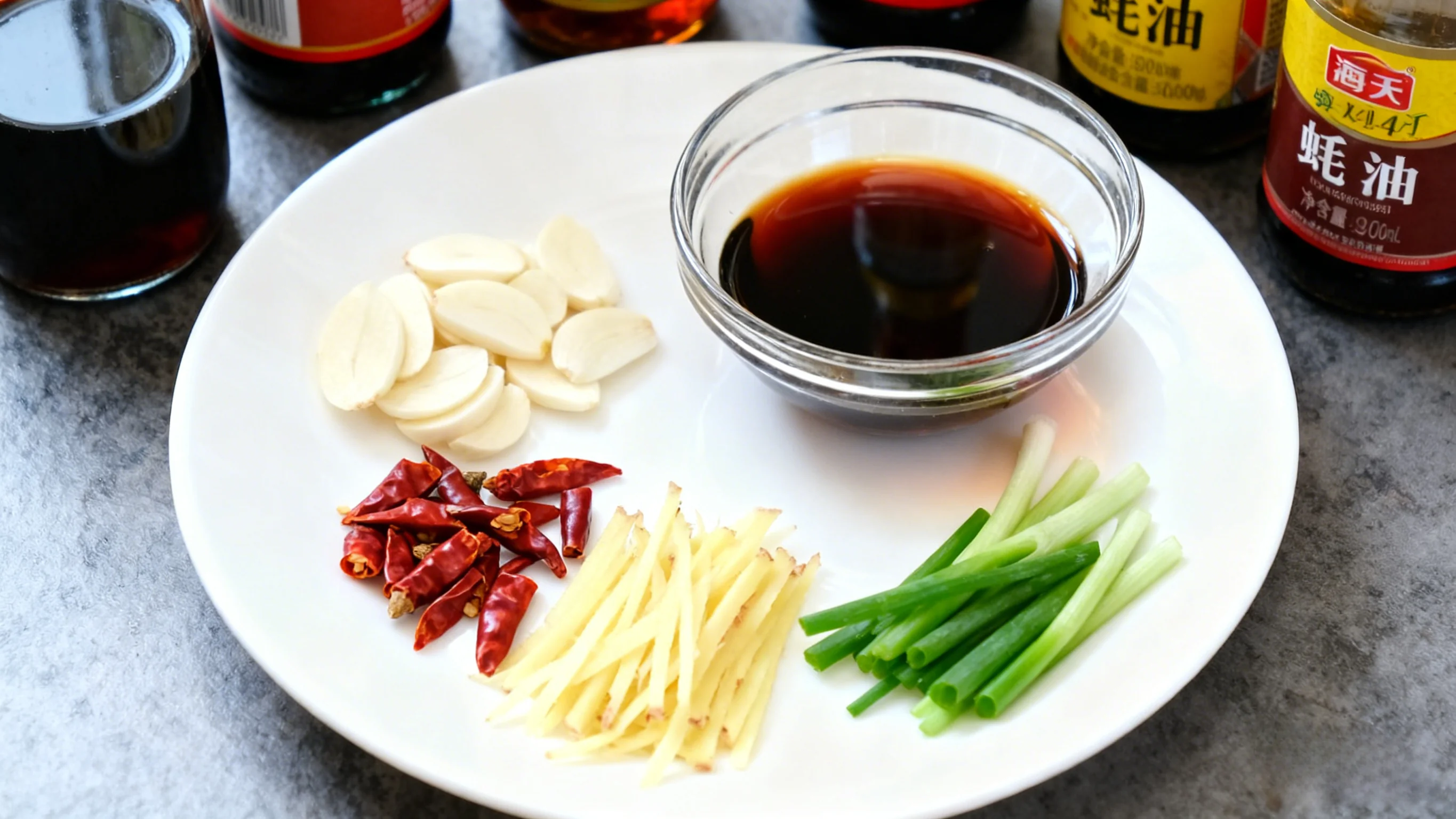 Pre-mixing the bowl sauce is the secret to consistent flavor in quick stir-fries and avoids scrambling.
Step 4: Velvet Pork Slices
- Heat wok, add oil. Heat oil until medium-hot (when slight ripples appear on the surface).
- Add marinated pork slices, quickly separate with chopsticks.
- Remove as soon as all slices change color, about 80% cooked at this point.
 Quick stir-fry in hot oil. Remove upon color change, letting residual heat achieve perfect tenderness.
Step 5: Sauté Aromatics & Stir-fry Cabbage
- Use remaining oil in wok (add a little if needed), sauté green onion whites, ginger, garlic, dried chilies until fragrant.
- Increase to high heat, add the squeezed-dry cabbage.
- Maintain high heat and stir-fry rapidly. You’ll hear a crisp sizzling sound.
- Stir-fry for about 1 minute 30 seconds. The cabbage will become glossy, slightly tender, but still retain crispness.
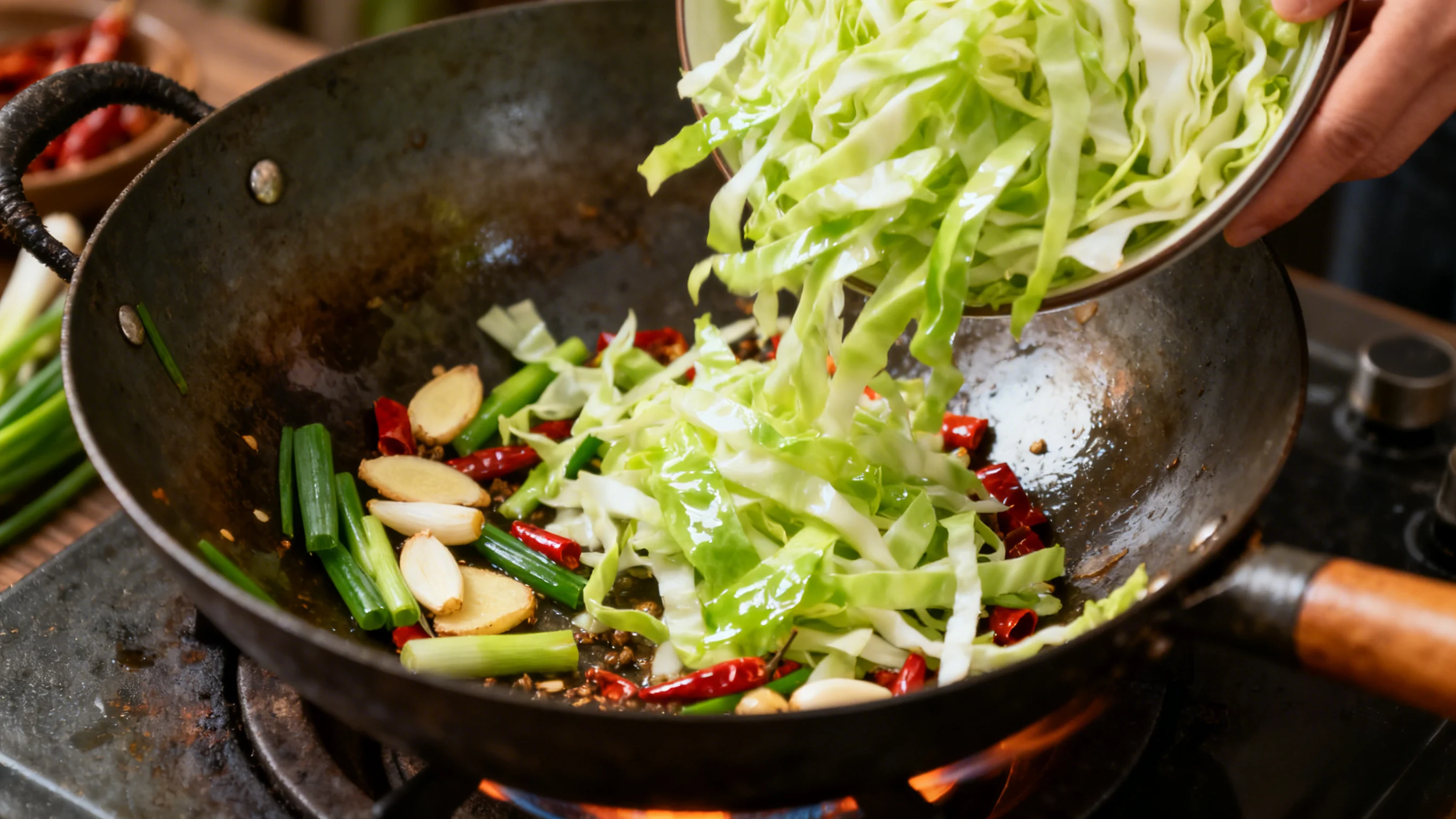 High-heat quick stir-fry of squeezed-dry cabbage instantly locks in crispness and vibrant green color.
Step 6: Combine, Season & Serve
- Return the velveted pork slices to the wok.
- Pour in the pre-mixed bowl sauce.
- Stir-fry quickly over high heat to combine, letting the sauce reduce and coat the ingredients.
- Turn off heat. Drizzle sesame oil, add green onion greens, toss using residual heat.
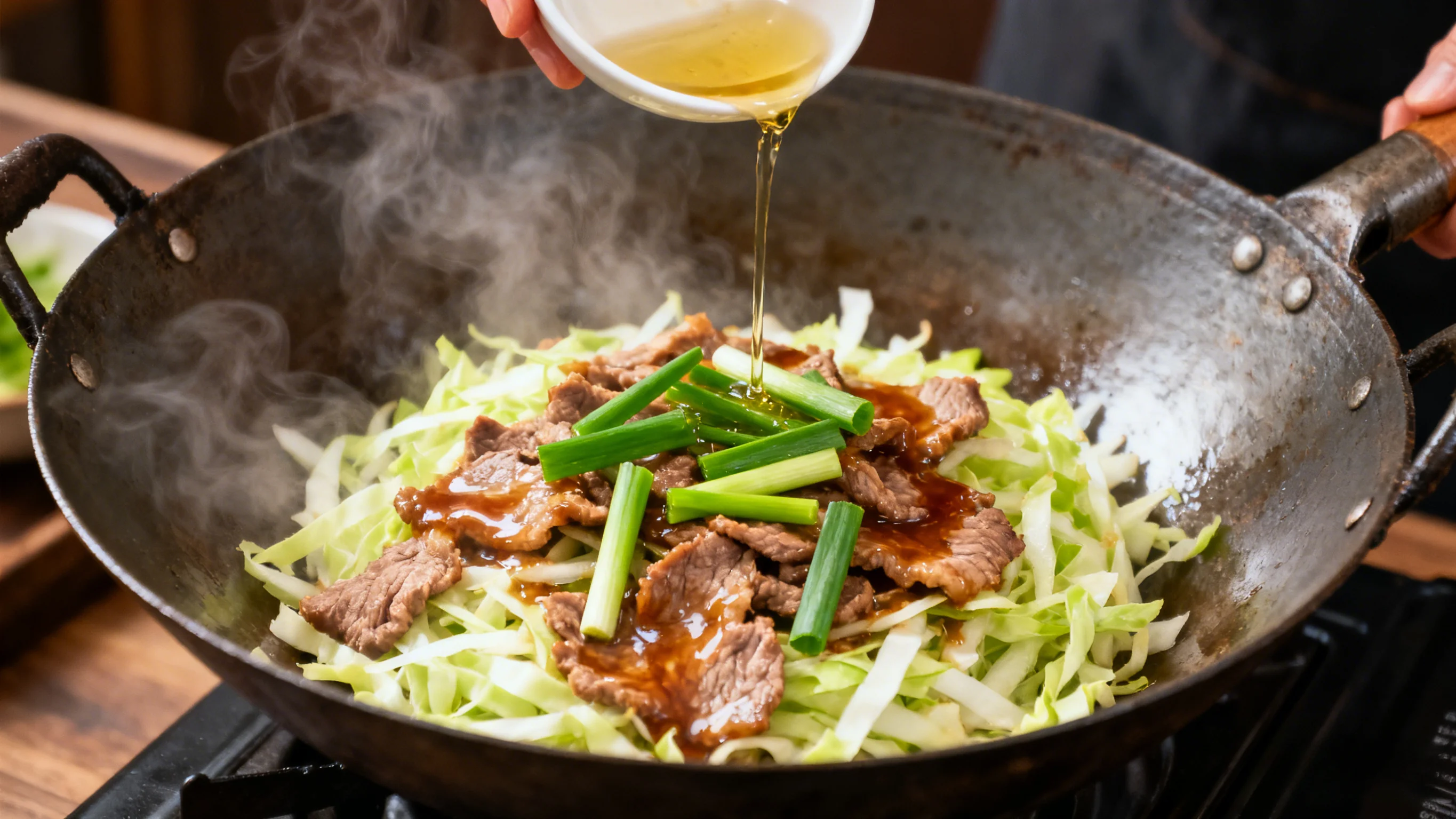 High-heat combination stir-fry allows the meat aroma, cabbage aroma, and sauce aroma to perfectly fuse under high temperature.
Exclusive Core Secrets (Keys to Elevating Home-style Dishes)
🎯 Secret 1: Salt-brining Dehydration Method (Solving the Vegetable Wateriness Problem)
- Scientific Principle: Osmotic pressure from salt draws water out of cabbage cells, damaging their water-holding structure. After squeezing, the cabbage releases minimal water during stir-frying.
- Texture Comparison: Treated cabbage has a denser texture, resulting in a crisper bite and better absorption of seasoning sauce.
- Wide Applicability: This method also works for stir-frying napa cabbage, spinach, bok choy, and other leafy greens prone to releasing water.
🎯 Secret 2: Staged Heat Control (The Wisdom of Layered Cooking)
- Velveting Meat with Warm Oil: Medium oil temperature (around 150°C / 300°F) is optimal for protein tenderization, quickly locking in meat juices.
- Stir-frying Vegetables with High Heat: High temperature instantly evaporates surface moisture on vegetables, forming a “protective layer” that maintains crispness and color.
- Combining with Fierce Heat: The final stage requires maximum heat to quickly reduce the sauce and激发 (ignite) “wok hei,” allowing flavors to cling tightly to the ingredients.
Advanced Techniques & Variations
🌟 Ingredient Upgrades:
- Pork Choice: Pork shoulder (neck) has even marbling, resulting in a more tender and juicy texture.
- Cabbage Variety: Choose firm, crisp-leaved heads of green cabbage for better texture.
- Aroma Enhancers: Add a few slices of pork belly to render lard, or use a little Sichuan pepper for added fragrance.
🌟 Flavor Variations:
- Savory Bean Paste Version: Add half a spoon of fermented soybean paste or sweet bean sauce to the bowl sauce.
- Sour & Spicy Version: Drizzle 1 tbsp of aromatic vinegar before serving and increase the amount of dried chilies.
- Garlic Lover’s Version: Double the garlic, add a handful of minced garlic just before serving.
- Seafood Version: Add fresh shrimp or squid rings to elevate the umami level.
🌟 Nutritional Pairings:
- Add Wood Ear Mushrooms: Soaked black fungus adds crunch and dietary fiber.
- Add Carrots: Julienne and stir-fry together for beta-carotene and more color.
- Add Dried Tofu: Provides plant protein for more comprehensive nutrition.
Frequently Asked Questions (FAQ)
Q: Do I need to rinse the cabbage after salting? A: No need. The amount of salt used is minimal (½ tsp), and most will be lost with the squeezed-out water, not making the final dish salty. Rinsing would reintroduce water, negating the effort.
Q: Can I prepare the cabbage ahead and refrigerate it? A: Yes. Salted and squeezed cabbage can be stored in an airtight container in the refrigerator for 1-2 days. No further prep is needed before stir-frying—very convenient.
Q: Can I skip the cornstarch when marinating the pork? A: You can, but the texture will be slightly inferior. The starch coating effectively prevents juice loss. If omitted, slice the meat thinner and use egg white to replace some moisture in the marinade.
Perfect Occasions to Enjoy
- 🍚 Perfect with Rice: The savory, well-balanced sauce is极品 (top-tier) for mixing with rice, ensuring clean plates.
- 🍜 Noodle Topping: Ladled over cooked noodles, a simple toss makes a delicious meal.
- 🏠 Family Weeknight: Done in 10 minutes, nutritionally balanced—the perfect choice for weekday dinners.
- 🍱 Bento Box Regular: Flavor holds up well after refrigeration and remains tasty after microwaving.
Cabbage Stir-fry with Pork, the most朴实 (simple) home-style dish, yet embodies the wisdom of Chinese cooking: respect for ingredient characteristics (salt-brining dehydration), mastery of heat rhythm (staged heat control), and pursuit of flavor layers (preparing sauce ahead). Mastering these allows you to make the most ordinary ingredients shine extraordinarily.
The Home Flavor Explorer January 19, 2025