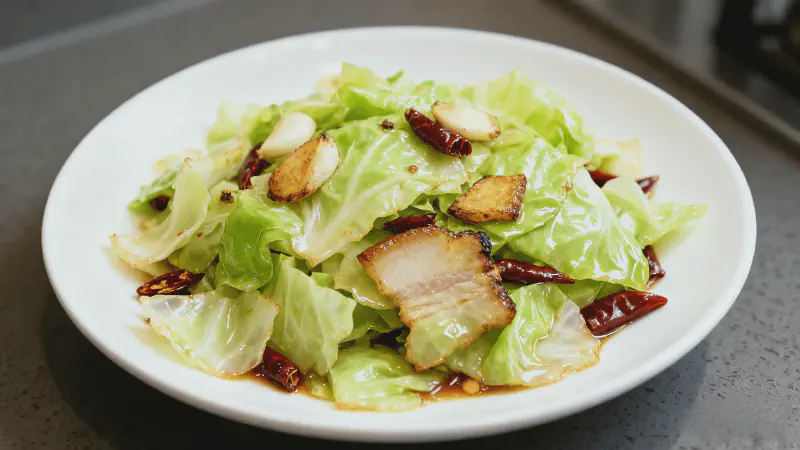
Hand-Torn Cabbage: Savory, Spicy, Crisp - Ready in 5 Minutes
Hello everyone! Today, I’m sharing a legendary homestyle dish beloved across China—Hand-Torn Cabbage. It seems simple, but achieving that restaurant-quality glossy, spicy-savory, crisp-tender, and deeply flavorful perfection requires a few exclusive secrets. Today, I’ll share them all, so you can recreate this “rice killer” at home!
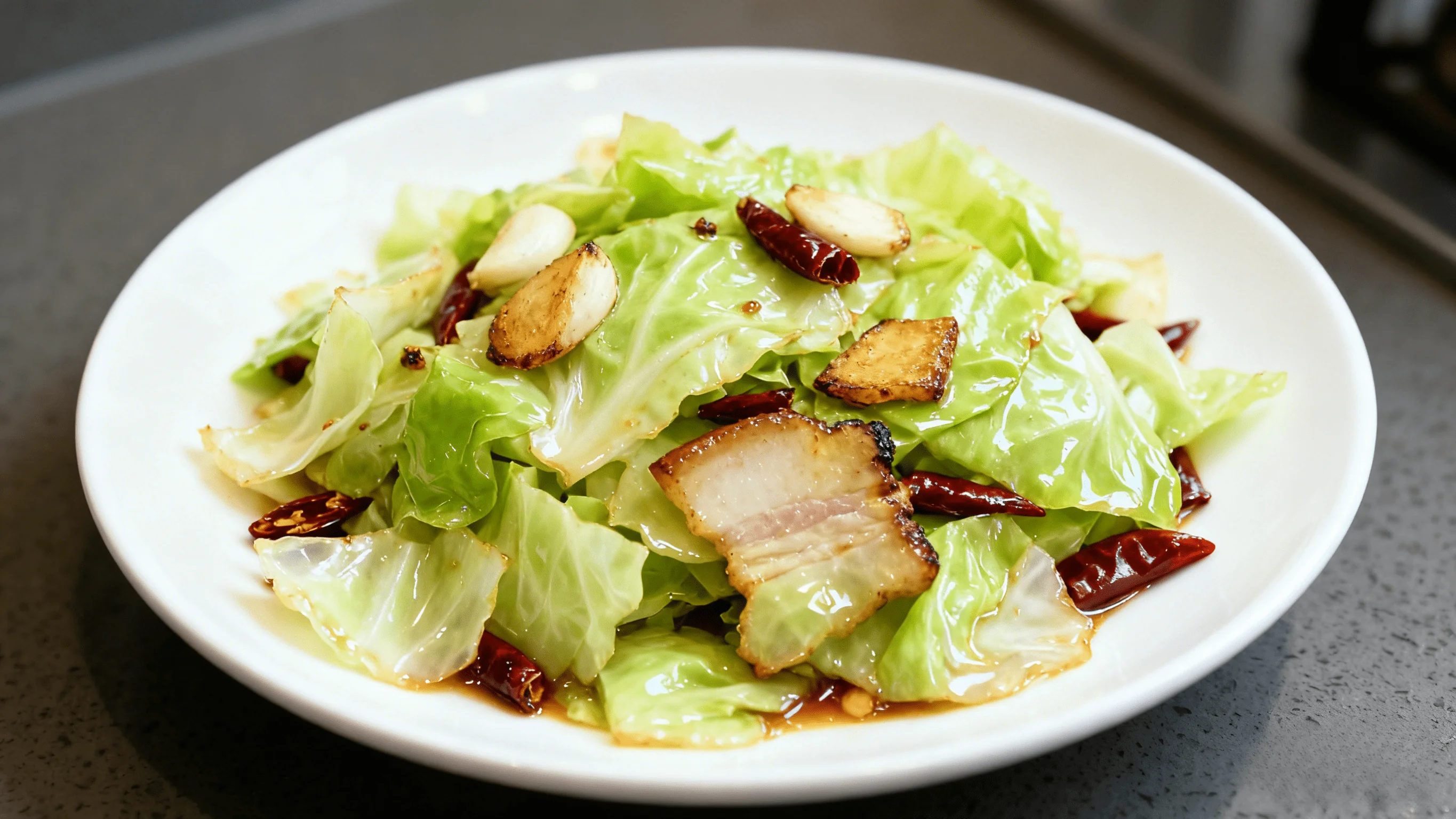
The Finished Dish
Detailed Steps
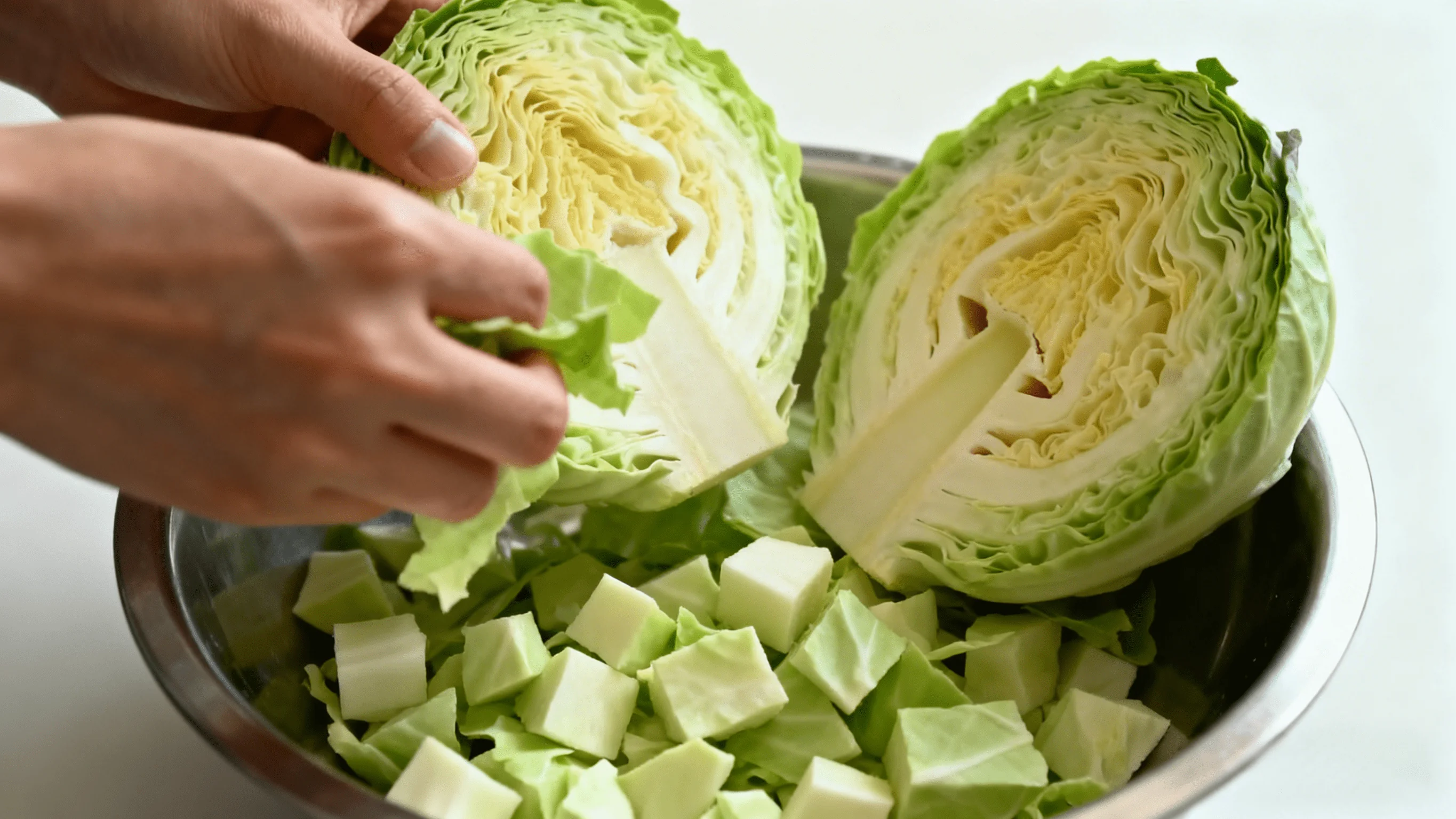
Step 1: Hand-Tearing the Cabbage – The Soul of Prep
- The ‘Tear’ Secret: You must tear it by hand! Irregular edges absorb sauce and flavor better than knife-cut surfaces and provide a more natural texture.
- Remove the Core: The tough core has poor texture; be sure to remove it or slice it thinly.
- Drain Key: Drain after rinsing, but leaving a bit of surface moisture helps create ‘wok hei’ (breath of the wok) for quick cooking.
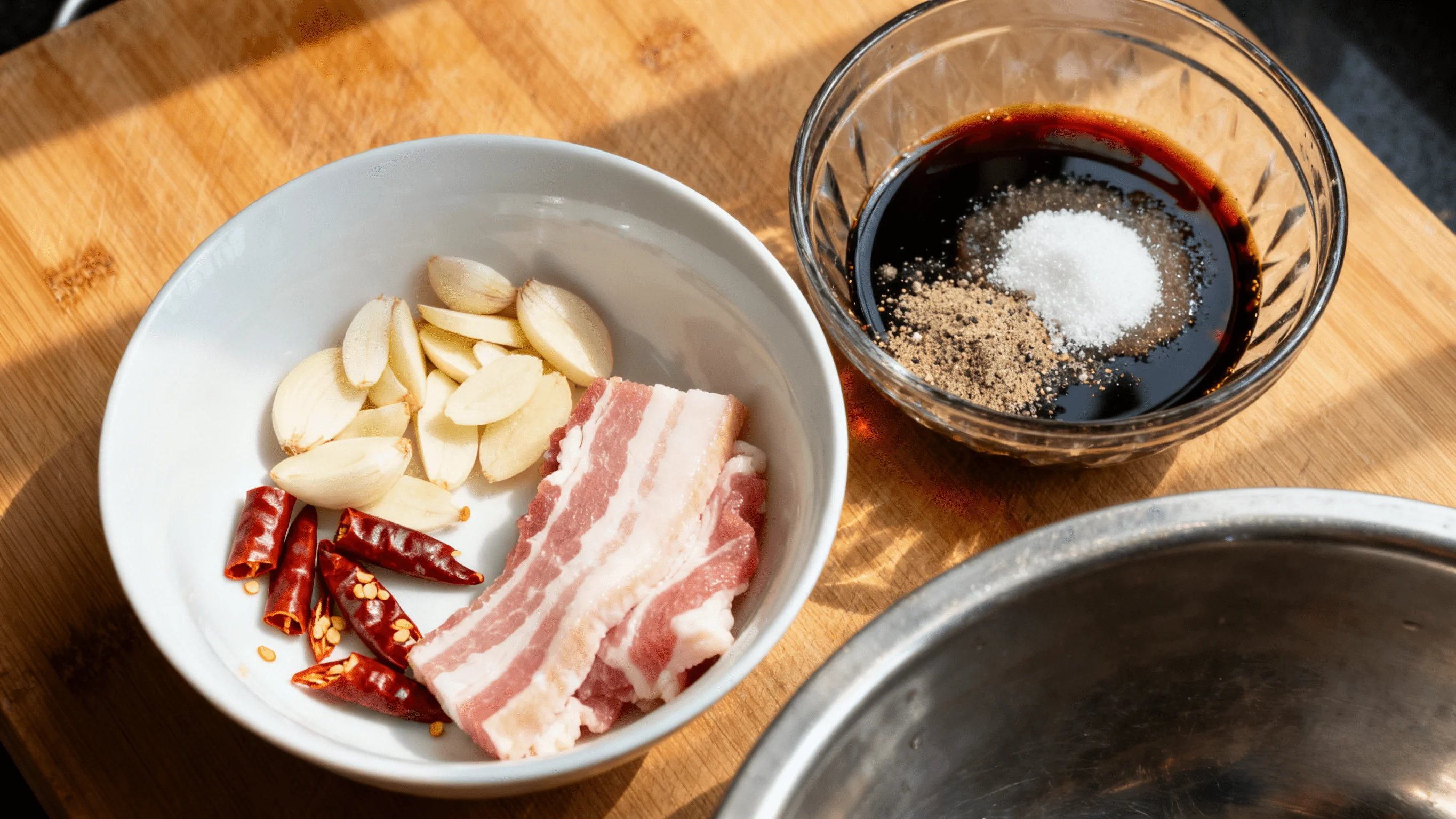
Step 2: Prepare the “Holy Trinity” of Aromatics
- Smash the Garlic: Smashed garlic releases aroma more persistently and burns less easily than minced.
- Prep the Chilies: Shake out some seeds from the cut chili sections for a warmer, less harsh heat.
- Pre-mix the Sauce: Mixing liquid seasonings beforehand prevents scrambling during cooking and allows flavors to meld.
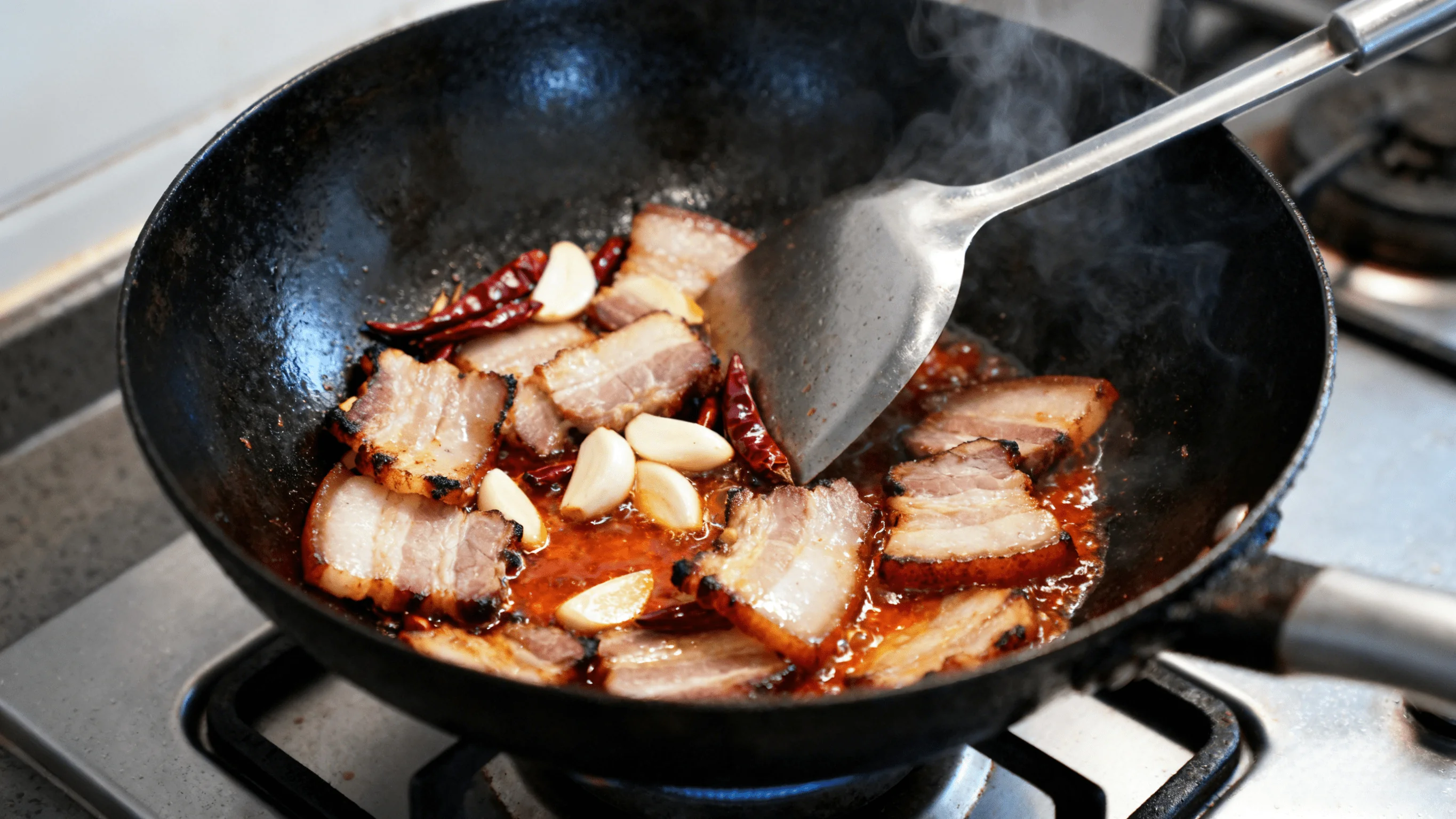
Step 3: Fry the “Soul Fat” Base
- Lard is Best: Using lard or fat rendered from pork belly is the core source of the cabbage’s signature aroma. Vegetarian oil can’t match this.
- Fry Until Fragrant: Render the pork belly slices until edges are crispy and golden. Add garlic and chilies, then fry over slightly lower heat to draw out the red oil and fragrance.
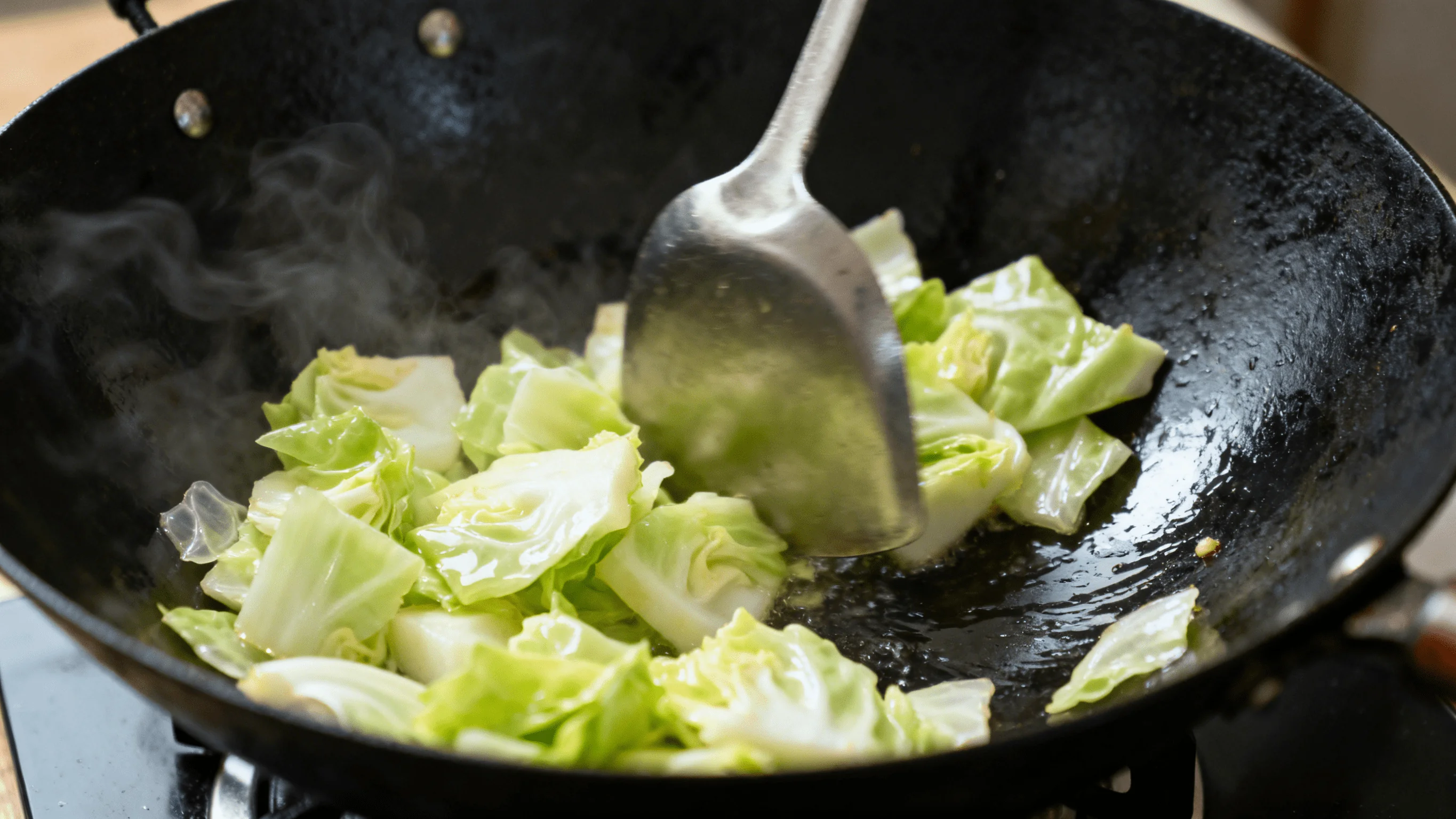
Step 4: High-Heat Stir-fry – Mastering “Wok Hei”
- Heat Must Be High: Ensure the wok and oil are very hot before adding cabbage. Maintain high heat throughout.
- Stir-Fry Vigorously: The first minute is crucial. Get every leaf hot quickly to lock in crispness.
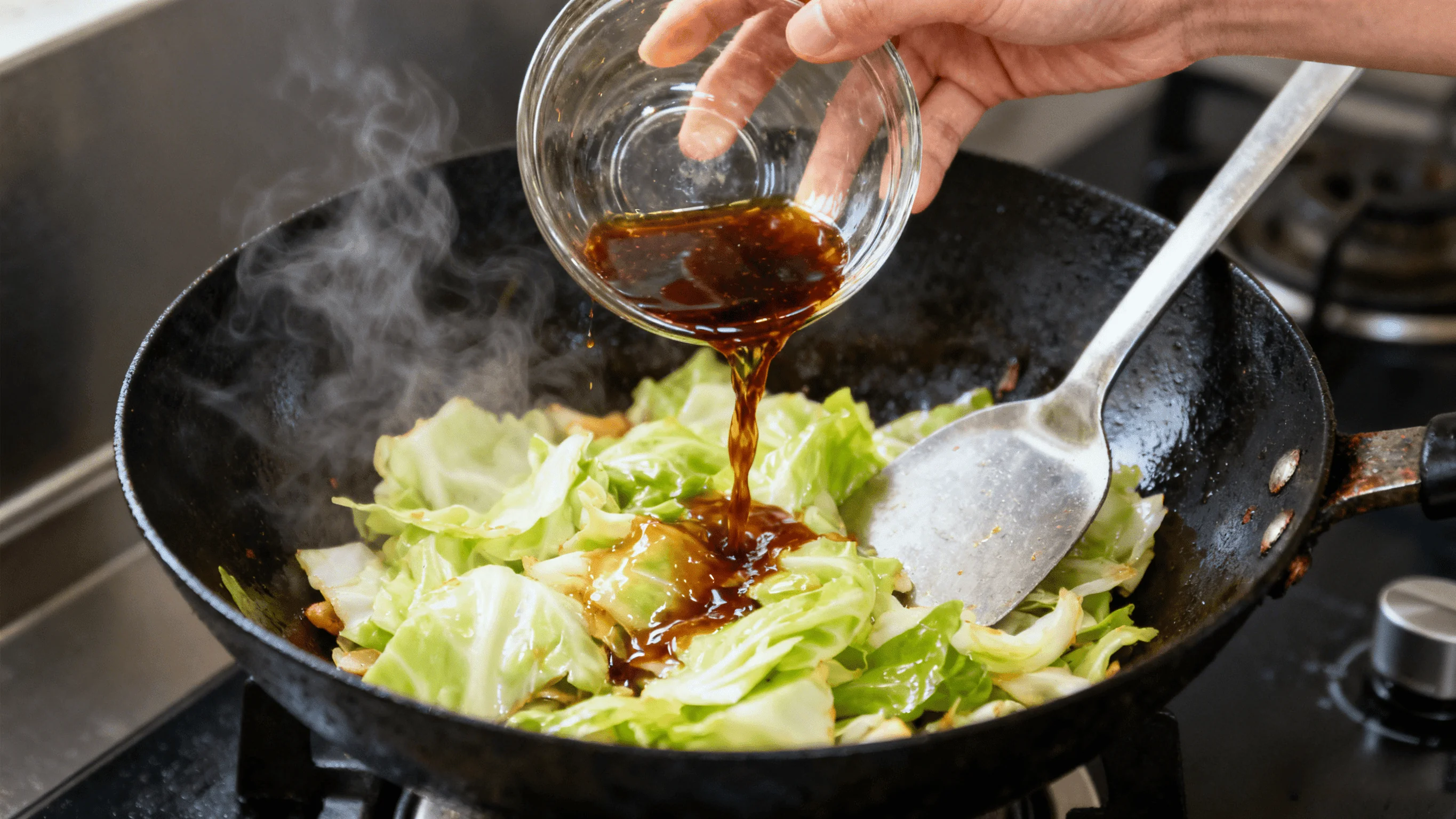
Step 5: Pour Sauce Down the Wok’s Side for Instant Flavor
- Where to Pour: Pouring the sauce onto the hot wok wall creates an instant sizzle (Maillard reaction), boosting aroma immensely.
- Salt Last: The soy sauce and seasoning mix are already salty. Taste at the end before deciding to add more salt.
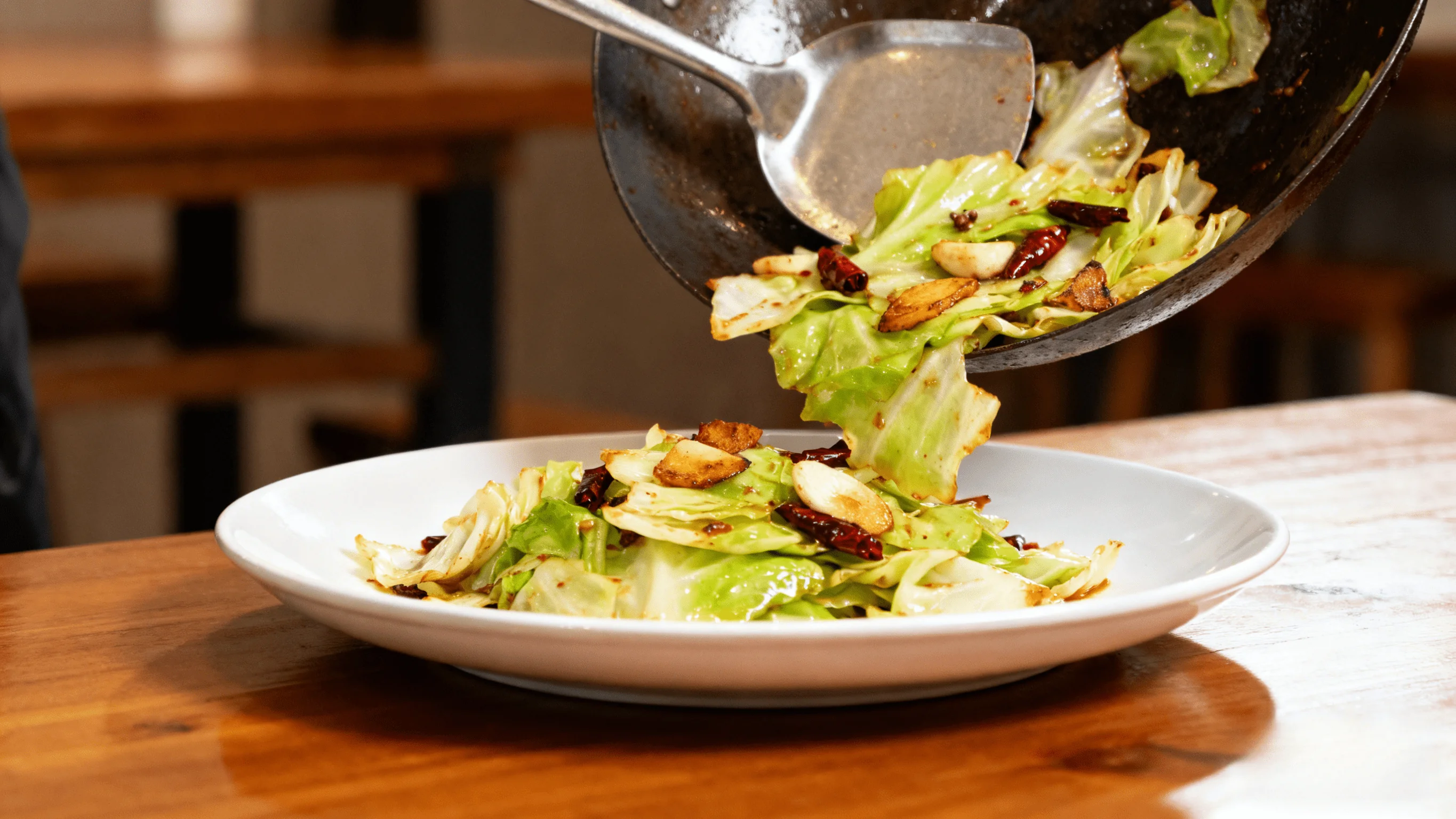
Step 6: Plate Decisively to Preserve Crispness
- Timing Control: Total cooking time from adding cabbage to plating is about 3-4 minutes. It’s done when the volume reduces, color deepens, and it looks glossy.
- No Mushiness: Residual heat will continue cooking after turning off the flame, so plate when it’s 90% done (edges soft, center still firm).
Exclusive Three Core Secrets
🎯 Secret #1: You MUST “Tear” It
- Science: Hand-tearing creates irregular breaks in plant fibers, allowing them to absorb sauce and oil more deeply. Knife-cut surfaces are smoother and more closed off.
- Texture Difference: Hand-torn leaves have naturally curled edges for layered texture. Knife-cut pieces tend to release water and become soggy.
🎯 Secret #2: “Animal Fat” is the Soulmate
- Flavor Core: The flavor compounds in lard or rendered pork fat pair perfectly with the cabbage’s sweetness, creating a complex aroma vegetarian oil can’t match.
- Tip: If you avoid pork belly, use plain lard or substitute with Chinese cured là ròu for a similar savory depth.