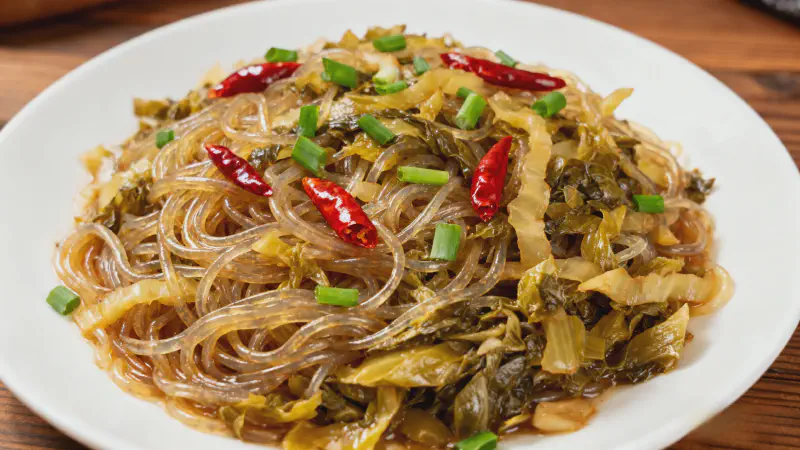
Pickled Cabbage Stir-fry Noodles: The Tangy, Appetizing Summer Savior
Hello everyone! Today, I’m bringing you a quick home-style dish that instantly awakens the taste buds—Pickled Cabbage Stir-fry Noodles. The essence of this dish lies in: the pickled cabbage should be tangy but not astringent, the noodles should be QQ (chewy) and not clumped together, and the two should meld perfectly in the wok, creating a tangy, appetite-stimulating delight. It seems simple, but doing it well requires attention to the pre-treatment of the cabbage and the stir-fry heat control for the noodles. I’ll share two core secrets to help you make perfectly balanced, strand-separated pickled cabbage noodles at home!
First, take a look at this plate of tangy, tempting Pickled Cabbage Stir-fry Noodles!
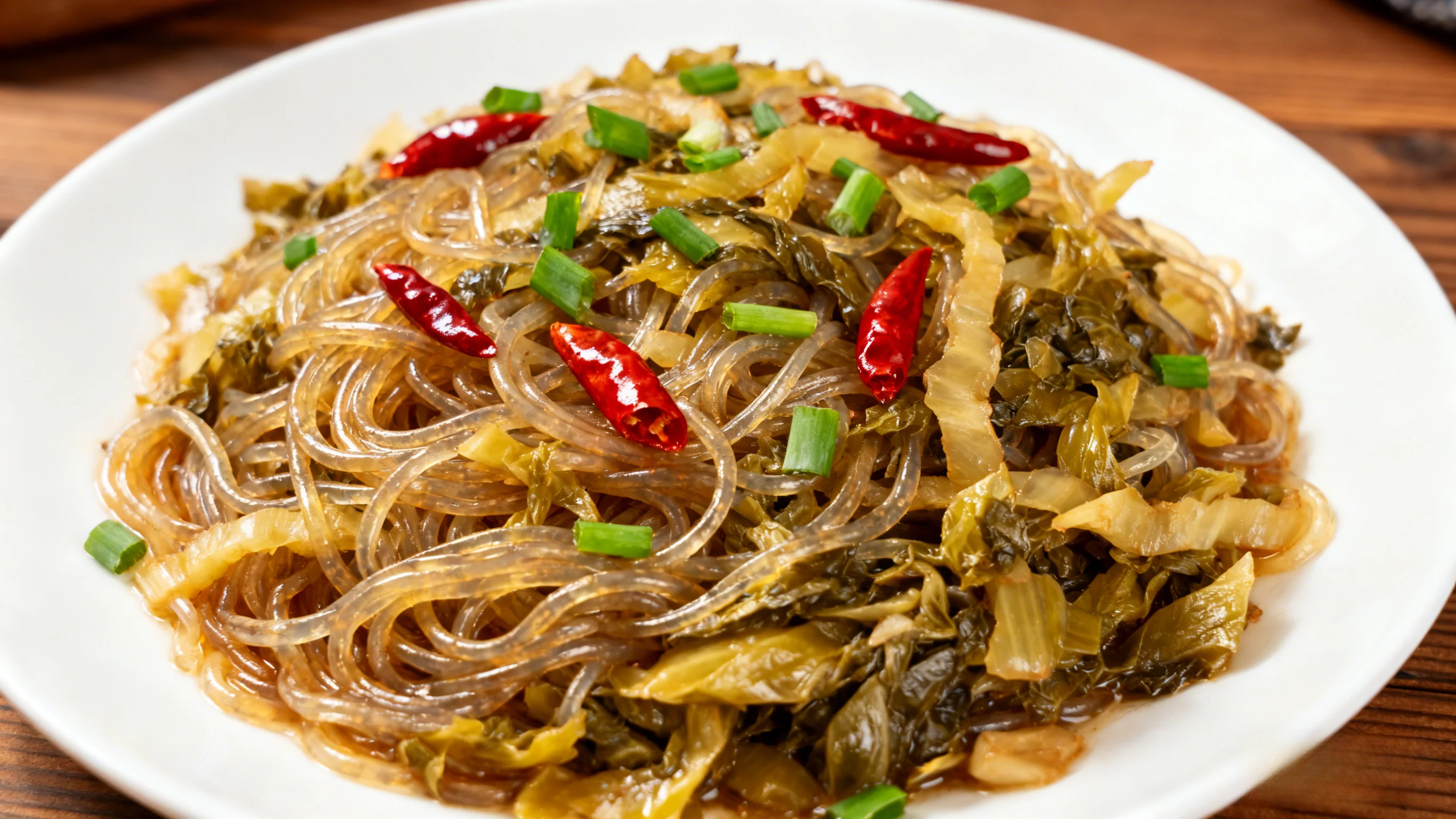 Golden, glossy noodles interwoven with tangy, crisp pickled cabbage strips, accented by bright red chilies and vibrant green onions—a tangy aroma that immediately stimulates the appetite.
Detailed Step-by-Step Instructions
Step 1: Prepare Noodles & Pickled Cabbage (Secret 1: Reduce Astringency, Soften Noodles)
- Noodle Prep: Soak sweet potato glass noodles in warm water until soft yet still springy. Do not soak until fully cooked, or they’ll fall apart during stir-frying. After soaking, cut them shorter for easier stir-frying and eating.
- Pickled Cabbage Prep: Store-bought pickled cabbage is often quite salty and may have an astringent taste. It must be rinsed repeatedly with water and squeezed dry. This step removes excess salt and any fermentation astringency, leaving only the pure tangy aroma.
- Cutting Technique: Julienne the cabbage into uniform thin strips for easier flavor release and absorption.
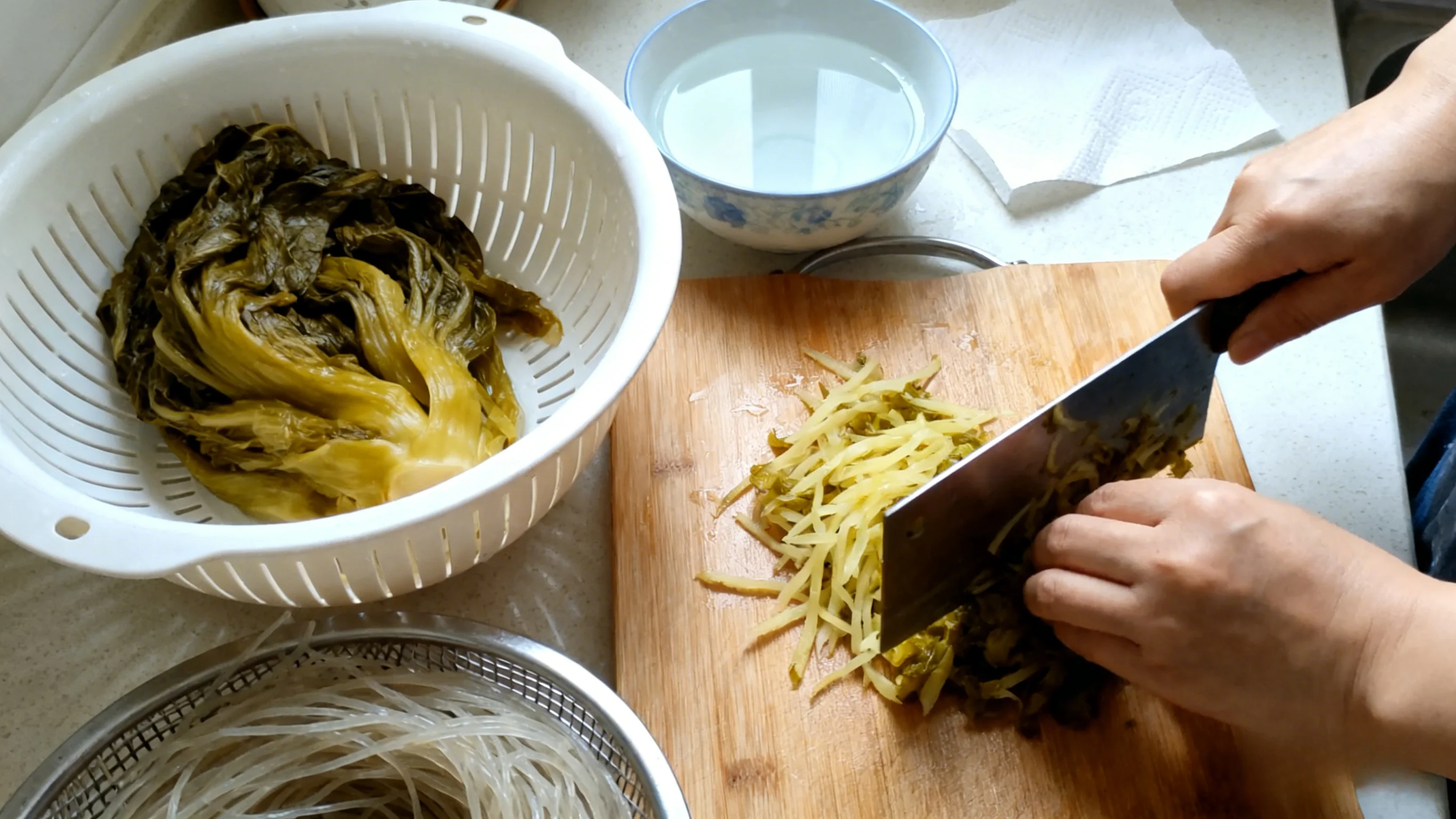 Rinsing off excess salt and astringency from the cabbage, soaking noodles until just soft—the first step to balancing flavor and texture.
Step 2: Prepare Other Ingredients & Sauce
- Julienned pork belly adds meaty aroma and fat, making the noodles more glossy. Vegetarians can omit or substitute with shiitake mushroom strips.
- Dried chilies provide a hint of spiciness, perfectly complementing the sourness.
- Exclusive Tip: Pre-mix the sauce. Sugar here is key—it perfectly balances the sour-salty taste of the cabbage, making the overall flavor more rounded and harmonious.
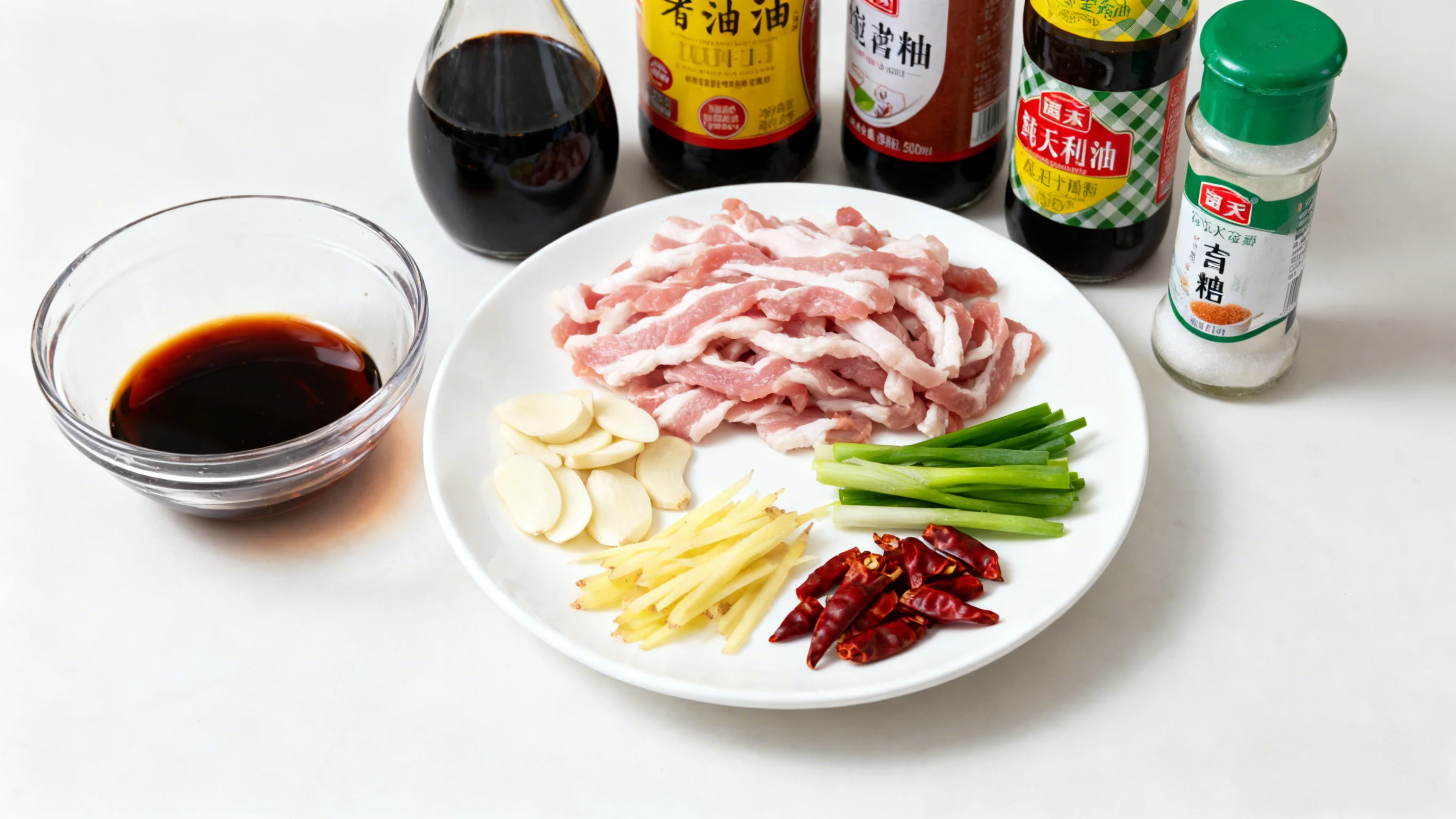 Light soy for umami, dark soy for color, sugar to balance sourness and saltiness—this sauce is the soul of the flavor.
Step 3: Sauté Aromatics
- If using pork, stir-fry the pork strips first until the fat renders and they turn slightly browned. The aroma of lard can inject soul into the whole dish.
- Use the rendered pork fat (or vegetable oil) to sauté ginger, garlic, and dried chilies until fragrant, infusing the oil with complex aromas.
- At this point, the fragrance in the wok is already very layered.
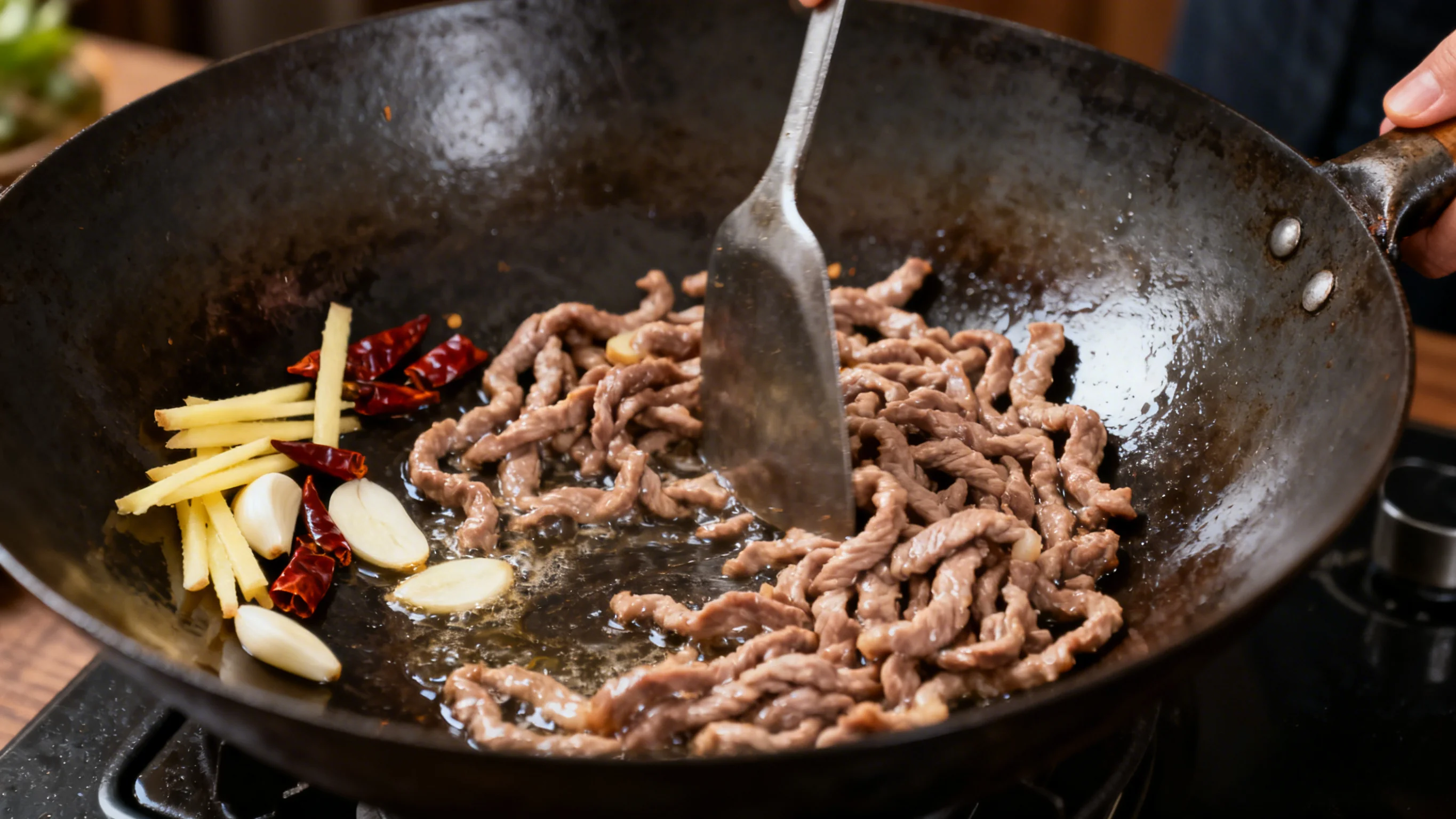 Sautéing aromatics thoroughly in lard or vegetable oil establishes the fragrant foundation for the entire dish.
Step 4: Stir-fry Pickled Cabbage
- Add the squeezed-dry pickled cabbage strips to the wok.
- Maintain medium-high heat and stir-fry patiently for 2-3 minutes.
- You’ll see the cabbage’s color change from dull to glossy, and you’ll smell a rich, appetite-stimulating tangy aroma being released by the heat.
- Stir-fry until the cabbage surface looks slightly dry—this shows it has fully absorbed the wok’s energy and oil.
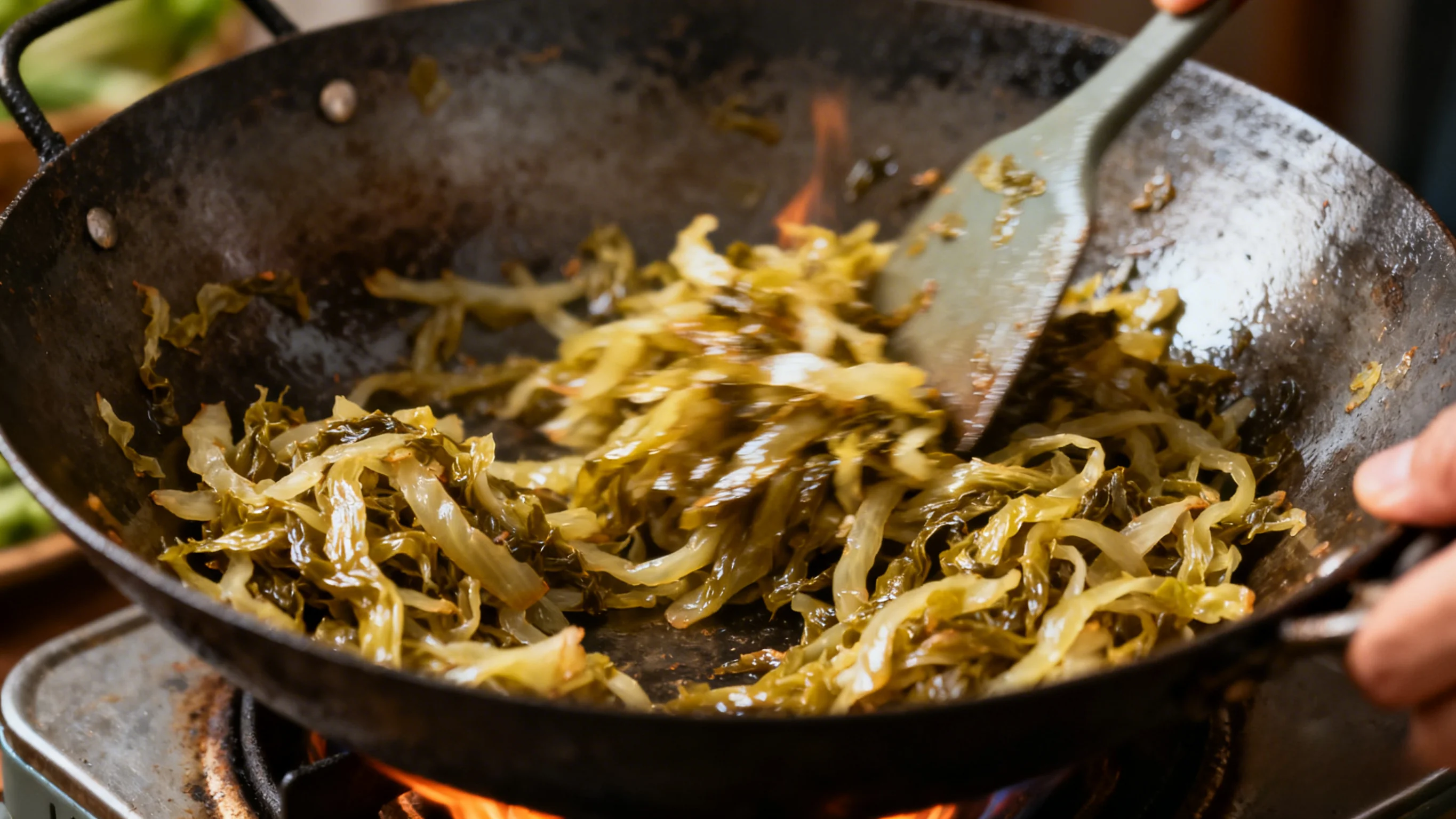 Stir-frying cabbage over medium-high heat releases its deep tangy aroma and evaporates excess moisture, making it crisper.
Step 5: Add Noodles (Secret 2: Quick Separation, Even Coloring)
- Add the drained noodles to the wok.
- Key Action: Use chopsticks in one hand and a spatula in the other to quickly separate, toss, and lift the noodles, ensuring they mix thoroughly with the cabbage and seasonings in the wok.
- Immediately pour in the pre-mixed sauce and continue stir-frying quickly.
- Watch as the noodles gradually turn from white to transparent, evenly coated with the sauce color.
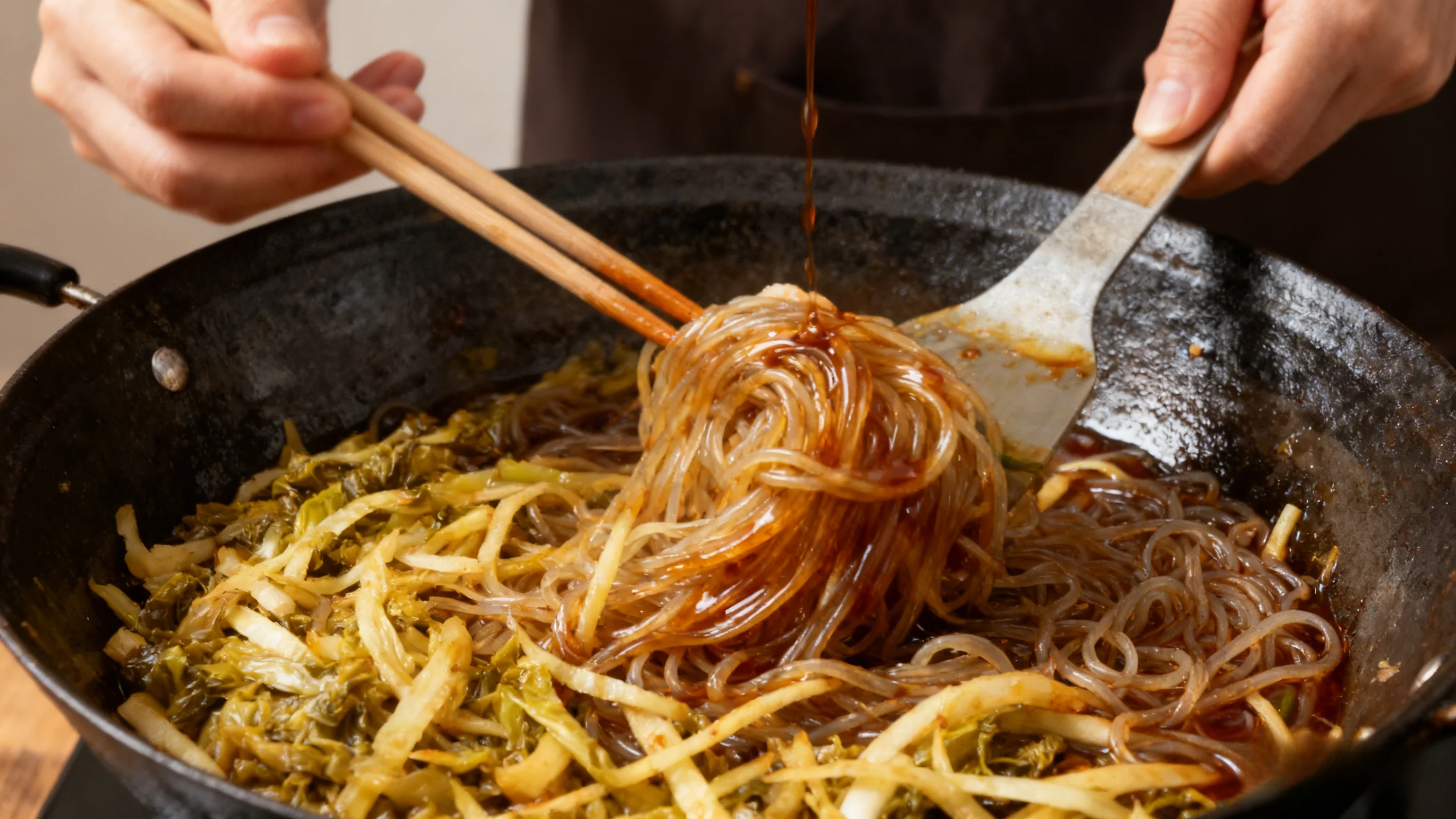 Quickly separating noodles with chopsticks and a spatula is the key technique to prevent sticking and ensure even flavoring.
Step 6: Final Seasoning & Serve
- Pour a little hot water around the edge of the wok—a sizzling sound and steam will rise.
- The hot water helps the noodles quickly absorb the flavors in the wok and distributes any sauce more evenly.
- Increase to high heat and toss quickly to reduce the liquid until the noodles are completely transparent, soft, yet springy.
- Turn off the heat, add the green onion sections, drizzle with a few drops of sesame oil, and toss to combine using the residual heat.
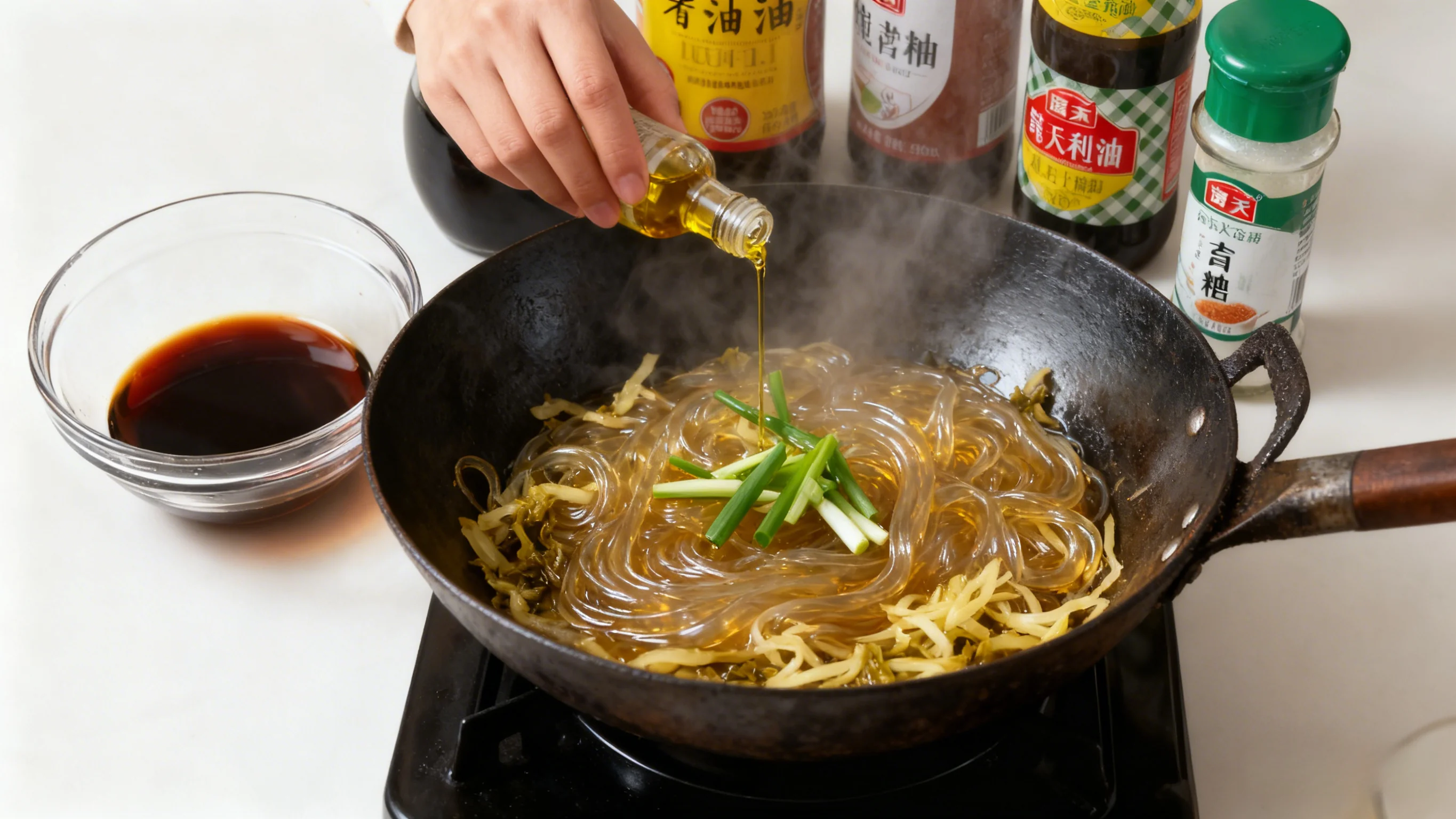 High-heat quick stir-fry to reduce the sauce. The noodles become crystal clear and glossy, bursting with tangy aroma. Best served immediately.
Exclusive Two Core Secrets
🎯 Secret 1: The “Rinse, Squeeze, Stir-fry” Three-Step Pickled Cabbage Treatment
- Rinse Away the ‘Industrial’ Taste: Store-bought pickled cabbage often has heavy salt and possible additive flavors for preservation. Repeated rinsing with water effectively removes these, restoring the true fermented tangy aroma.
- Squeezing Dry is Key: Pickled cabbage has considerable water content. If not squeezed dry before adding to the wok, it will release a lot of water, making the whole dish watery and softening the noodles, causing them to lose their QQ texture. Squeezing firmly ensures the stir-fried cabbage is crisp and better absorbs subsequent oil and flavors.
- Stir-fry for Wok Hei: Pickled cabbage needs sufficient wok hei and time to unlock its deep flavors. Stir-frying over medium-high heat for 2-3 minutes makes the cabbage’s sourness more mellow and rounded, not raw and harsh.
🎯 Secret 2: The “Warm Water Soak, Hot Wok Toss, Liquid Steam” Anti-Stick Trilogy for Noodles
- Soak in Warm Water Until Just Soft: Soaking in boiling water makes noodles mushy outside and hard inside; cold water takes too long. Warm water (about 60°C / 140°F) is optimal for even softening while retaining enough resilience for subsequent stir-frying.
- Hot Wok, Quick Toss to Prevent Sticking: The main component of glass noodles is starch, which sticks easily when heated. In a hot wok already containing oil and cabbage, quickly separating them with chopsticks is the most effective physical method to prevent sticking, far better than using only a spatula.
- Splash Water to Steam & Absorb Flavor: Adding a little hot water during stir-frying creates instant steam that helps further soften the noodles and allows them to quickly absorb all the flavors in the wok (sour, salty, umami, fragrant), ensuring even penetration from outside in.
Advanced Techniques & Variations
🌟 Ingredient Variations:
- Pickled Cabbage Choice: Northeastern-style pickled cabbage (fermented napa cabbage) is classic, with a mellow sourness. Sichuan-style pickled cabbage (fermented mustard greens) is more sharply tangy and offers a different profile.
- Noodle Choice: Sweet potato glass noodles are the most QQ and stir-fry resistant. Potato starch noodles are more transparent and slippery. Mung bean vermicelli is thinner, absorbs flavor quickly but breaks easily, requiring more careful handling.
- Protein Upgrades: Besides pork strips, adding shredded scrambled eggs, diced Spam, or shrimp are all excellent pairings.
🌟 Creative Flavor Extensions:
- Minced Pork Pickled Cabbage Noodles: Use minced pork instead of strips, stir-fried until crispy, then cooked with the cabbage and noodles for a richer texture.
- Spicy & Numbing Version: Add Sichuan peppercorns and more chilies when sautéing aromatics. Drizzle with prickly ash oil before serving for a sour, spicy, numbing, fragrant kick.
- Tomato Pickled Cabbage Noodles: Add one chopped tomato, stir-fry until juicy, then proceed with the steps for a more complex sourness with a hint of sweetness.
- Soup Version: Add more water or stock to make a tangy pickled cabbage noodle soup, warming and appetizing.
🌟 One-Pot Wisdom:
- Add Fresh Vegetables: Add bean sprouts, green pepper strips, or carrot shreds after stir-frying the cabbage for more color, texture, and nutrition.
- Transform into a Main Course: Use more noodles and fewer add-ins—this becomes “Pickled Cabbage Fried Noodles,” a tangy, appetizing, and filling main dish.
- Bento Box Star: The flavor holds up well after cooling, even becoming more flavorful, making it an excellent bento choice.
Frequently Asked Questions (FAQ)
Q: The stir-fried cabbage still tastes very salty. What to do? A: This means insufficient rinsing and soaking during prep. Remedies: 1. Add little or no light soy sauce during stir-frying. 2. Taste before serving. If too salty, add a small spoon of sugar to balance, or quickly blanch some greens and mix in. The best solution is still to rinse more thoroughly and soak in water for 10 minutes during prep.
Q: The noodles always clump together and won’t separate. What to do? A: Three possible issues: 1. Over-soaked—noodles have softened completely and lost their structure. Soak only until just soft. 2. The wok wasn’t hot enough or there wasn’t enough oil when adding noodles, causing instant starch gelatinization and sticking. Ensure a hot wok with enough oil. 3. Didn’t separate immediately. Upon adding noodles, immediately, quickly, and continuously separate them with chopsticks—this is the most crucial action.
Q: Can I make it without meat? A: Absolutely, and it’s very delicious! The vegetarian version is equally tangy and appetizing. To enhance flavor and glossiness, use a bit more oil, or add a small spoon of mushroom sauce or fermented bean paste when sautéing aromatics. You can still make a richly flavored vegetarian stir-fry.
Appetite Philosophy & Summer Redemption
On hot, humid, appetite-suppressing summer days, a plate of Pickled Cabbage Stir-fry Noodles is the best “gut wake-up call.” The恰到好处 (just right) sourness stimulates saliva production and opens up taste buds; the carbohydrates from the noodles provide solid satisfaction. It’s not华丽 (lavish), but it’s direct, effective, and comforting enough.
Perfect Occasions to Enjoy
- 🌞 Summer Lunch: The ultimate appetite stimulator when you have no appetite—tangy and refreshing, instantly awakening.
- 🍚 Rice’s Best Friend: The tangy aroma is a perfect match for rice, making you want an extra half bowl.
- 🍻 Late-night Snack Partner: Quick and simple, tangy and hangover-easing—perfect late-night comfort.
- 🏠 Lazy One-Meal Solution: Has vegetables and a starch (noodles can partly substitute for carbs)—one plate solves a meal.
Pickled Cabbage Stir-fry Noodles uses the humblest fermentation wisdom to brighten the most ordinary days. It teaches us: When the沉淀 of time (pickled cabbage) meets patient处理 (noodles), catalyzed by heat, magic that大开胃口 (greatly stimulates the appetite) can happen.
The Home Flavor Explorer January 19, 2025