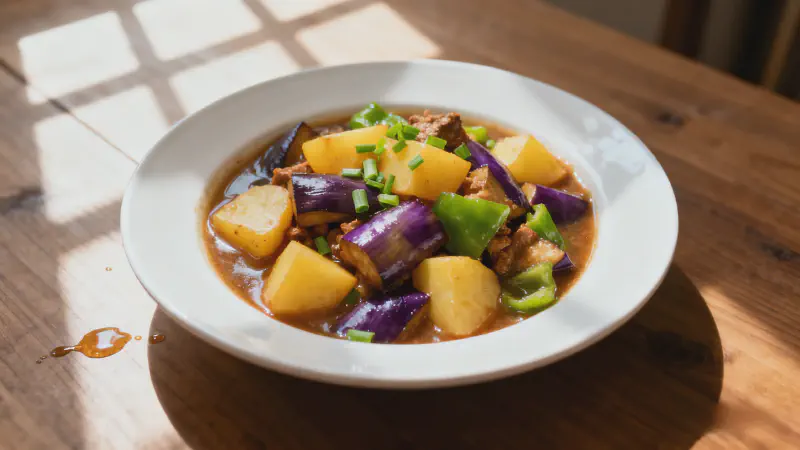
Potato and Eggplant Stew: The “Vegetarian Duo” on Northeast Tables
Hello everyone! Today I bring you a classic Northeast Chinese home-style dish—Potato and Eggplant Stew. Although this dish uses only vegetables, after stewing, the potatoes become soft and flavorful, while the eggplant absorbs the savory broth. But to achieve authentic Northeast flavor with both vegetables reaching optimal texture requires mastering several key techniques. Learn these 3 secrets, and your potato and eggplant stew will definitely become a rice companion superstar!
First, admire this aromatic pot of potato and eggplant stew!
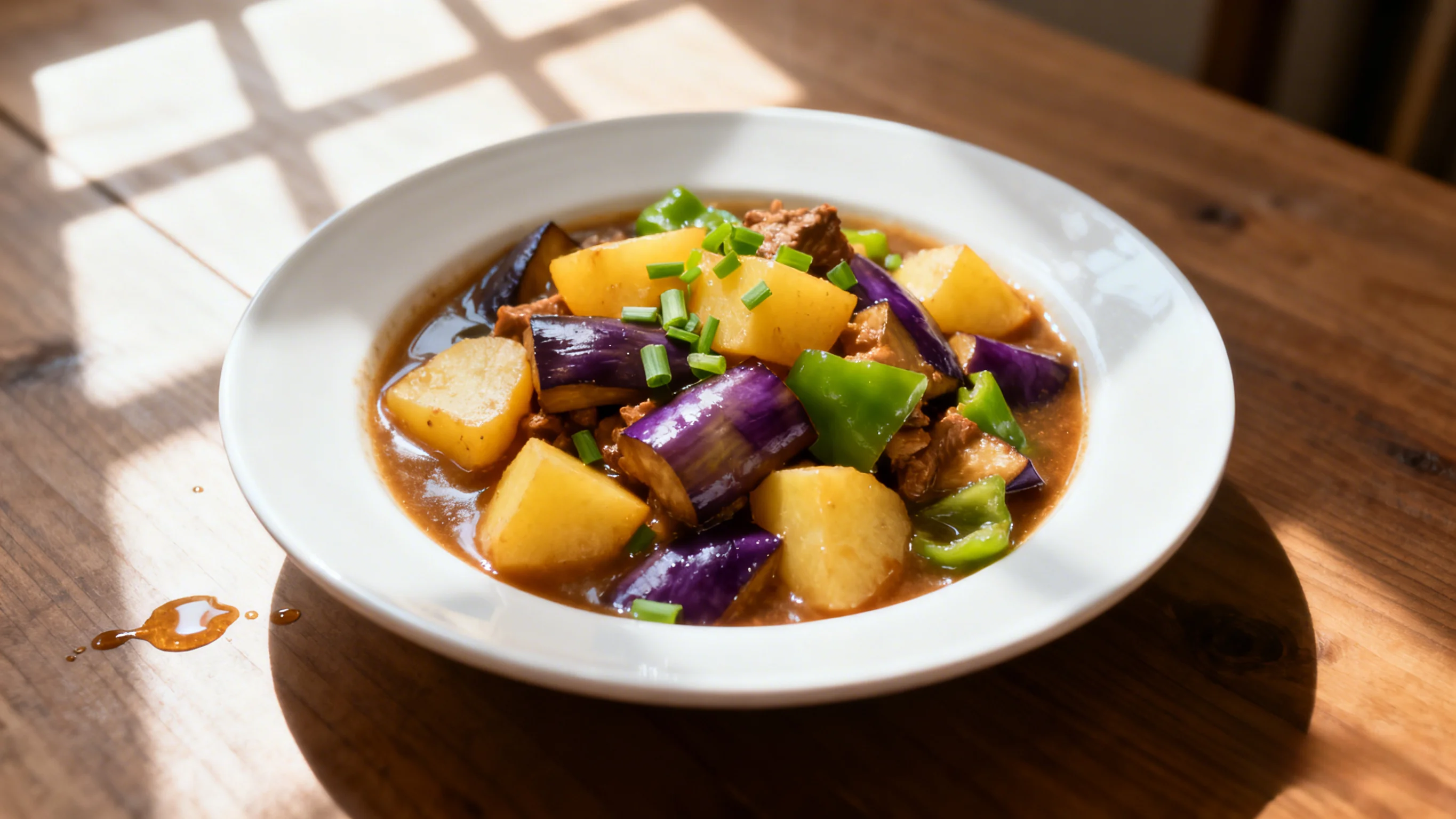 Golden potatoes, deep purple eggplant, emerald green pepper—rich broth, stimulates appetite!
Detailed Step-by-Step Guide
Step 1: Ingredient Preparation (Secret #1)
- Potato choice: Yellow-fleshed potatoes softest, best for stewing
- Cutting technique: Chunks, uniform size
- Eggplant prep: Keep skin on, retains nutrition and color
- Pro tip: Soak cut potatoes in water to prevent oxidation
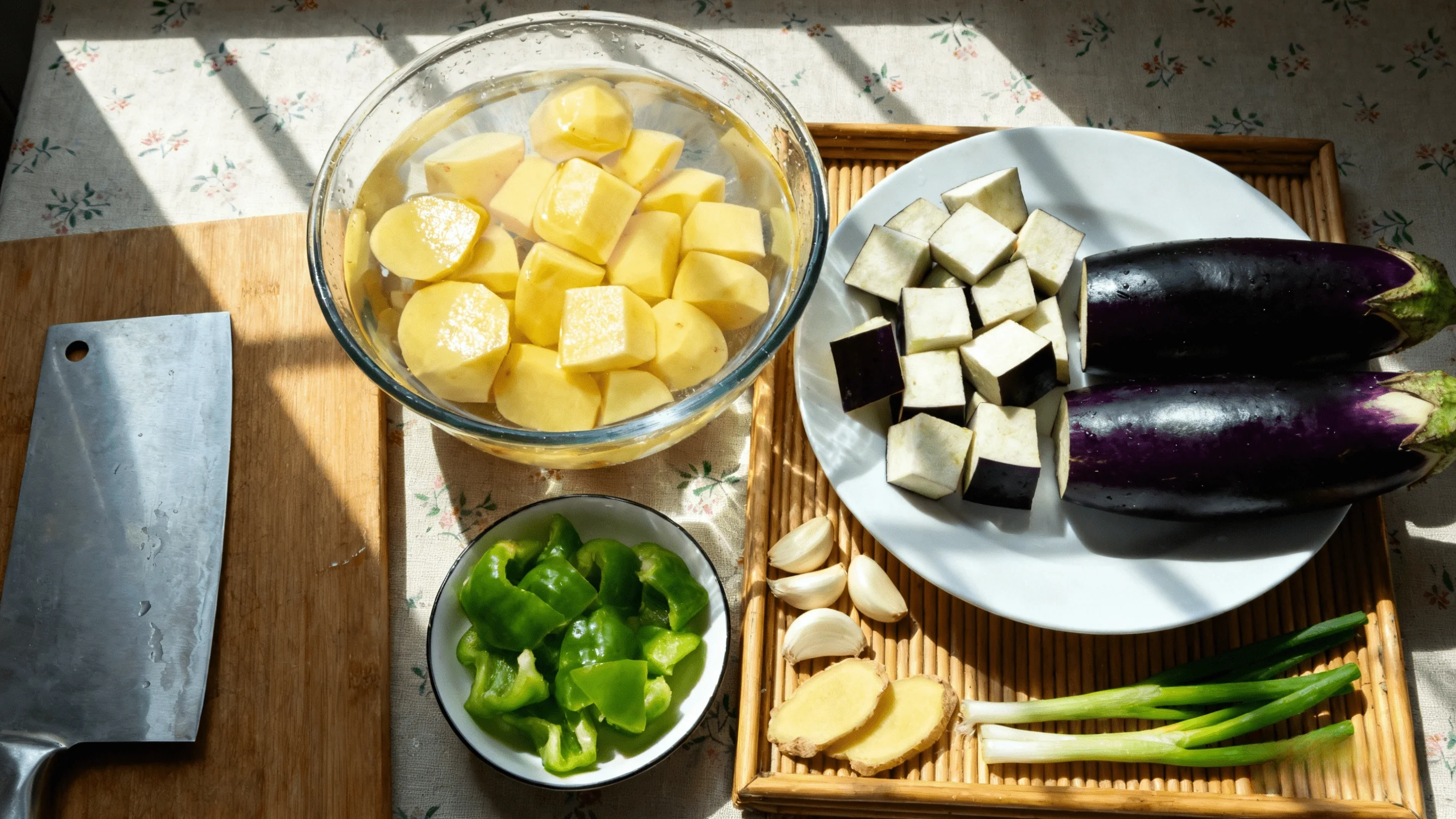 Chunks increase surface area for better flavor absorption; soaking prevents potato discoloration
Step 2: Eggplant Marination Treatment (Secret #2)
- Add 1 tsp salt to eggplant chunks
- Mix well, marinate 10 minutes
- Gently squeeze out water by hand
- Key step: Don’t squeeze completely dry
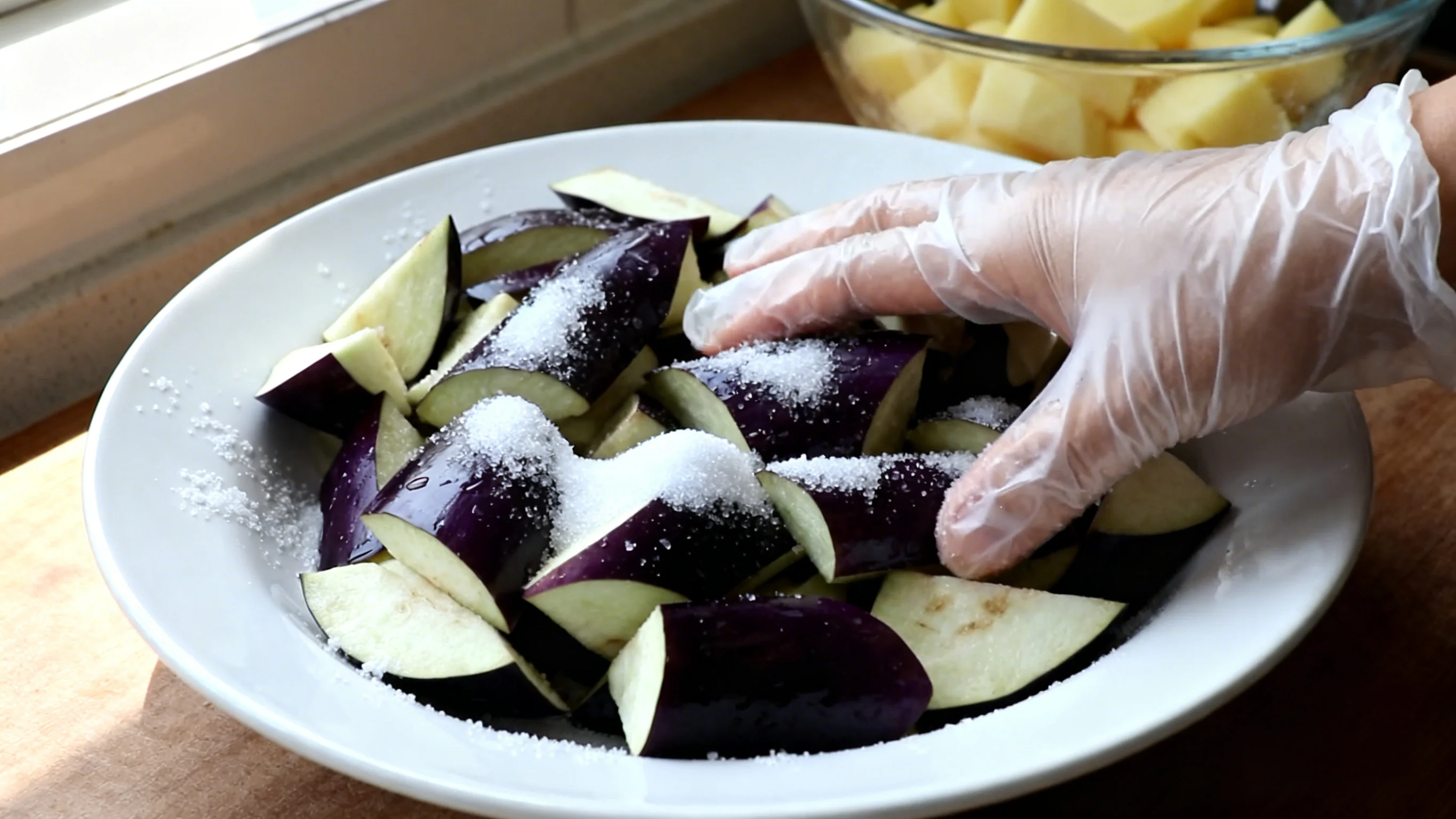 Salt draws out water reducing oil absorption; maintains shape during cooking
Step 3: Pan-frying Eggplant
- Heat appropriate amount oil in pan
- Spread eggplant evenly in pan
- Pan-fry over medium heat until all sides slightly golden
- Pro technique: Minimize flipping, wait until set before turning
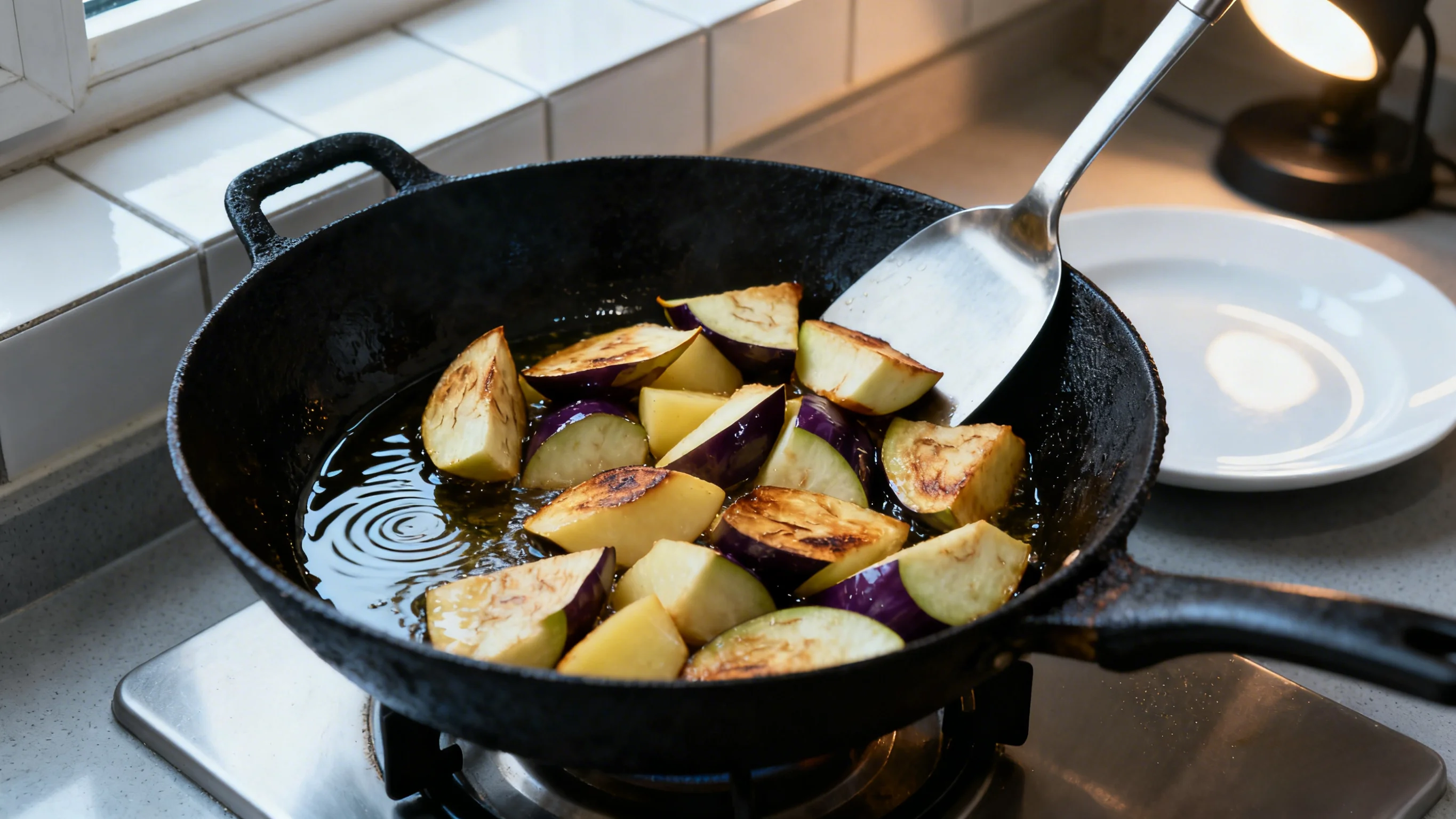 Pan-frying creates aromatic crust, locks in moisture and nutrients
Step 4: Frying Aromatics
- Use remaining oil in pan
- Slowly sauté scallion, ginger, garlic, star anise over low heat
- Cook until fragrant but not burnt
- Pro tip: Break star anise for better flavor release
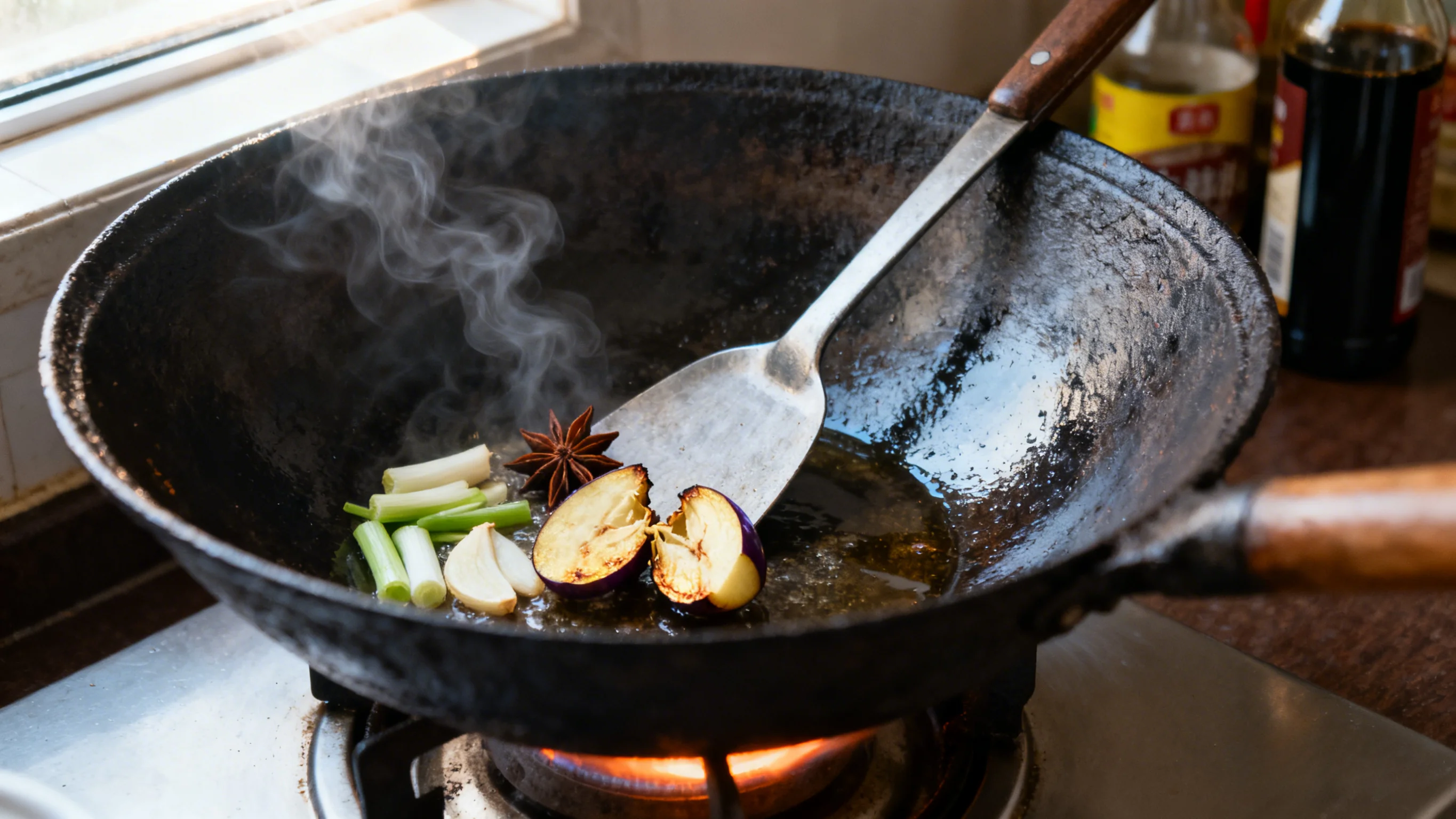 Low heat releases aromatic flavors, establishes flavor foundation
Step 5: Stewing Potatoes
- Add potato chunks, stir-fry
- Let potatoes absorb aromatic flavors
- Add all seasonings
- Important step: Stir-fry before adding water
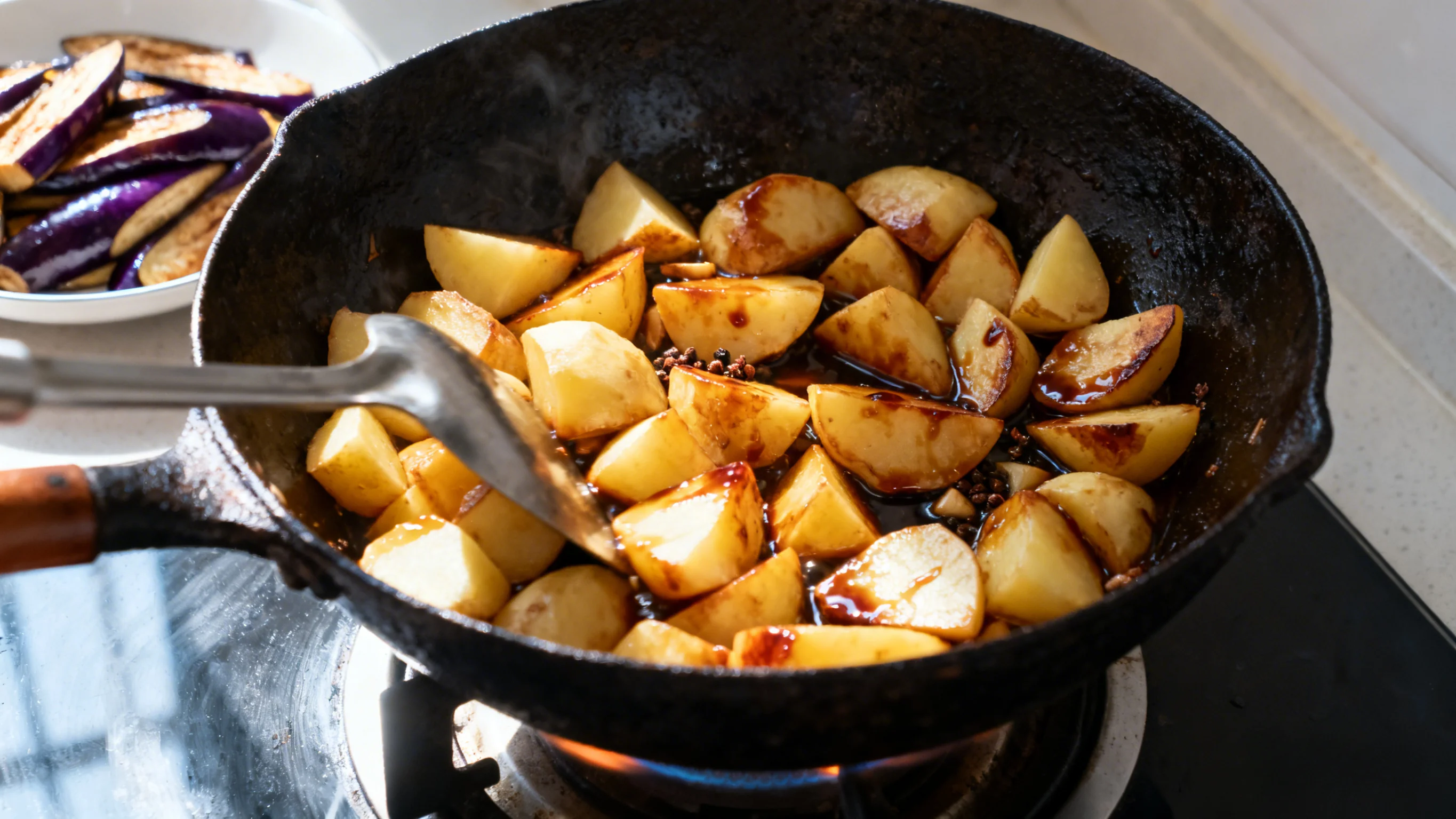 Stir-frying first lets potatoes absorb sauce flavor; stewing enhances flavor
Step 6: First Stewing Phase
- Add sufficient boiling water
- Bring to boil then reduce to medium-low heat
- Cover and stew 15 minutes
- Water control: Just enough to cover potatoes
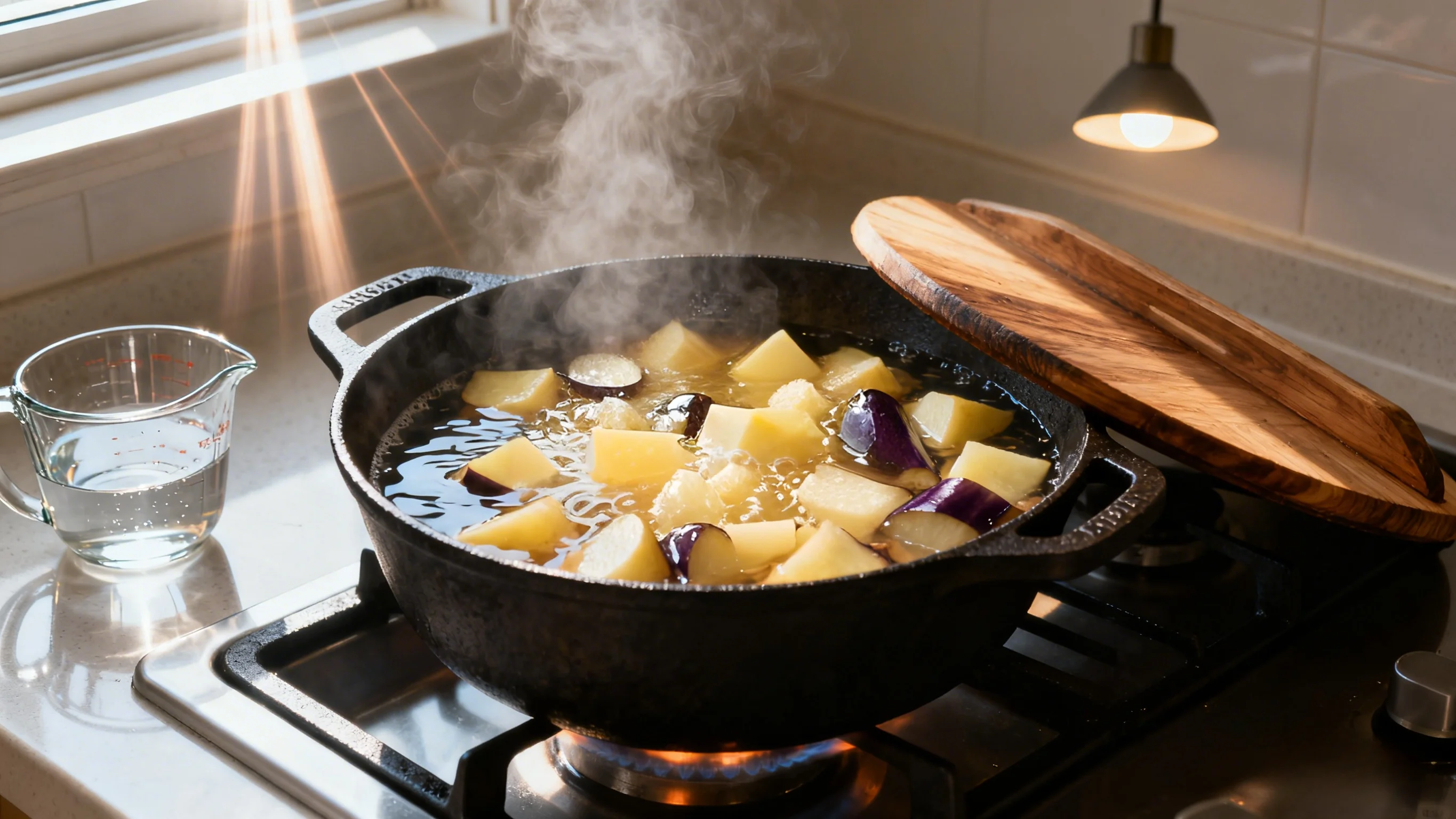 Boiling water cooks potatoes evenly; medium-low heat slowly softens
Step 7: Adding Eggplant
- Add pan-fried eggplant chunks
- Mix gently
- Pro technique: Place eggplant on top
- Prevents eggplant from overcooking
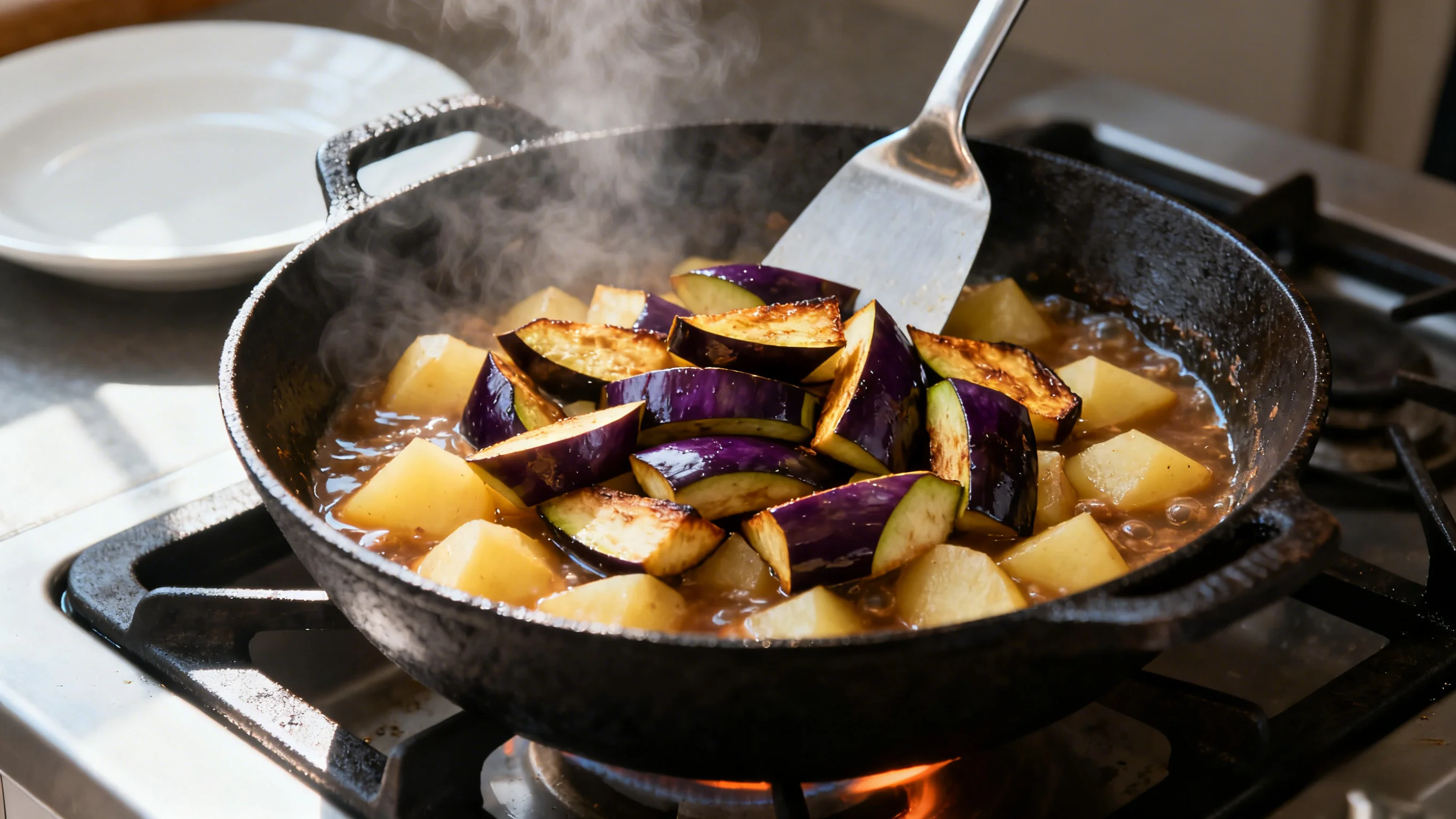 Eggplant on top steams gently, maintains shape integrity
Step 8: Second Stewing Phase
- Continue stewing 10 minutes
- Gently stir once during cooking
- Timing control: Potatoes pierce easily with chopsticks
- Eggplant tender and flavorful
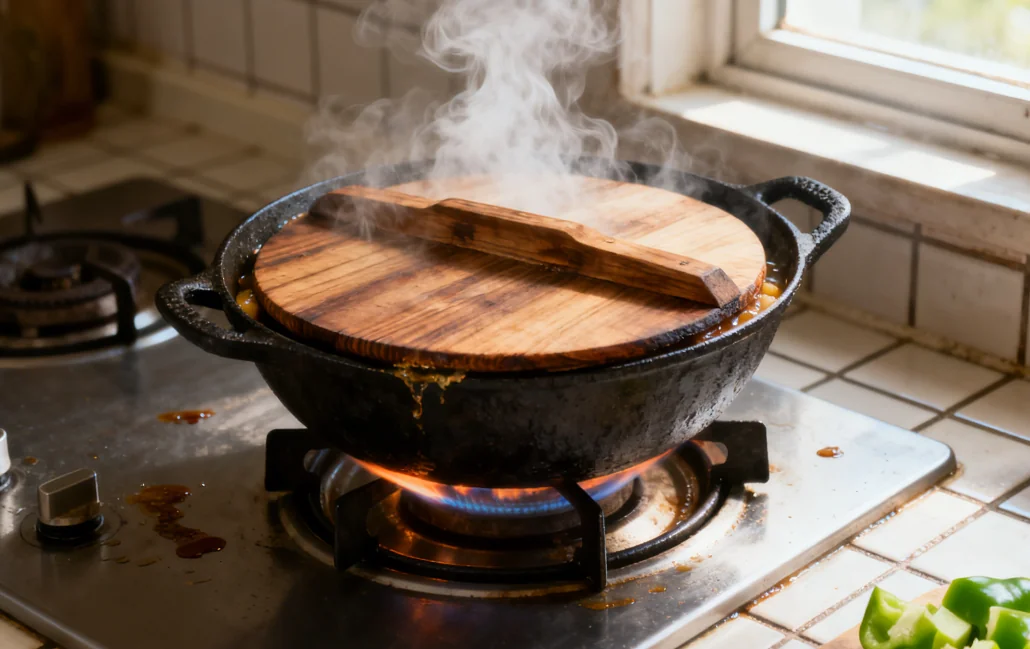 Different vegetables require different stewing times; ensures each reaches optimal texture
Step 9: Adding Bell Pepper
- Add bell pepper pieces during last 5 minutes
- Quick stewing: Maintains pepper crispness
- Cook until color brightens
- Adds color and fresh aroma
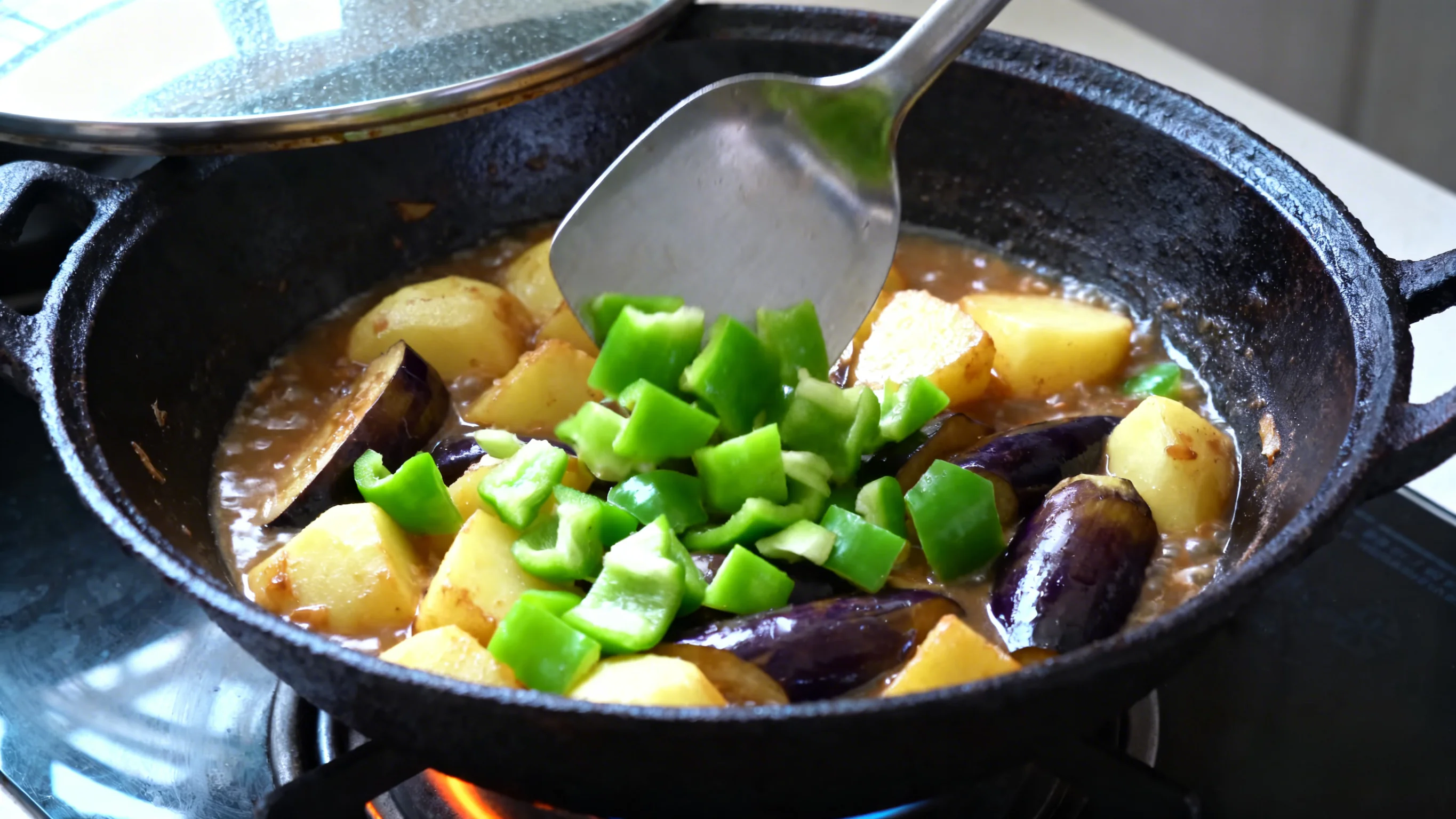 Bell pepper added last stays crisp, enhances dish color layers
Step 10: Reducing Sauce and Serving
- Remove lid, increase to high heat
- Reduce until sauce thickens and coats spoon
- Garnish with chopped scallions
- Key timing: Sauce coats ingredients
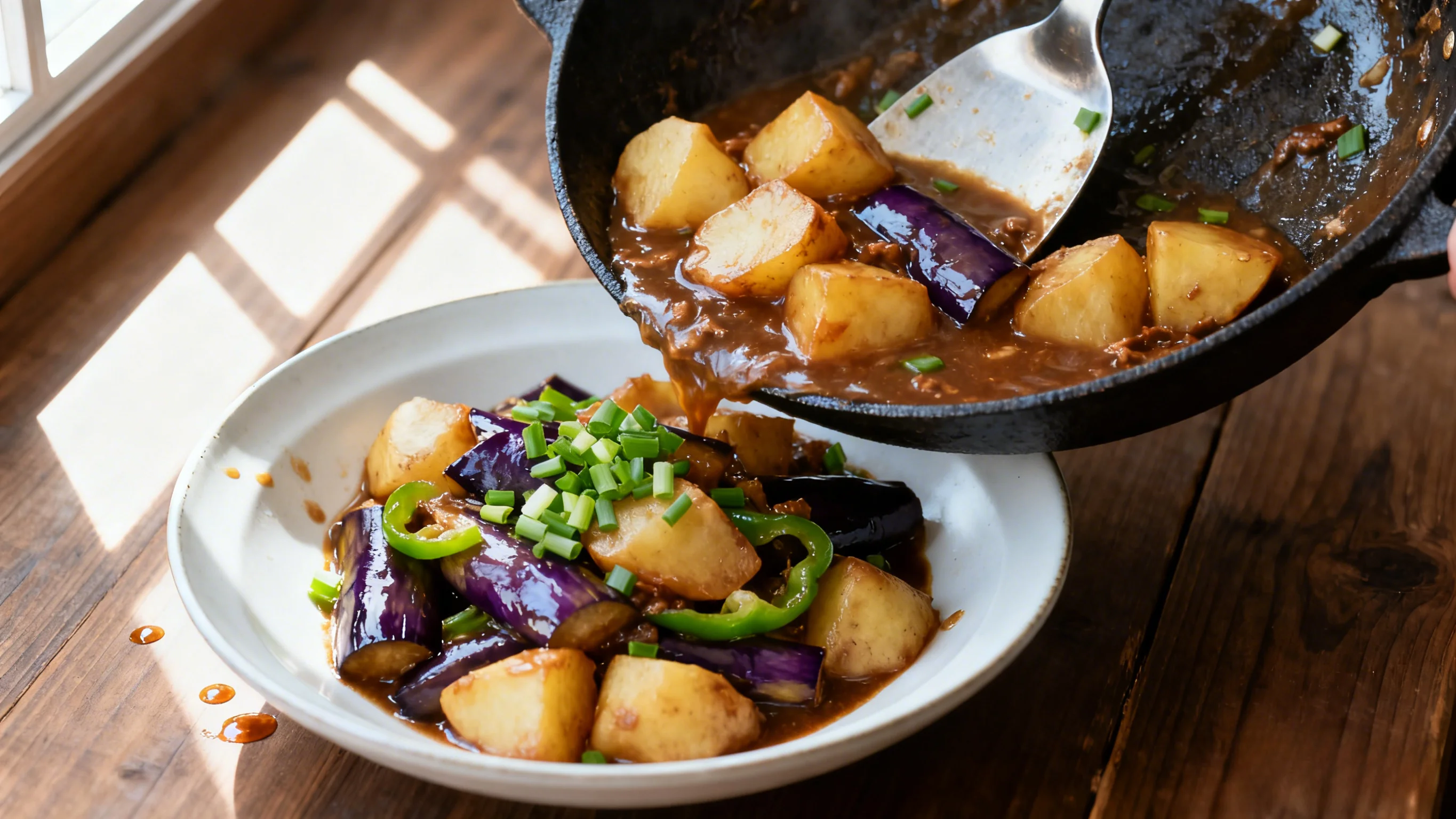 High heat reduction thickens sauce for glossy coating
Exclusive Three Secrets
🎯 Secret #1: Eggplant “Salt-Draw Squeeze Pan-fry”
- Salt draws water: 10 minutes sufficient, reduces eggplant moisture
- Gentle squeezing: Retain 30% moisture, not completely dry
- Reduces oil absorption: Treated eggplant absorbs 60% less oil
- Pan-fry sets shape: Creates crispy crust, less likely to disintegrate when stewed
🎯 Secret #2: Potato “Stir-fry First Then Stew”
- Stir-fry absorbs: Lets potatoes absorb seasoning aromas
- Boiling water stewing: Ensures even cooking inside and out
- Medium-low slow stew: 15 minutes completely softens potatoes
- Staged water addition: Water just covering ingredients
🎯 Secret #3: Cooking “Staggered Addition”
- Potatoes first: Hardest to cook, goes in first
- Eggplant second: Cooks quickly, prone to disintegration
- Bell pepper last: Maintains crispness and color
- Timing control: Each vegetable reaches optimal doneness
Advanced Techniques
🌟 Vegetable Selection:
- Potato variety: Yellow-fleshed potatoes softer, better for stewing
- Eggplant type: Long eggplants fewer seeds, thicker flesh; round eggplants denser
- Bell pepper choice: Sweet peppers non-spicy, chili peppers add mild heat
- Ratio adjustment: Potato:Eggplant = 1:1
🌟 Flavor Variations:
- Minced meat version: Add minced pork for protein
- Spicy version: Add dried chilies or Sichuan broad bean paste
- Sauce version: Add fermented soybean paste or sweet flour paste
- Garlic version: Double garlic amount, stronger aroma
🌟 Cooking Tools:
- Cast iron pot: Better heat retention, more flavorful stew
- Clay pot: Traditional tool, better preserves original flavors
- Non-stick pan: Beginner-friendly, less sticking
- Electric pressure cooker: Saves time, ready in 10 minutes
FAQ
Q: Why is my eggplant greasy after stewing? A: Possible reasons: ① Eggplant not pre-marinated and squeezed ② Too much oil ③ Oil temperature too low when pan-frying eggplant
Q: Do potatoes need blanching first? A: No. Raw stir-frying and stewing better preserves potato aroma and nutrition
Q: Can I omit star anise? A: Yes, but flavor diminished. Can use five-spice powder or thirteen-spice powder for partial flavor replacement
Q: What if sauce reduced too much? A: Add small amount hot water to dilute, or next time turn off heat earlier, leave some broth for rice accompaniment
Nutritional Value
- ✅ Complex carbs: Potatoes provide quality carbohydrates
- ✅ Dietary fiber: Eggplant rich in fiber, aids digestion
- ✅ Vitamins: Both vegetables provide various vitamins
- ✅ Low fat: Pure vegetarian, low fat content
- ✅ Easy digestion: Stewing makes vegetables easier to digest
Serving Suggestions
- 🍚 With rice: Classic rice companion, broth perfect with rice
- 🍜 With noodles: As topping for noodle soup
- 🫓 With steamed buns: Classic Northern pairing, dip in broth
- 🥣 With porridge: Light dinner option
- 🥗 With cold dish: Like smashed cucumber, refreshing balance
- 🍵 With barley tea: Cuts richness, aids digestion
Potato and eggplant stew isn’t just a dish—it’s home flavor: simple, substantial, warm. Remember: Good potatoes + good eggplant + patience = Perfect potato and eggplant stew!
Total Cooking Time: 40 minutes
Difficulty Level: ★☆☆☆☆ (Beginner friendly)
Success Rate: 90% following tips
Best Served: Hot immediately after cooking, reheated for enhanced flavor
Pro Tip: While stewing, place small steamed buns or flatbreads around pot edge—steam cooks them, creating one-pot meal with starch and vegetables!