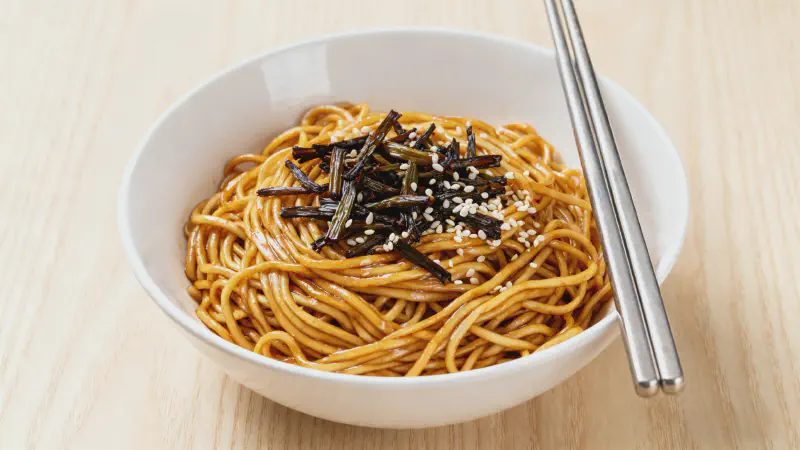
Scallion Oil Noodles: The Soulful “King of Plain Noodles”
Hello everyone! Today I present a Shanghainese classic—Scallion Oil Noodles. This seemingly humble dish is actually a “litmus test” for cooking skills: well-made scallion oil should perfume the entire kitchen, the sauce ratio must be perfect, and each noodle should be glossy but not greasy. Master a few key points, and you can recreate restaurant-quality scallion oil noodles at home!
First, admire this “golden gleaming” bowl of scallion oil noodles!
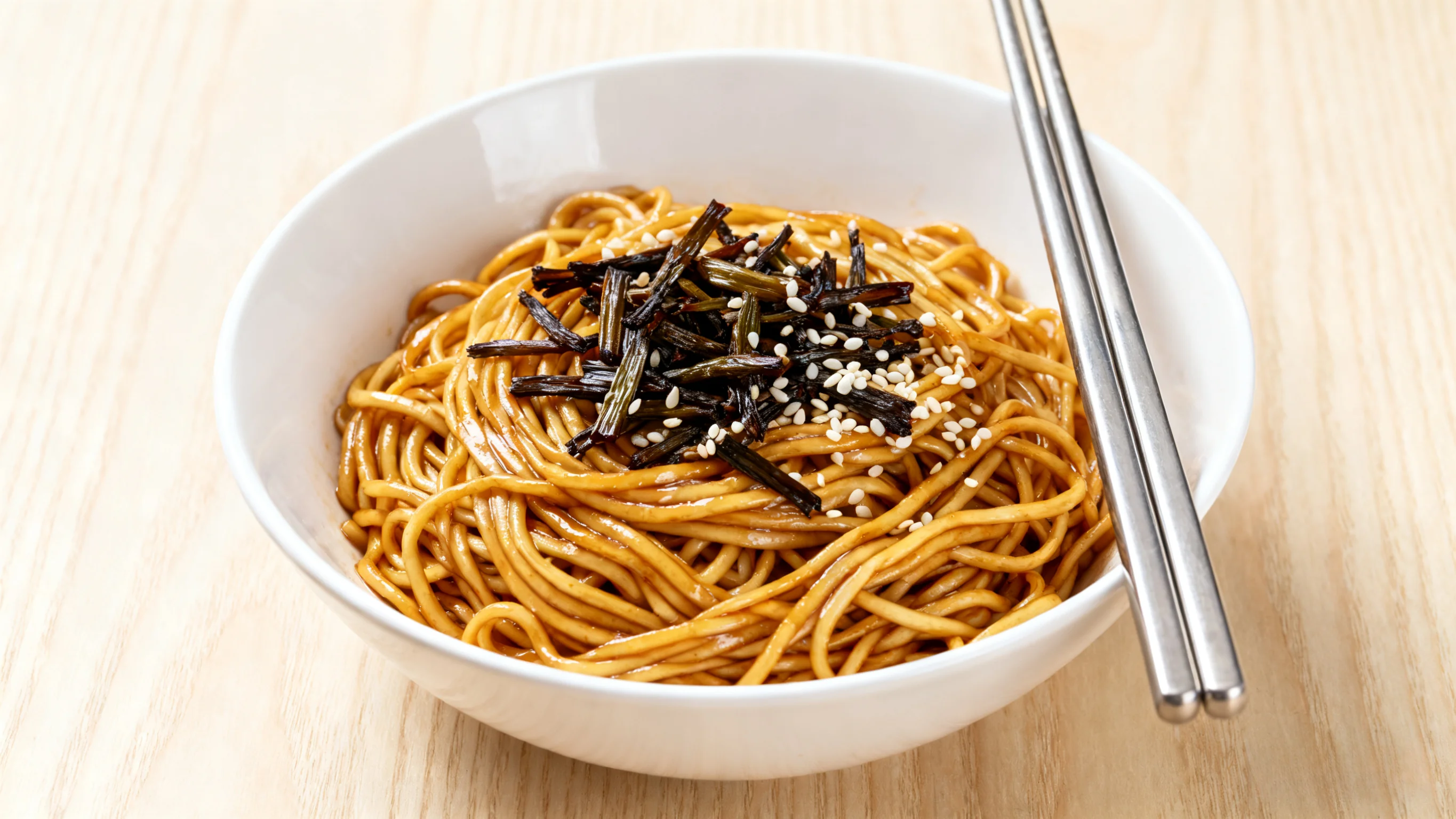 Glossy noodles, aromatic crispy scallions, enticing sauce color—the aroma fills the air when mixed!
Detailed Step-by-Step Guide
Step 1: Preparing Scallions (Secret #1)
- Choose thin spring onions, not large leeks
- Key technique: Scallions must be completely dry! Crucial for safety
- Handle white and green parts separately
- Pro tip: Cut greens into sections, lightly smash whites to release flavor
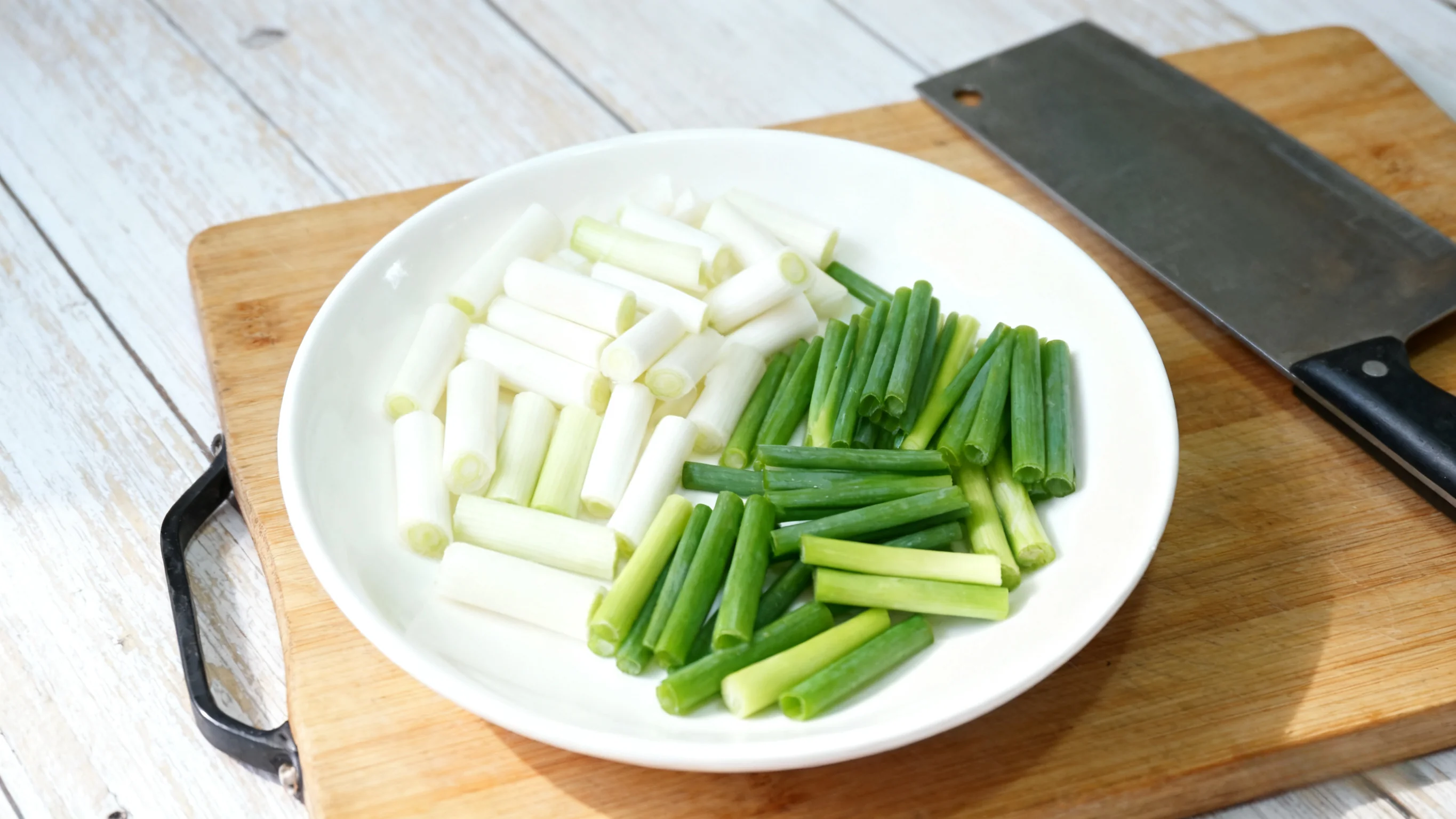 Dry scallions are safer for frying, separate handling creates layered aroma
Step 2: Low Heat Simmering (Secret #2)
- Start with cold oil, maintain low heat throughout
- Key technique: Add white parts first, then greens when whites turn golden
- Be patient, never increase to high heat
- Watch closely when scallions curl and darken
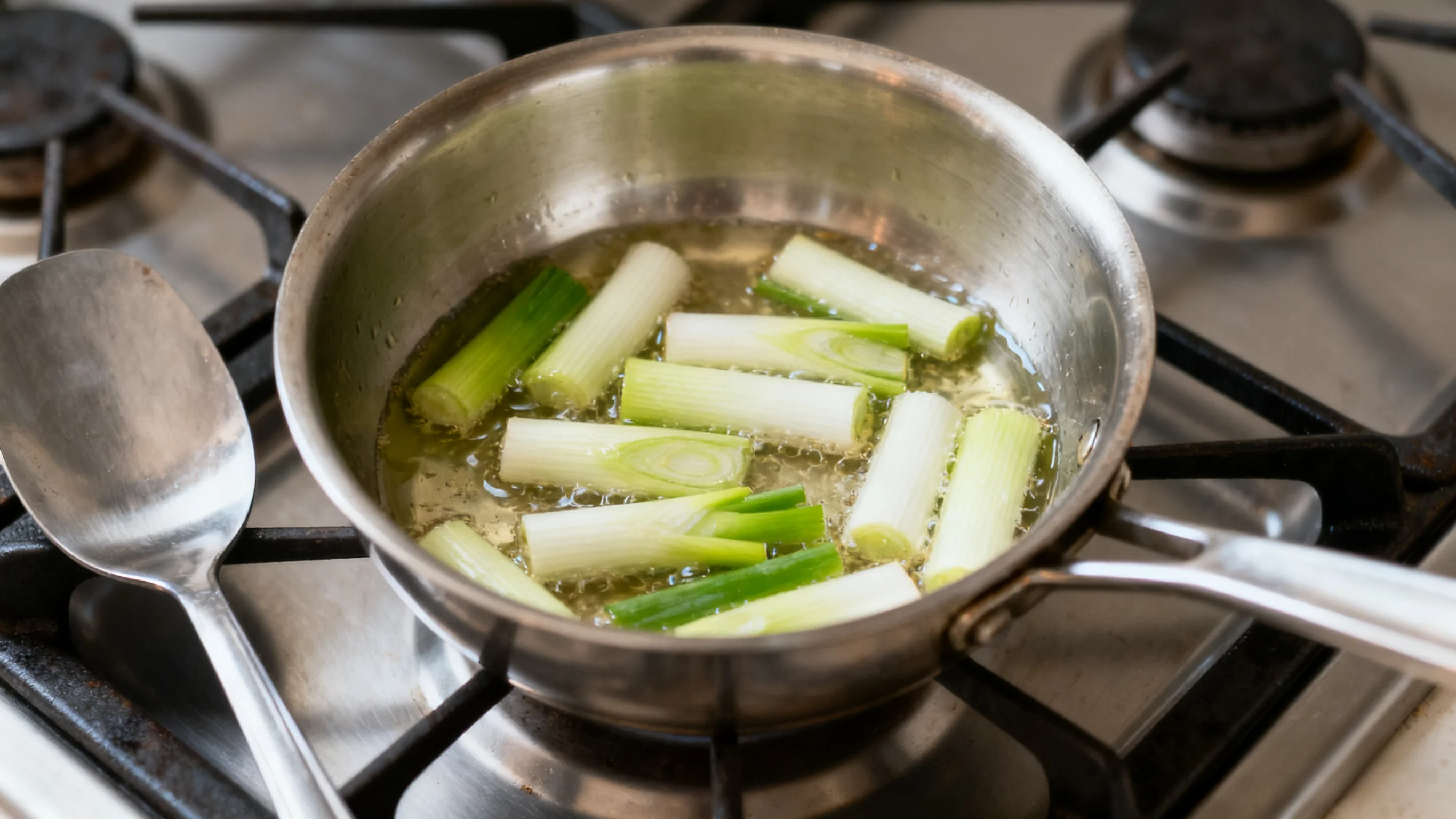 Low heat extracts scallion sweetness and aroma, high heat causes bitterness
Step 3: Golden Ratio Sauce
- Light soy:Dark soy:Sugar = 3:1:1 (by volume)
- Key technique: Ensure sugar fully dissolves
- Add oyster sauce for complex umami (optional)
- Mix sauce in advance for convenience
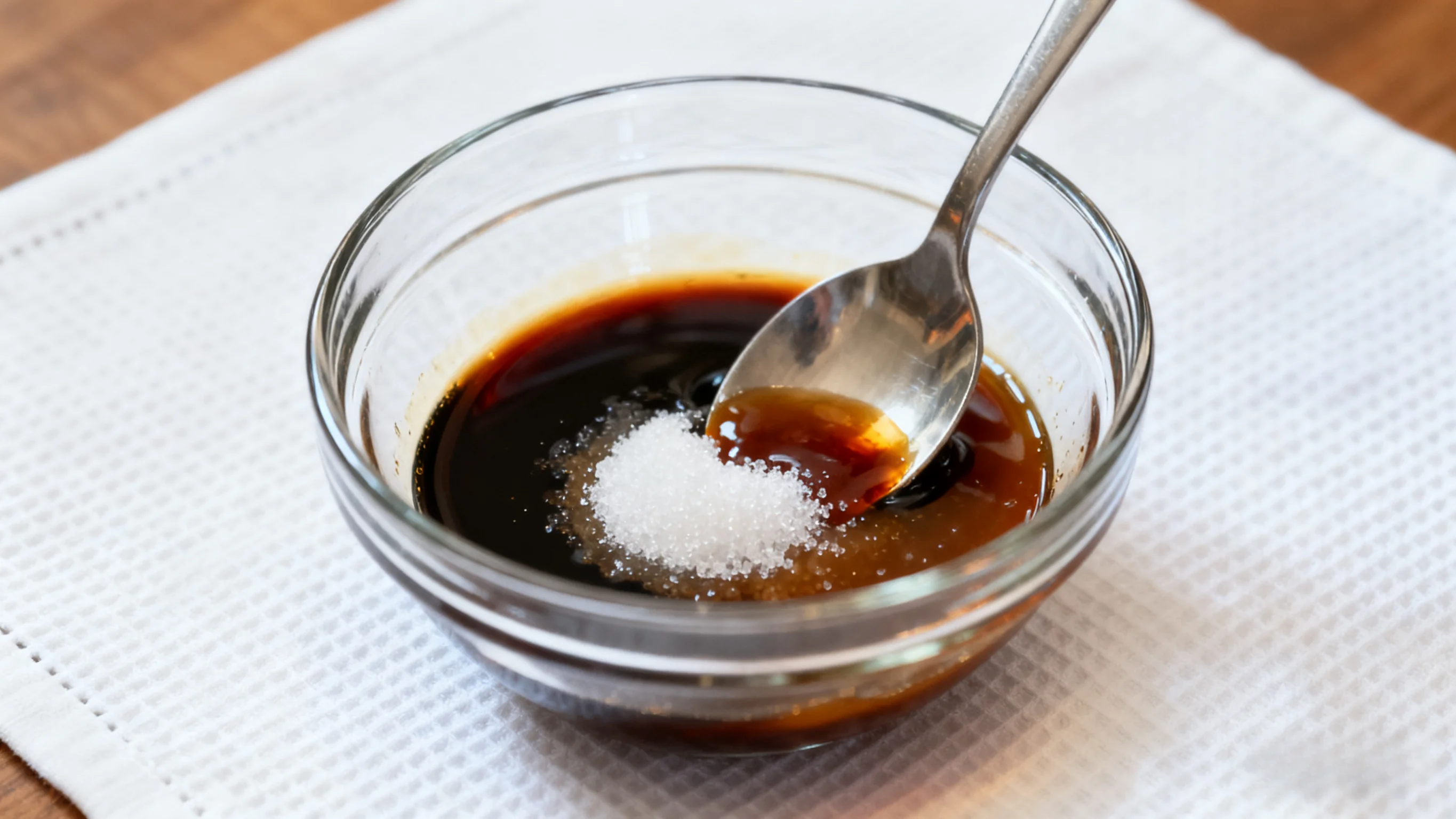 Precise ratios ensure balanced flavor, pre-mixing prevents rush
Step 4: Perfect Crispy Scallions
- Remove scallions when uniformly deep brown
- Critical timing: Remove when darkened but not blackened
- Drain on paper towels immediately
- Residual heat will further crisp them
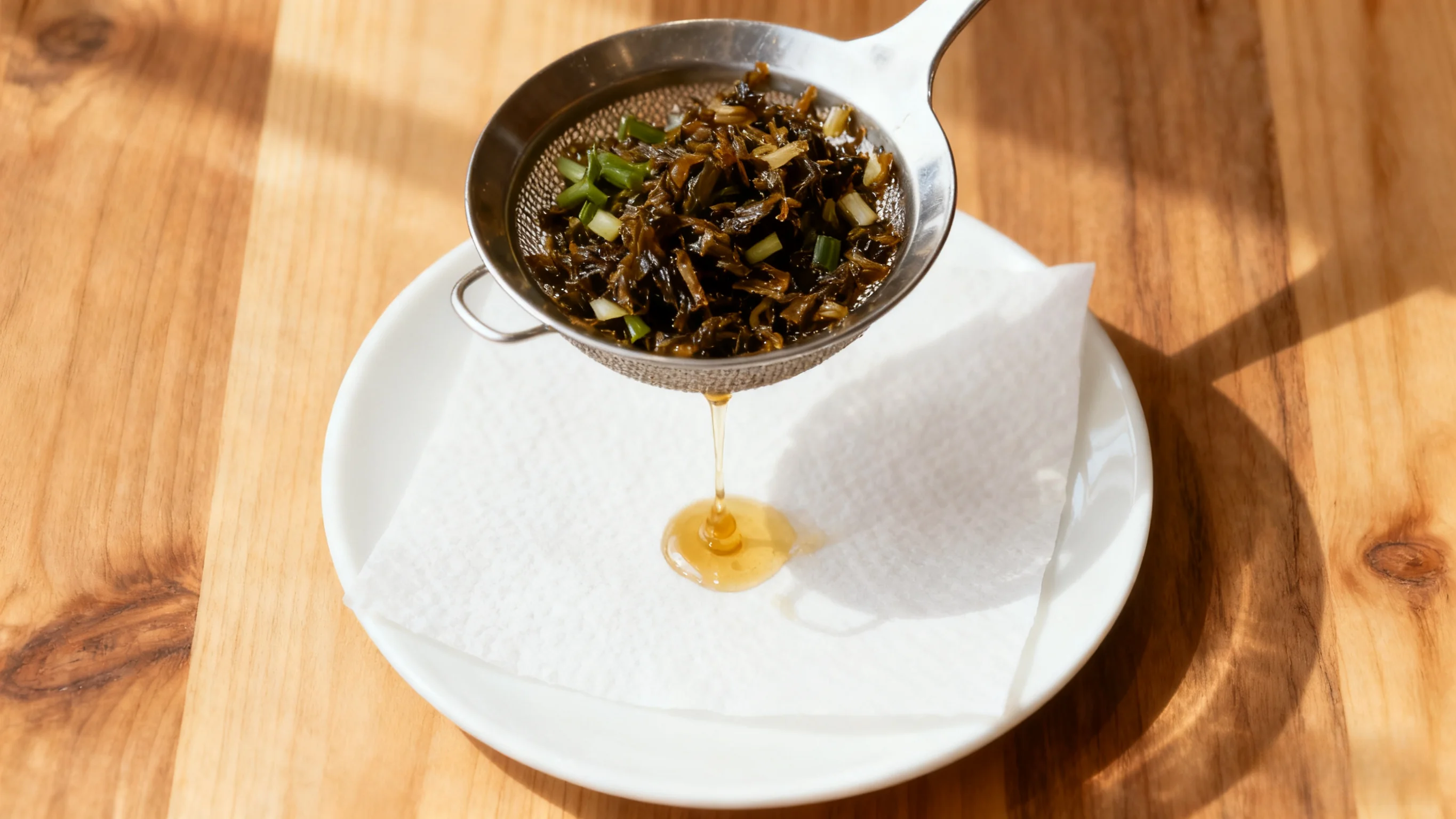 Perfect caramelization creates aroma, blackened pieces turn bitter
Step 5: Sauce and Oil Fusion
- Keep scallion oil warm
- Key technique: Slowly pour sauce along pan edge
- Heat over low until slight bubbling
- Turn off heat immediately to prevent over-concentration
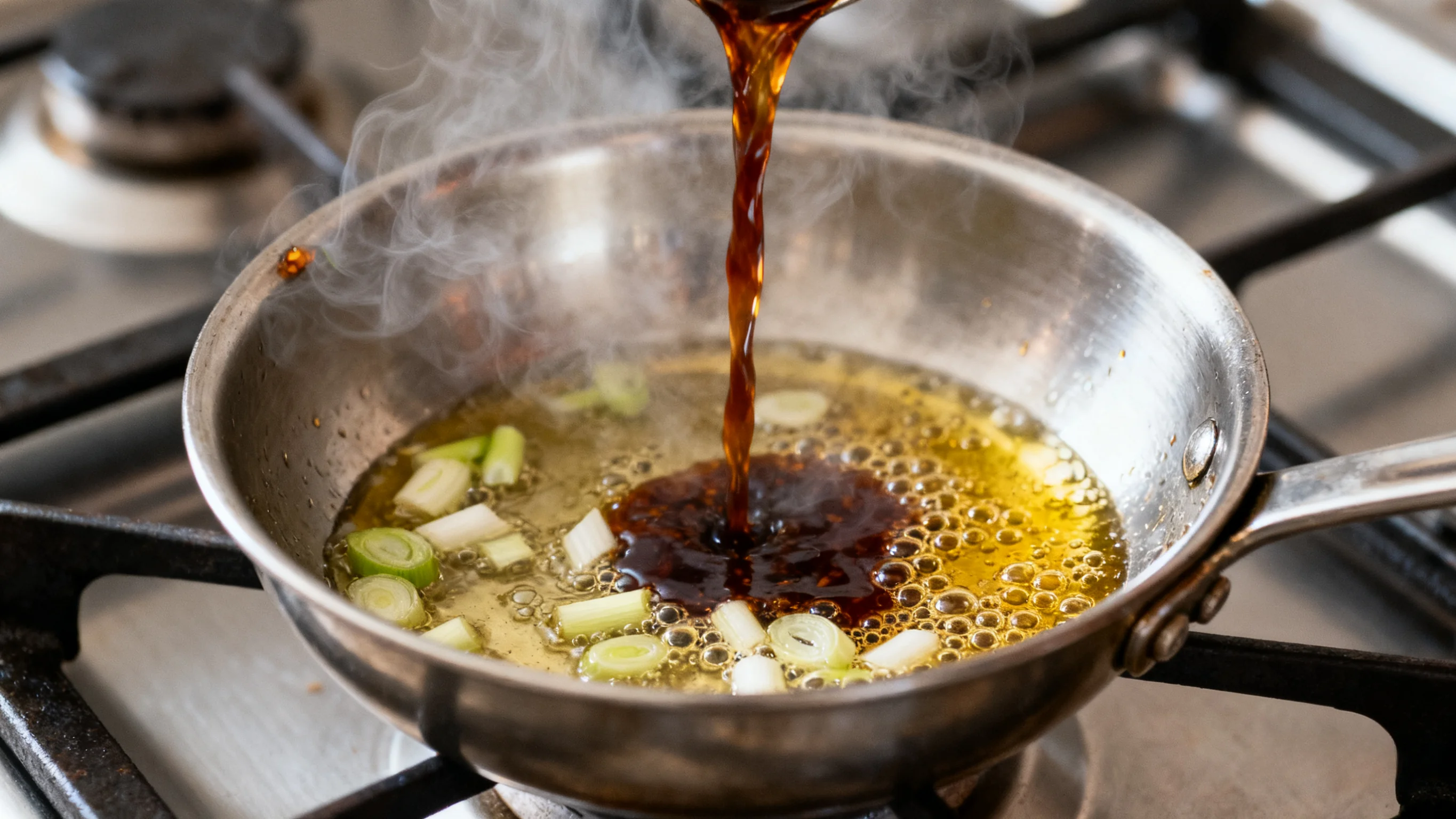 The “sizzle” of hot oil meeting sauce is the flavor升华 moment
Step 6: Noodle Cooking and Mixing (Secret #3)
- Use plenty of boiling water with salt
- Key technique: Cook noodles to 80-90% doneness
- After draining, toss with oil instead of rinsing
- Mix with sauce immediately while hot
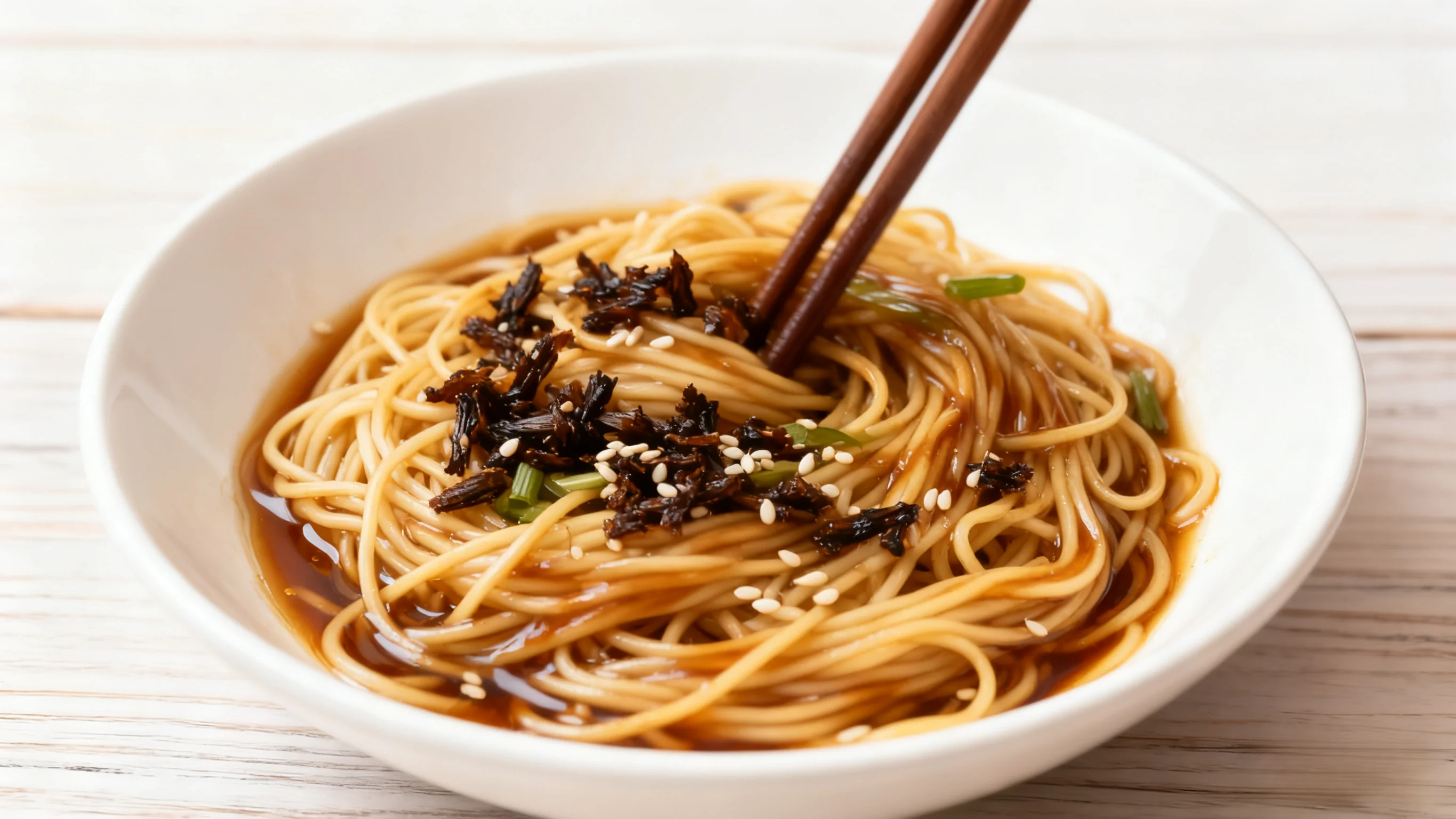 Hot noodles absorb sauce better, each strand becomes glossy
Exclusive Three Secrets
🎯 Secret #1: Scallion Preparation and Simmering
- Complete dryness: Wet scallions cause dangerous splatter
- Separate addition: Whites first (more heat-resistant), greens later
- Consistent low heat: Patience is the primary requirement
🎯 Secret #2: Sauce Golden Ratio
- 3:1:1 Rule: 3 parts light soy for umami, 1 part dark soy for color, 1 part sugar for balance
- Pre-dissolve sugar: Ensures even coating
- Hot oil activation: Hot scallion oil instantly releases sauce aroma
🎯 Secret #3: Noodle Selection and Handling
- Alkaline noodles preferred: More chewy, better sauce adherence
- Salt in cooking water: Adds base flavor to noodles
- No cold rinsing: Retains surface starch for better sauce cling
Advanced Techniques
🌟 Ingredient Upgrades:
- Dried shrimp version: Soaked shrimp fried with scallion whites, enhances umami
- Lard version: Half lard half vegetable oil, richer aroma
- Compound oil: Add star anise, bay leaf while frying for complexity
🌟 Noodle Choices:
- Fresh alkaline noodles: Best choice, chewy and smooth
- Egg noodles: Common household option, convenient
- Hand-pulled noodles: Heartier texture, stronger wheat flavor
- Udon noodles: Innovative variation, unique experience
🌟 Flavor Variations:
- Spicy version: Add dried chilies to scallion oil
- Meat version: Add pan-fried pork slices
- Sesame version: Add spoonful of sesame paste for richness
- Sour-spicy version: Add vinegar and chili oil
FAQ
Q: Why does my scallion oil taste bitter? A: Likely heat too high causing burnt scallions, or green parts overcooked. Remember low heat, remove when deep brown.
Q: Can I make scallion oil in advance? A: Absolutely! Cooled scallion oil (without sauce) stored in sterilized jar, refrigerated lasts 2-3 weeks. Sauce best mixed fresh.
Q: Noodles become clumpy quickly after mixing? A: Ensure noodles are tossed with oil or sauced immediately after cooking. Heating sauce before mixing also helps.
Q: Suitable for vegetarians? A: Base version is vegetarian. If using oyster sauce or dried shrimp, omit for vegan version.
Nutritional Value
- ✅ Carbohydrates: Noodles provide sustained energy
- ✅ Plant-based fats: Unsaturated fatty acids in scallion oil
- ✅ Micronutrients: Scallions contain vitamin C and potassium
- ✅ Easy digestion: Noodles relatively easy to digest
- ⚠️ Sodium content: Moderate soy sauce usage, can reduce as needed
Serving Suggestions
- 🍳 With fried egg: Runny yolk mixed in adds protein
- 🥬 With blanched greens: Spinach or bok choy for balance
- 🍜 With soup: Seaweed egg drop or tomato egg soup
- 🥟 As topping: Equally delicious with wontons or dumplings
- ☕ With light tea: Cleanses palate, perfect finish
Scallion oil noodles aren’t just a dish—they’re an attitude toward life: using simplest ingredients to create most heartfelt flavors. Master these techniques, and you can serve this “soulful noodles” anytime. Remember: Patient oil simmering, precise sauce mixing, quick hot tossing!
Total Cooking Time: 15 minutes
Difficulty Level: ★☆☆☆☆ (Beginner friendly)
Success Rate: 95% following these tips
Best Served: Mixed and enjoyed within 3 minutes
Pro Tip: Keep a strainer nearby while simmering scallion oil. Remove scallions immediately when they darken to prevent residual heat from burning them!