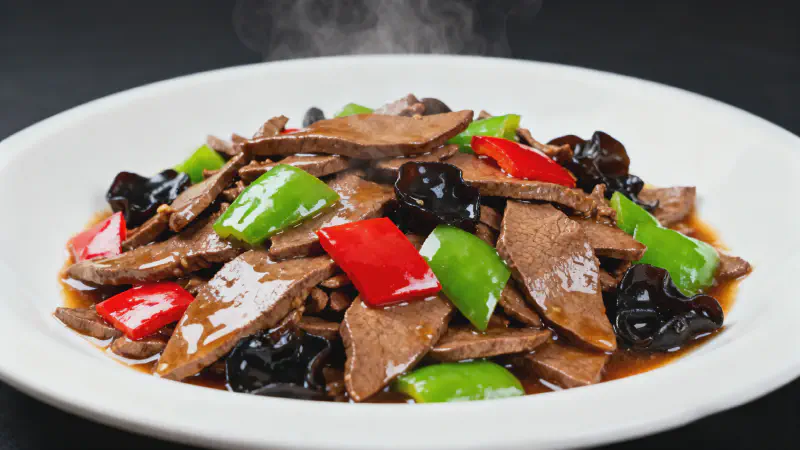
Slippery Liver Slices: The Ultimate Guide to Tender, Tofu-Like, Fragrant Liver
Hello everyone! Today, we’re tackling an ingredient many love yet fear—pork liver. A perfectly executed “slippery liver slices” dish should feature: an extremely tender texture, completely free of gamey odor, with a glossy, clinging sauce. However, home cooks often struggle with tough, smelly, watery liver. I’ll share two core secrets to help you easily recreate restaurant-level tender and smooth liver slices at home!
First, admire this plate of glossy, slippery liver slices!
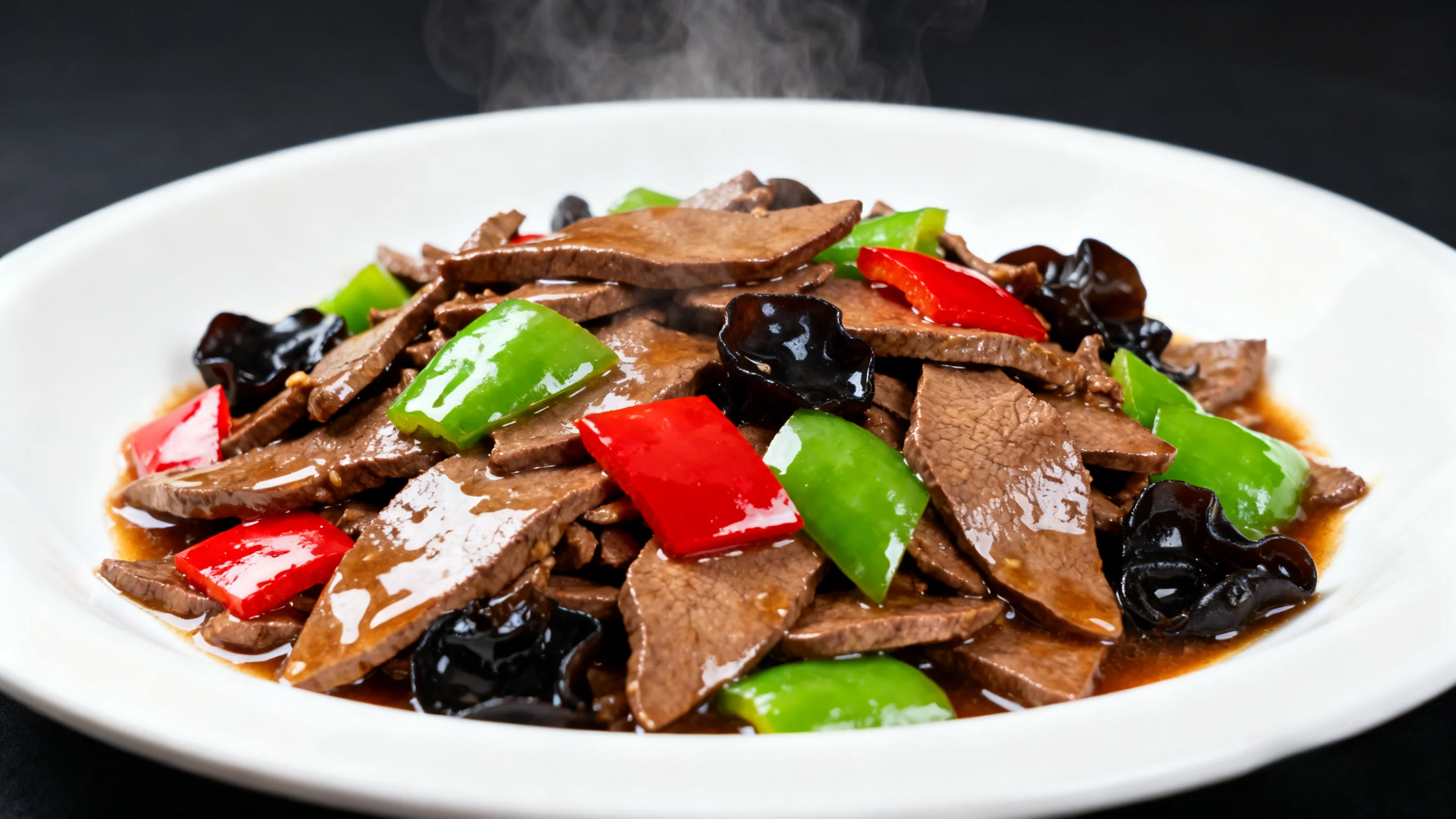 Soy-glazed, glossy liver slices intermingle with vibrant green and red pepper chunks and dark wood ear mushrooms, all coated in a crystal-clear, glistening sauce, emitting an enticing wok aroma.
Detailed Step-by-Step Instructions
Step 1: Intensive Liver Preparation (Secret 1, Foundation for Deodorizing & Tenderizing)
- Ingredient Choice is Key: Select fresh pork liver that is bright red and glossy. The “liver tip” section is the most tender.
- Knife Skills Matter: Slice against the grain into 3-4mm uniform slices. Too thick won’t cook through; too thin will fall apart.
- Core Operation: Immediately after slicing, place liver in vinegar water (or wine water) and massage. Vinegar alters the blood’s pH, making it easier to release.
- Patience in Rinsing: Repeat massaging and changing water 3-4 times until the water runs clear. This is 90% of the key to removing the gamey smell.
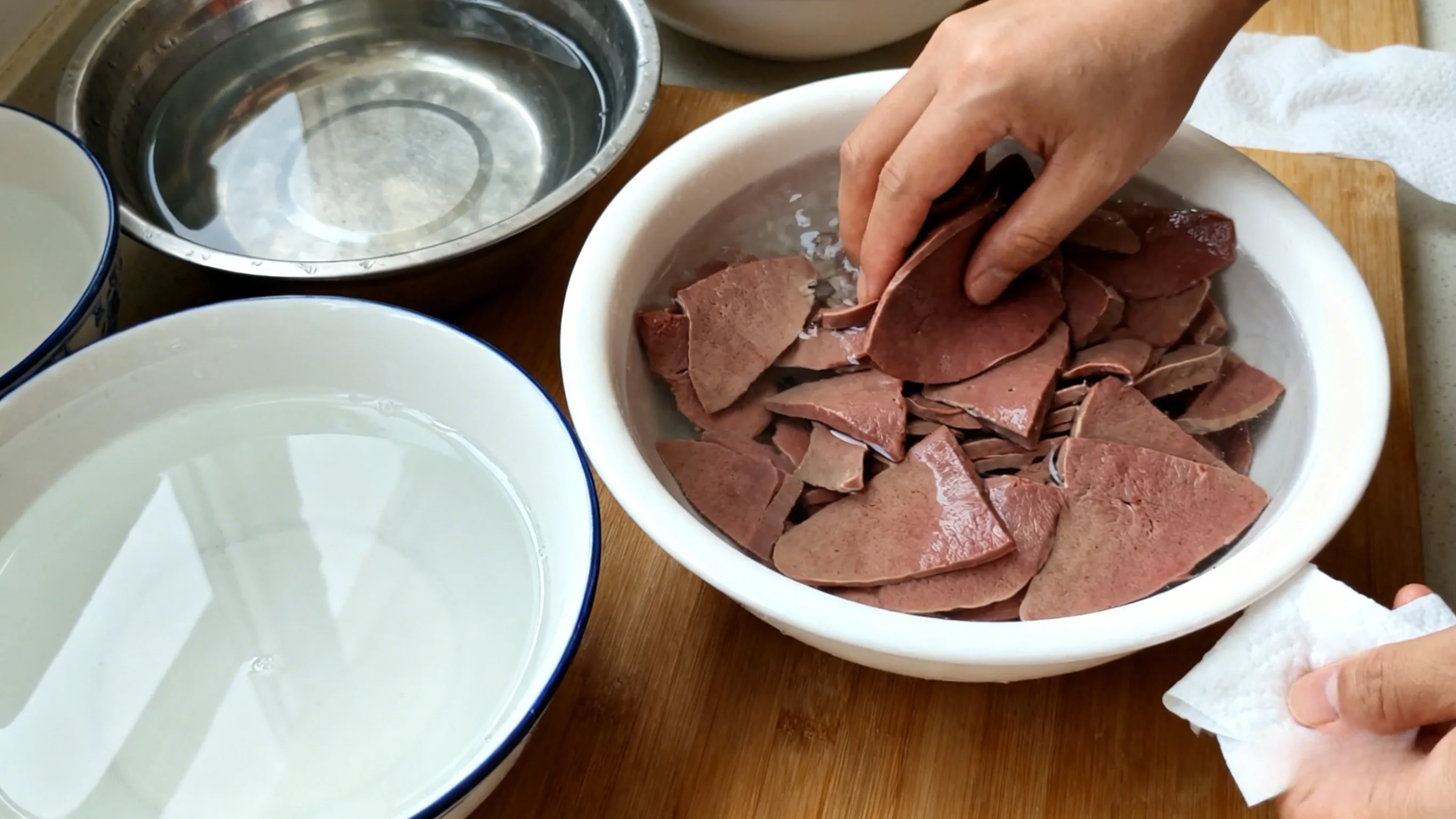 Massaging in vinegar water and repeatedly rinsing are the combined “physical + chemical” methods to conquer liver odor. Do not skip.
Step 2: Velveting & Marinating the Liver (Locking in Moisture & Tenderness)
- Pat the liver slices completely dry with paper towels. Surface moisture causes the coating to slip off, oil splatter, and toughens texture.
- First, mix with light soy sauce and pepper for base flavor penetration.
- Then add cornstarch to form a protective layer, locking in internal moisture and freshness.
- Finally, seal with oil to prevent starch clumping during cooking and further lock in moisture.
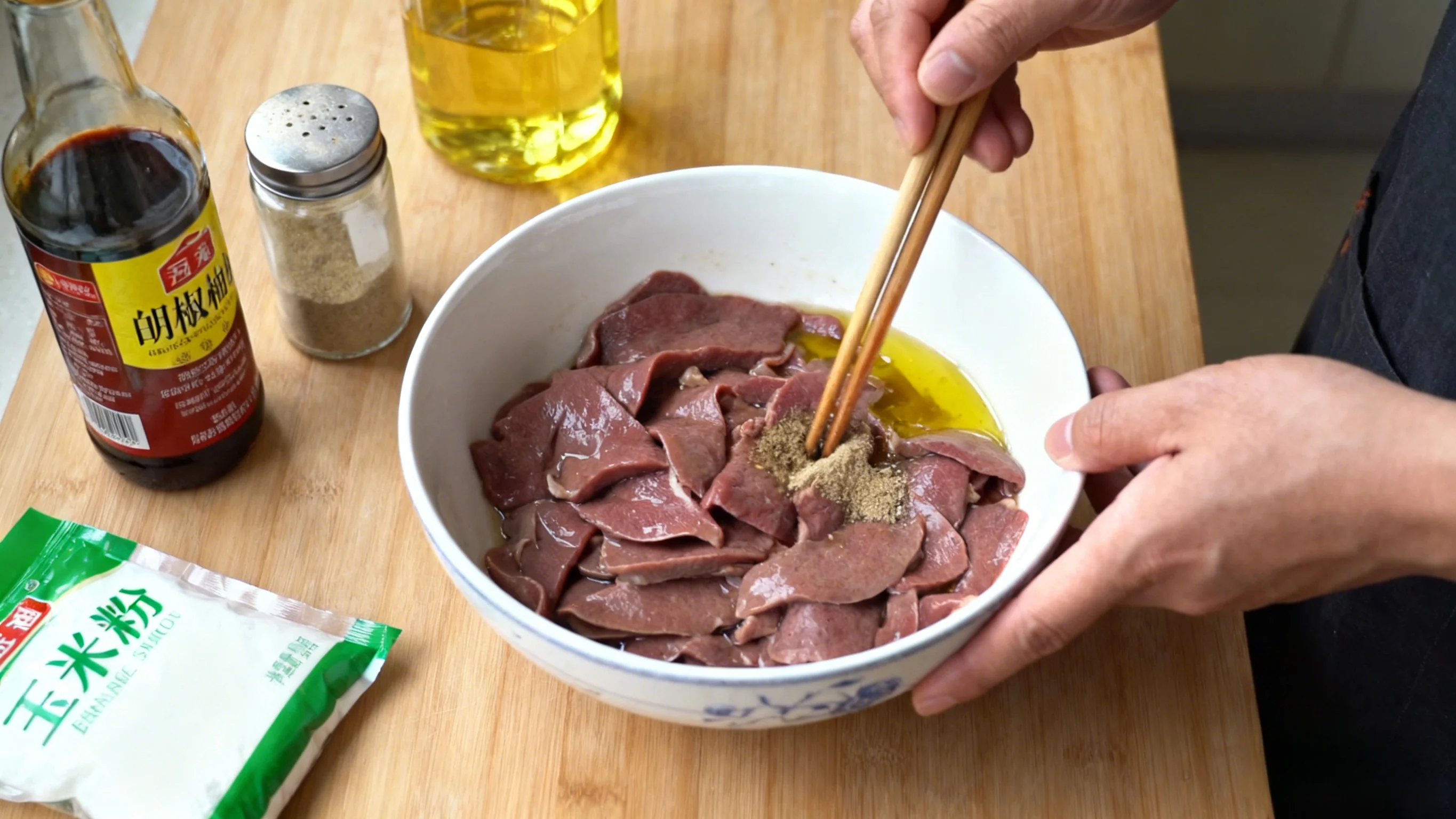 The four-step velveting method: “Dry - Season - Starch - Seal with Oil” is the armor for the liver’s tender texture.
Step 3: Prepare Ingredients & Slippery Sauce
- Cut bell peppers into chunks, tear wood ear mushrooms for color and varied texture.
- Green onion, ginger, and garlic are the “holy trinity” for deodorizing and adding aroma.
- Exclusive Tip: Pre-mix all liquid seasonings with cornstarch into a bowl sauce. This allows seamless execution during the “slippery” stir-fry, ensures even heating, and quickly forms a perfect clinging sauce.
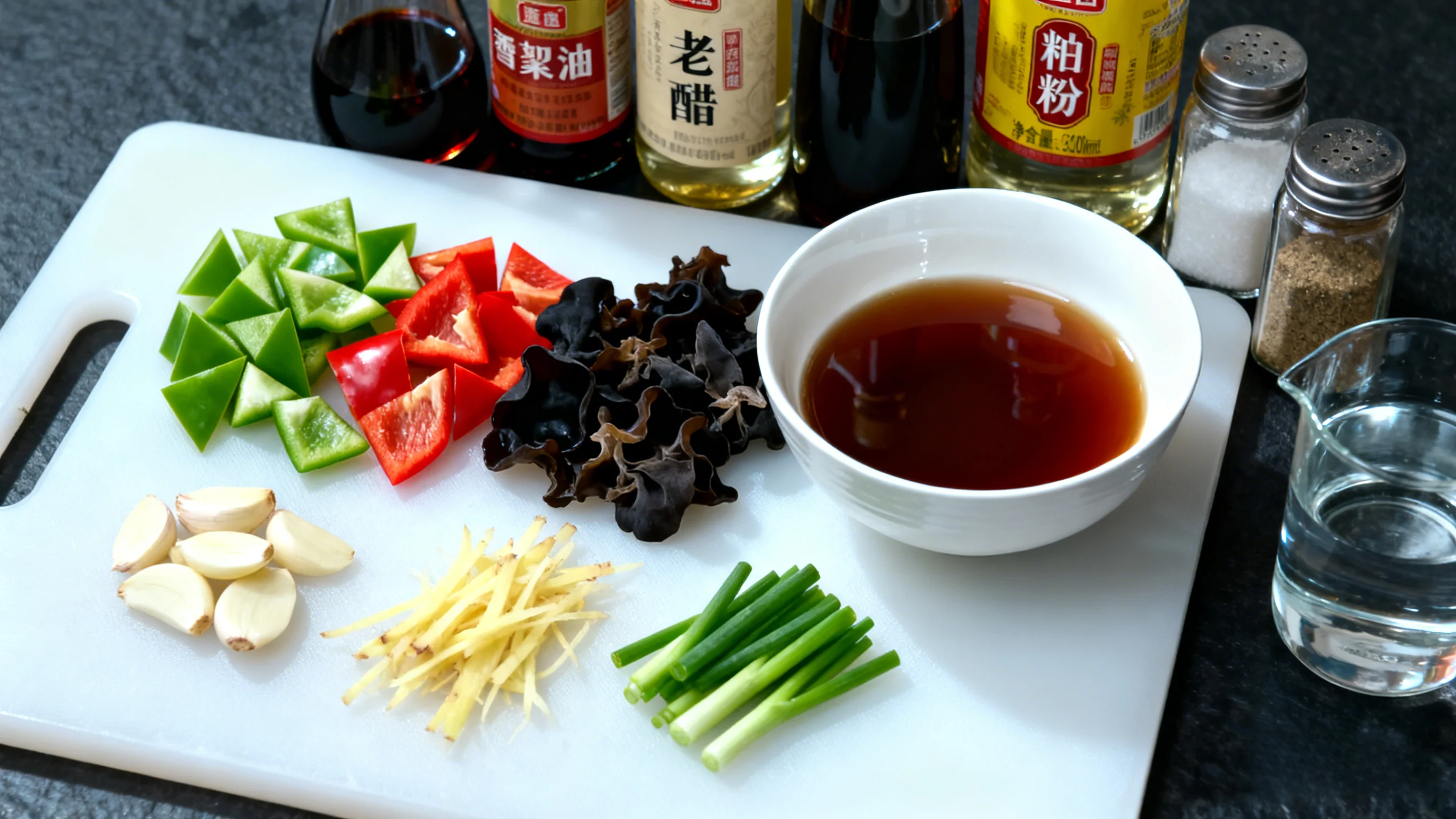 Pre-mixing the “bowl sauce” is an industry secret for stir-fried dishes to maintain consistent flavor and even saucing.
Step 4: Blanching in Oil (Secret 2, The Decisive Step for Tenderness)
- Use Ample Oil: Blanching requires 2-3 times more oil than usual stir-frying to ensure the liver is instantly surrounded by hot oil.
- Oil at 50% Heat: About 150°C / 300°F, when the oil surface is calm with slight ripples. Too low, and the starch coating falls off; too high, and the outside chars while the inside remains raw.
- Quick Separation: Immediately after adding liver, use chopsticks to quickly separate the slices for even heating.
- Extremely Short Time: 20-30 seconds. Remove as soon as the liver just changes color (from red to greyish-brown) and the surface is seared. The inside remains tender at this point; residual heat will bring it to perfect doneness.
 Quick blanching in oil at 50% heat is the core technique to achieve an “outside cooked, inside tender” state in the shortest time.
Step 5: Quick Stir-fry Vegetables
- Use the oil left from blanching the liver (already infused with meaty flavor) to sauté the aromatics.
- Add bell peppers and wood ear mushrooms, increase to high heat, and stir-fry rapidly.
- High heat preserves the vegetables’ crisp-tender texture and vibrant color, creating a delightful textural contrast.
 High-heat quick stir-frying of vegetables maintains their “crisp, fresh, colorful” quality, creating wonderful textural layers with the tender liver.
Step 6: The “Slippery” Stir-fry & Finish
- Return the blanched liver to the wok.
- Immediately pour in the pre-mixed bowl sauce.
- Stir-fry quickly over high heat for 10-15 seconds. Watch as the sauce instantly thickens, turns glossy and transparent, evenly coating all ingredients.
- Turn off heat, add sesame oil, sprinkle with green onion greens, and serve.
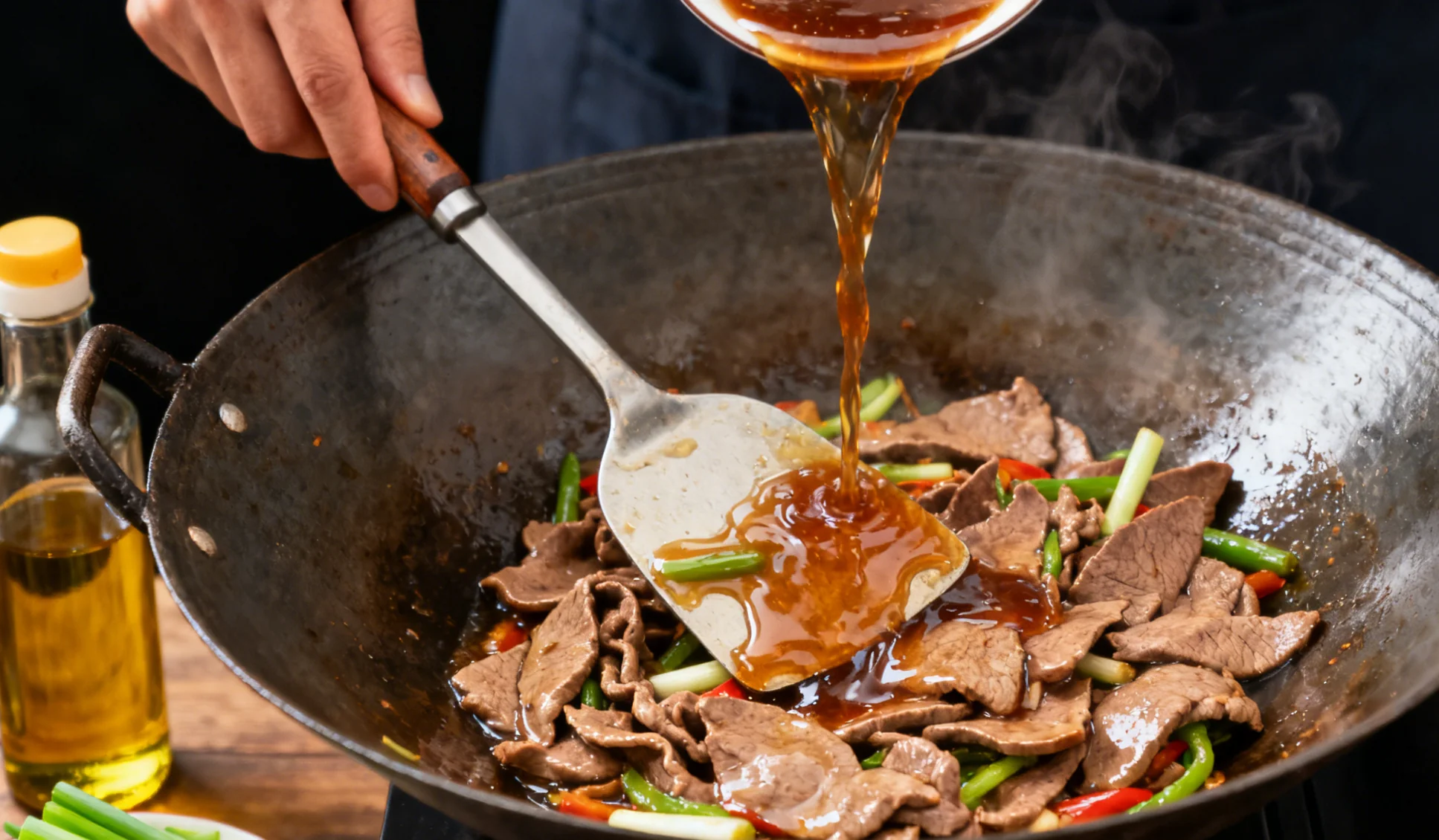 Ingredients return to the wok, sauce is added, and a quick high-heat toss—these mere seconds determine the dish’s final texture and sheen.
Exclusive Two Core Secrets
🎯 Secret 1: Vinegar Water Massage + Thorough Drying
- Biochemical Deodorizing: The gamey smell of liver mainly comes from residual blood and bile. White vinegar (acidic) or cooking wine (alcohol) alters the solubility of hemoglobin in the blood, making it easier to detach from tissues. Repeated massaging is the physical冲刷 (flushing) process.
- Texture Assurance: Liver cells contain much water and blood. Thoroughly washing removes odor and allows marinades to penetrate more easily later, while also preventing bloody liquid from seeping out during cooking, which would muddy the sauce and create a gritty texture.
- Prerequisite for Velveting: Only when the surface is absolutely dry can the cornstarch adhere firmly, forming an effective protective layer. Otherwise, the starch will gelatinize and slide off when it contacts water.
🎯 Secret 2: Blanching in Ample Oil + Removing at 70% Doneness
- Heat Conduction Principle: Oil has a high specific heat capacity and transfers heat evenly and rapidly. Sufficient hot oil instantly sears the liver’s surface, forming a seal that locks in internal juices—the physical basis for the “silky tender” texture. Home stoves often lack power; blanching in ample oil is the best method to compensate.
- Controlling Protein Denaturation: Liver’s main component is protein, which rapidly denatures and coagulates at 60-70°C. Removing it at 70% doneness (surface color changed) and letting residual heat from the dish itself slowly bring the internal temperature to full doneness (about 75°C). This “carryover cooking” avoids the protein over-contracting, hardening, and releasing water caused by continuous high heat—key to maintaining ultimate tenderness.
Advanced Techniques & Variations
🌟 Liver Selection & Prep:
- Freshness Check: Bright red or purplish-red color, moist and glossy surface, elastic to the touch, no foul odor.
- Part Selection: The liver tip (the thickest edge) is the most tender, ideal for this dish. The central lobe is slightly tougher.
- Emergency Deodorizing: If short on time, rinse the sliced liver under running cold water for 10 minutes; this also works well.
🌟 Sauce Flavor Profiles:
- Yu Xiang (Fish Fragrant): Add minced pickled chili, ginger, and garlic to the bowl sauce, adjusting the sugar-vinegar ratio.
- Savory Bean Sauce: Add half a spoon of fermented soybean paste or sweet bean sauce for a richer taste.
- Black Pepper: Replace white pepper with black pepper and add a little black pepper sauce.
🌟 Vegetable Combinations:
- Classic Combo: Bell peppers + wood ear mushrooms—great color and texture.
- Upgraded Version: Add bamboo shoot slices or cucumber slices for extra crunch.
- Deluxe Version: Pair with a few slices of velveted pork kidney for “Slippery Two Kinds.”
Frequently Asked Questions (FAQ)
Q: How should I handle the oil left in the wok after blanching the liver? A: The oil used for blanching contains meaty aroma and nutrients but also some blood residue. Let it settle, then use the clearer upper layer to stir-fry the vegetables (as in this recipe) or for other flavorful dishes (like fried rice, noodles). It’s not recommended for deep-frying or stir-frying delicate vegetables.
Q: I don’t want to use so much oil for blanching at home. Can I blanch in water instead? A: Yes, but the texture differs. Bring a pot of water to a boil, turn off the heat, then scatter the velveted liver slices into the water. Let them sit for 30-40 seconds until color changes, then remove. This method is healthier, but the tenderness and oiliness are slightly inferior to oil-blanching, and controlling the heat is more critical, making it easier to overcook.
Q: Why does my sauce clump instead of coating the food? A: This is due to an unevenly mixed “bowl sauce” or incorrect timing. Ensure the cornstarch is completely dissolved with no lumps. The wok and ingredients must be hot enough (on high heat) when adding the sauce, and you must stir-fry quickly for even starch gelatinization.
Nutritional Value & Dietary Notes
- ✅ Iron-Rich Superfood: Pork liver is rich in heme iron, which has high absorption rates, making it ideal for those with iron-deficiency anemia.
- ✅ Vitamin A Treasure Trove: Extremely high in Vitamin A, crucial for eye health.
- ✅ Consume in Moderation: High in cholesterol. Recommended portion is 100-150g per serving, not to be consumed frequently.
- ✅ Cook Thoroughly: Must ensure the liver is fully cooked to eliminate potential parasites and bacteria.
Perfect Occasions to Enjoy
- 🍺 Classic Drinking Appetizer: Tender, savory, and aromatic—a timeless配角之王 (king of side dishes) on Chinese drinking tables.
- 🍚 Rice’s Best Friend: The rich sauce mixed with hot rice is incredibly flavorful.
- 🍜 Noodle Topping: Ladled over cooked soup noodles or tossed noodles, instantly upgrading it to a luxurious “Liver Noodles.”
- 🥢 Impressive Party Stir-fry: Quick to make, beautiful presentation—a signature dish showcasing home-cooking skill.
Slippery Liver Slices is a subtle test of fundamental cooking skills. It demands precise prep, second-level heat control, and balanced seasoning. Successfully creating a perfect plate brings a sense of achievement no less than any grand dish. It teaches us: Special ingredients require special patience and techniques; ultimate deliciousness often hides within these meticulous details.