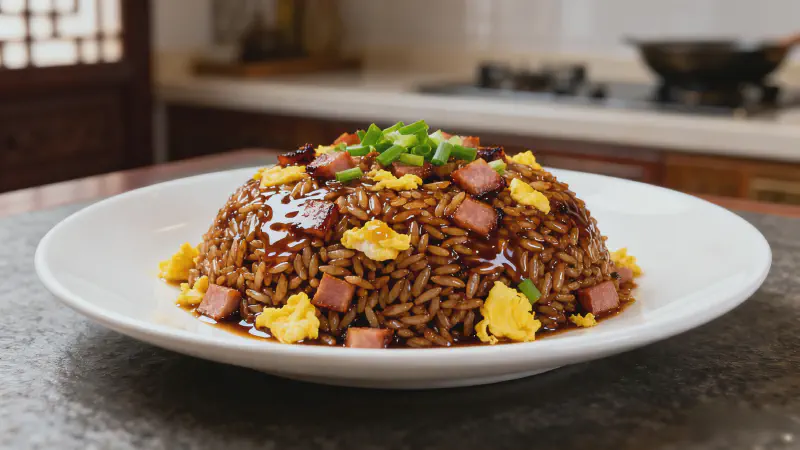
Soy Sauce Fried Rice: The Golden Rules for Transforming Leftovers
Hello everyone! Today, I’m sharing the ultimate solution for leftover rice and a classic foundation of Chinese fried rice—Soy Sauce Fried Rice. The standard for a perfect bowl can be summed up in eight characters: Each grain separate, evenly coated with savory aroma. However, many end up with clumpy, sticky rice or uneven coloring. I’ll share two core secrets to help you master the technique of “golden fried rice” with ease.
First, feast your eyes on this plate of golden Soy Sauce Fried Rice!
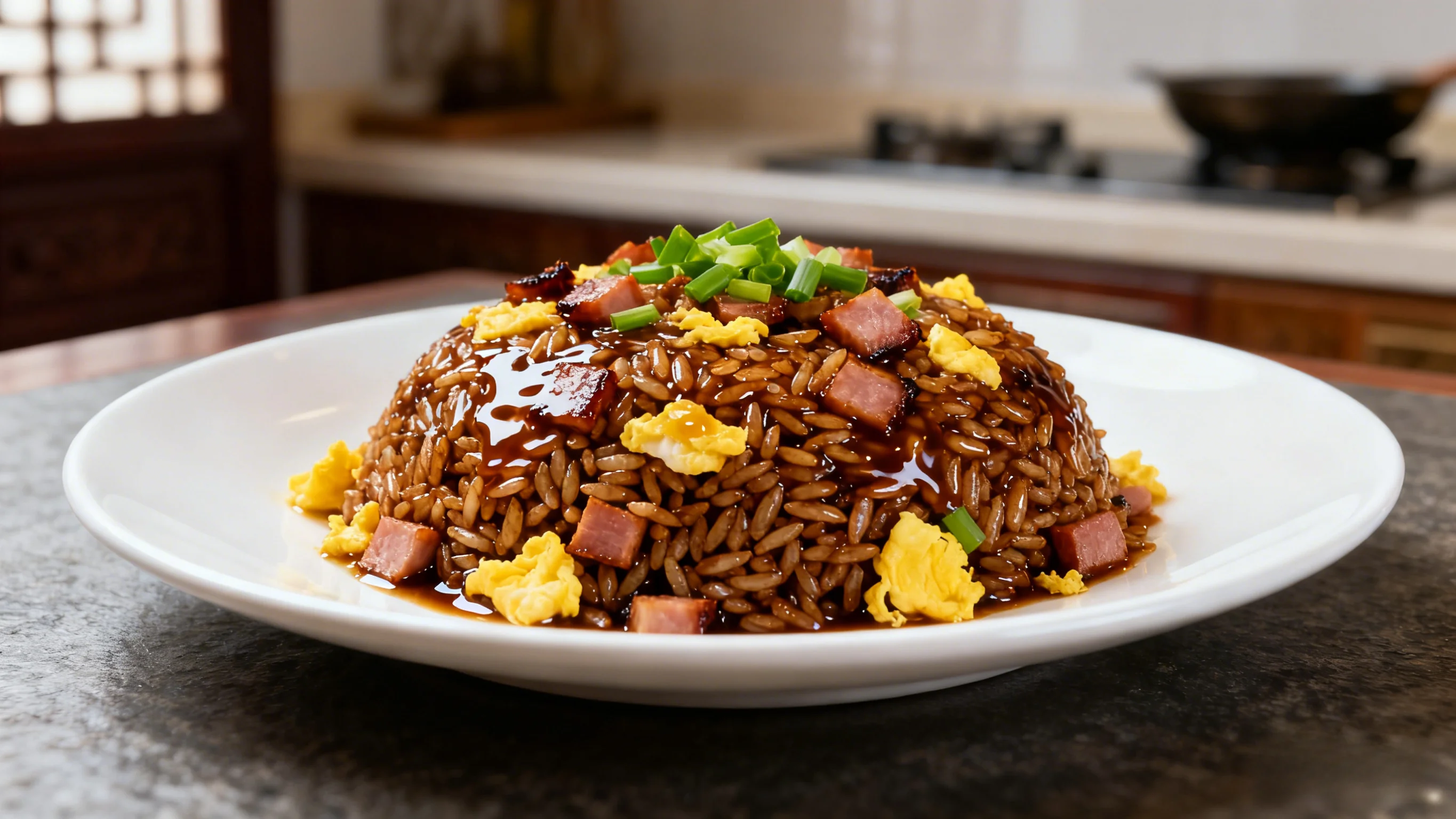 Each grain of rice is coated in a savory soy glaze, gleaming golden and glossy, studded with tender yellow eggs, pink ham cubes, and vibrant green scallions—an aromatic masterpiece.
Detailed Step-by-Step Instructions
Step 1: Rice Preparation (Secret 1, The Key to Success)
- Must use day-old, refrigerated rice: After moisture evaporates, the rice becomes drier and easier to separate.
- Break it apart by hand: Wearing gloves or with clean hands, thoroughly loosen the cold rice. This is far more effective than using a spatula.
- Coat with oil to lock out moisture: Mixing in oil coats each grain with a protective film. This prevents the rice from absorbing moisture and sticking to the wok during frying, resulting in a more luxurious, separate texture.
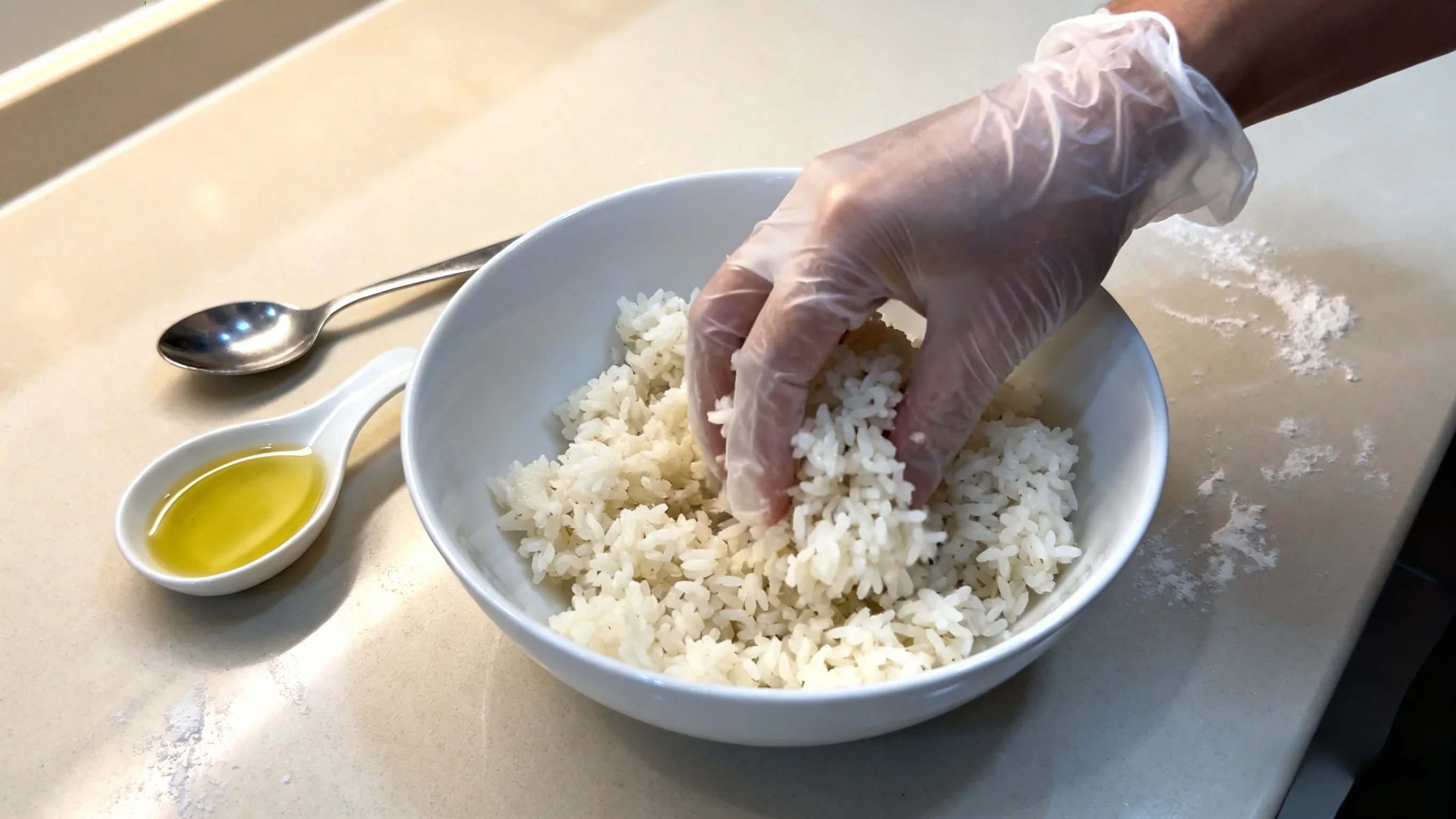 Breaking apart rice by hand is the most effective method. Coating with oil is the core step for achieving separate grains.
Step 2: Prepare Ingredients & Sauce
- When beating the eggs, you can add a pinch of salt and a dash of cooking wine to reduce any eggy smell.
- Cut the ham or Spam into small cubes, about 0.5 cm, which allows them to crisp up nicely when fried.
- Exclusive Tip: Pre-mix the light soy sauce, dark soy sauce, sugar, etc. This prevents scrambling during cooking and ensures even coloring and seasoning.
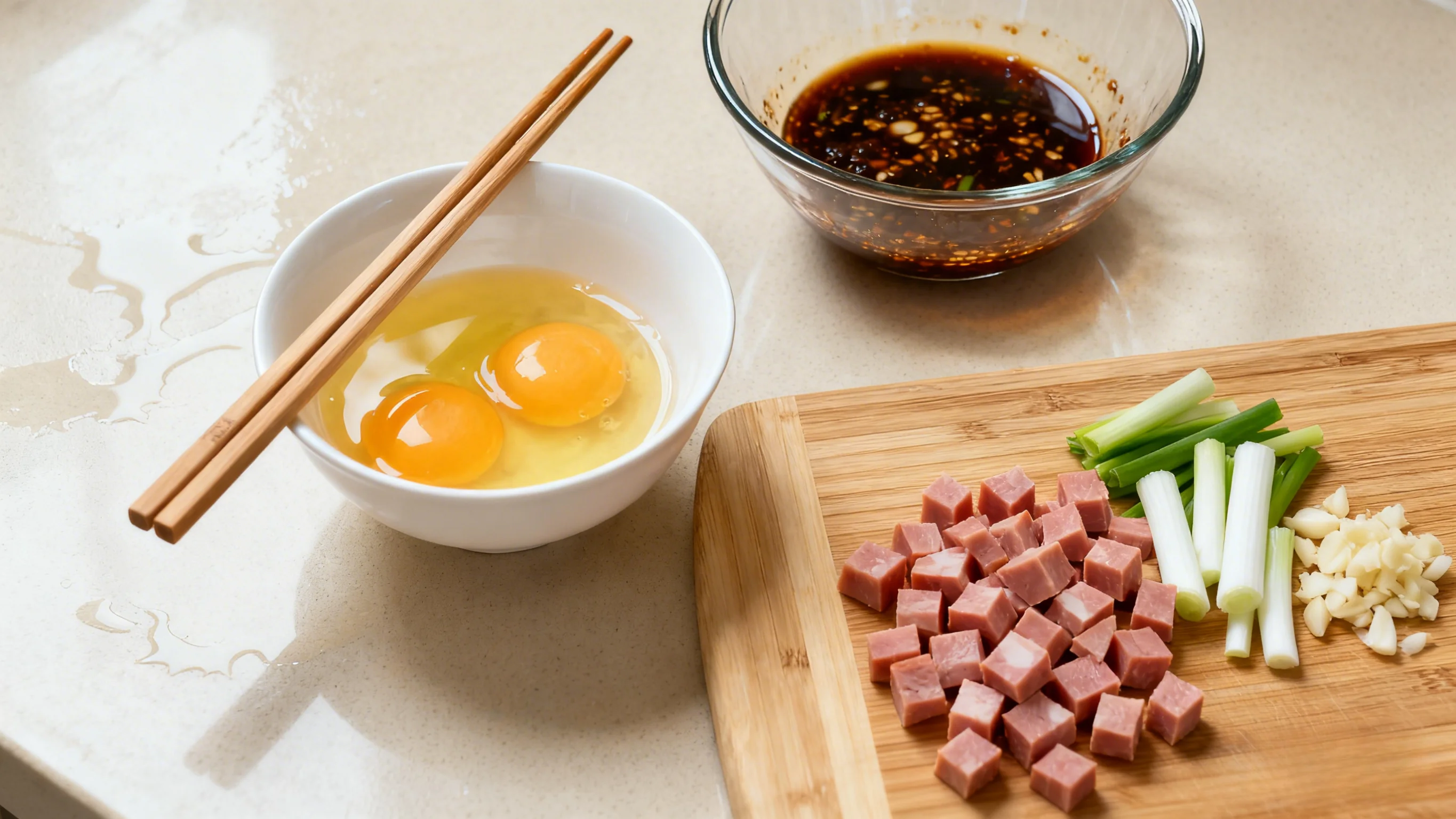 Pre-mixing the sauce guarantees uniform flavor, avoiding patches of “white rice” and “black rice.”
Step 3: Scramble the Eggs
- Ensure the wok is hot and has enough oil.
- Pour in the beaten eggs and quickly stir in a circular motion with chopsticks or a spatula to form fine, tender curds.
- Heat level: Medium heat is ideal. High heat can burn them; low heat can make them rubbery.
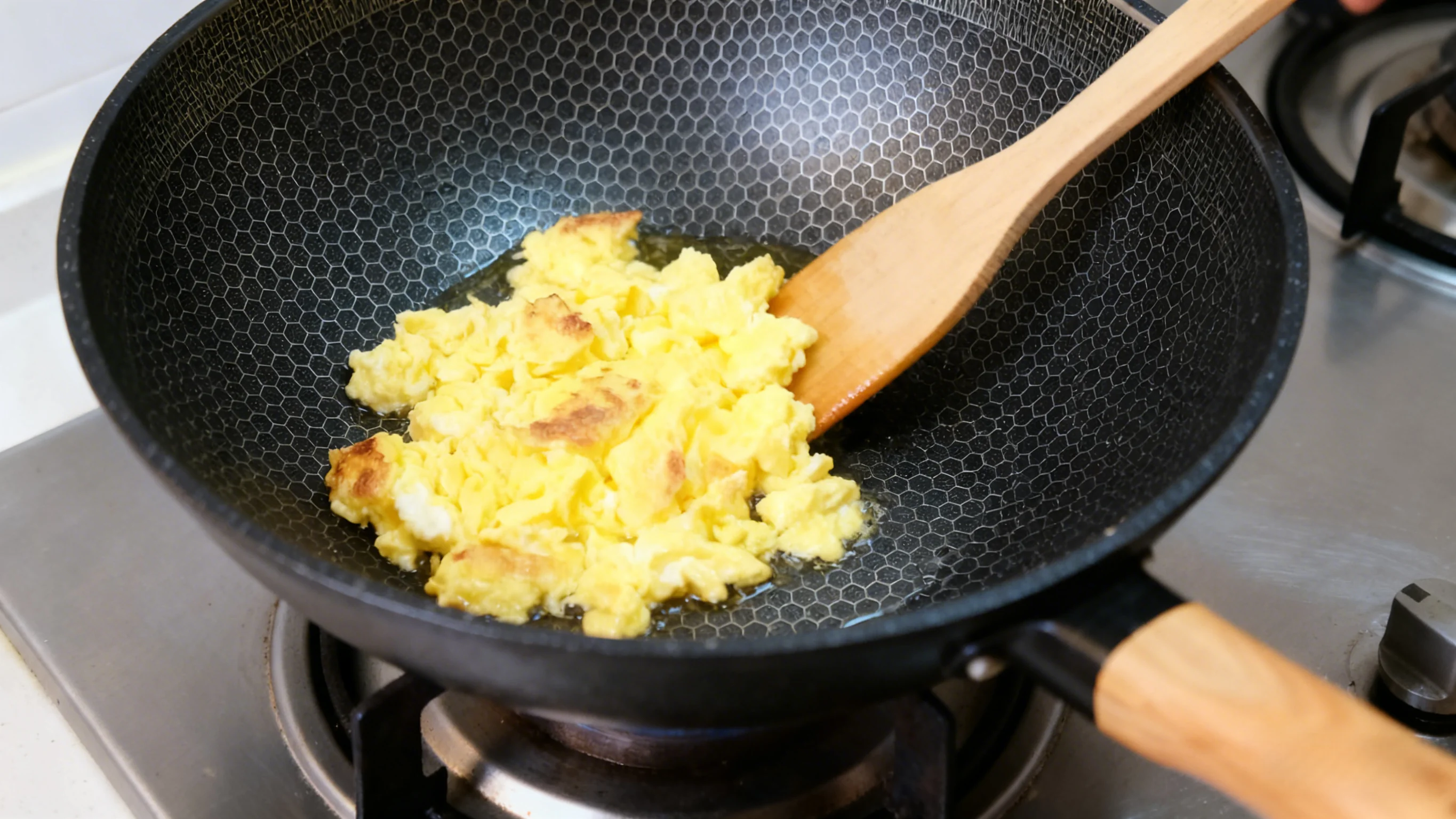 Scramble the eggs until they are tender and fine, making it easy to mix evenly with the rice later.
Step 4: Sauté the Aromatics
- Using the oil left from scrambling the eggs, stir-fry the diced ham over medium heat.
- Fry the ham until the edges are slightly caramelized, releasing a rich, meaty aroma.
- Then add the minced garlic and ginger (if using) and stir-fry briefly until fragrant.
- At this point, the complex aromas form the flavor foundation for the fried rice.
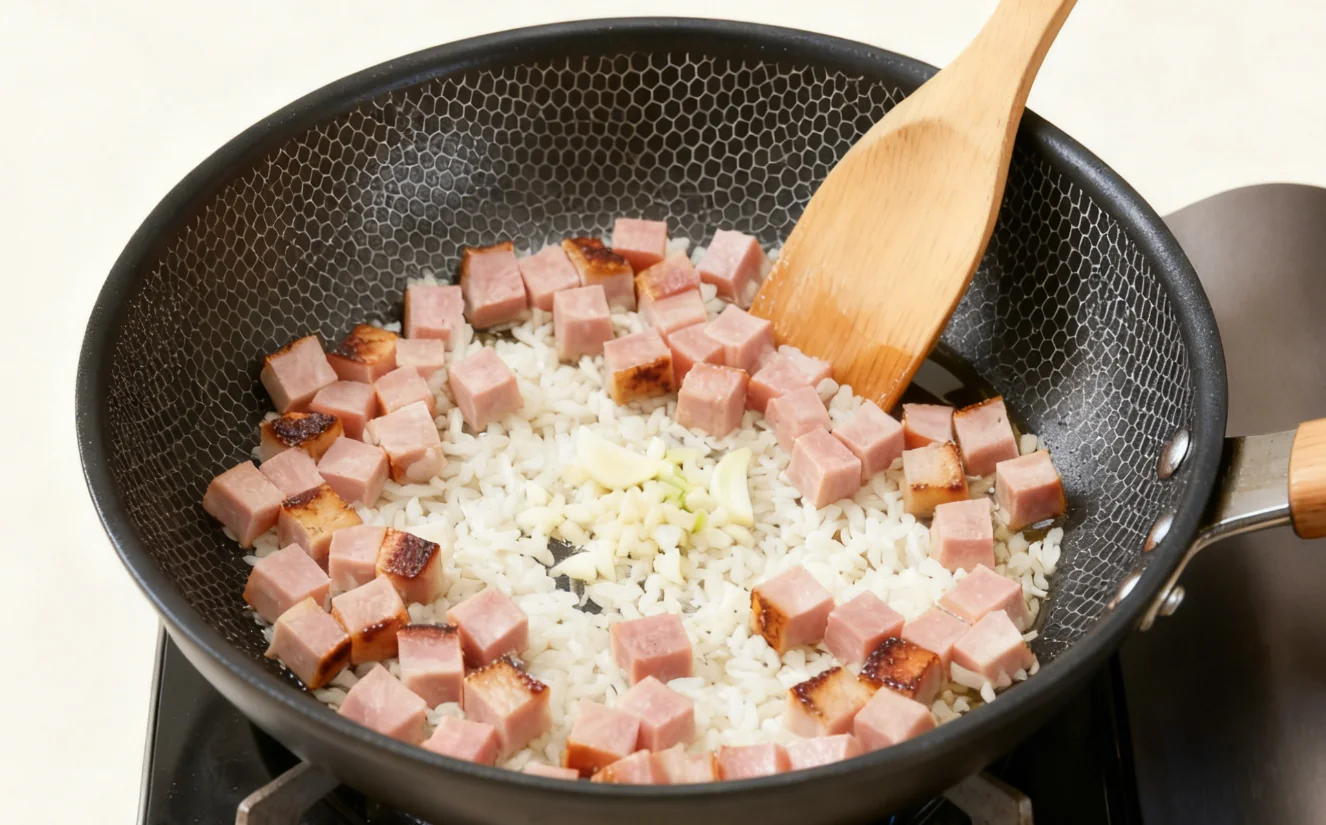 Sautéing the ham until fragrant is key; the caramelized edges significantly enhance the overall depth of flavor.
Step 5: Fry the Rice & Add Color (Secret 2, The Technical Core)
- Increase heat to high. Add the oil-coated rice.
- Stir-fry while pressing down with your spatula. The goal is to break up any remaining clumps and allow the rice to heat up quickly.
- Fry for about 2 minutes, until the rice grains “dance” in the wok (jumping slightly).
- The Critical Move: Reduce heat to medium. Drizzle the sauce in a circular motion over the rice, rather than pouring it in one spot. Immediately stir-fry rapidly and vigorously. This allows the sauce to be instantly absorbed by the hot rice grains at the optimal temperature, triggering the Maillard reaction and releasing a rich, savory aroma.
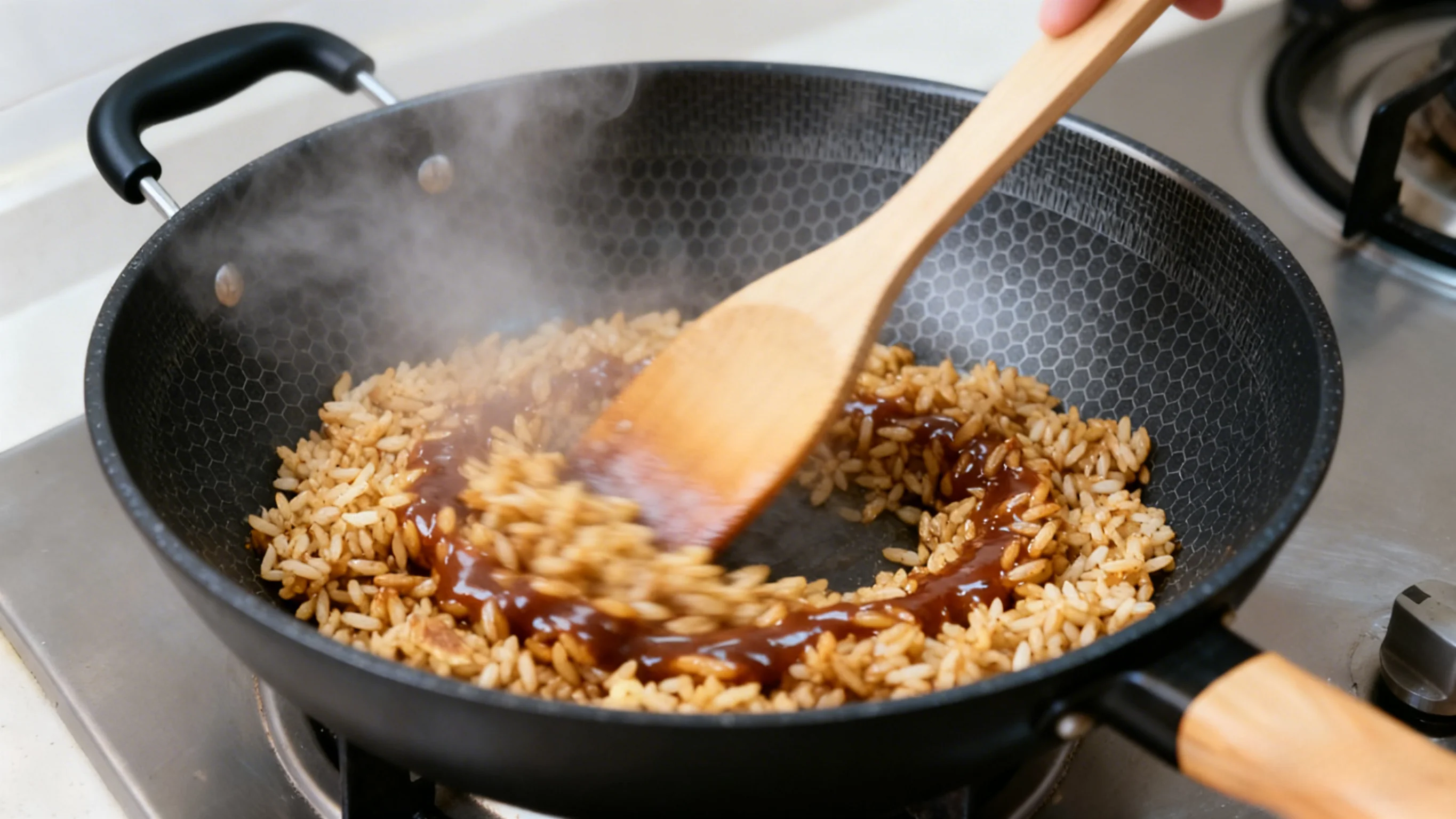 Three-part harmony: reduce heat, drizzle sauce, fast stir-fry—ensuring even color and explosive aroma.
Step 6: Combine & Finish
- Add the scrambled eggs and optional peas/corn. Stir-fry to combine evenly.
- Taste. Since both the ham and soy sauce are salty, usually no extra salt is needed.
- Turn off the heat. Then, add the chopped green onions and drizzle with sesame oil.
- Use the residual heat from the wok and the rice to awaken the fragrance of the scallions and sesame oil. Give it a final toss and serve.
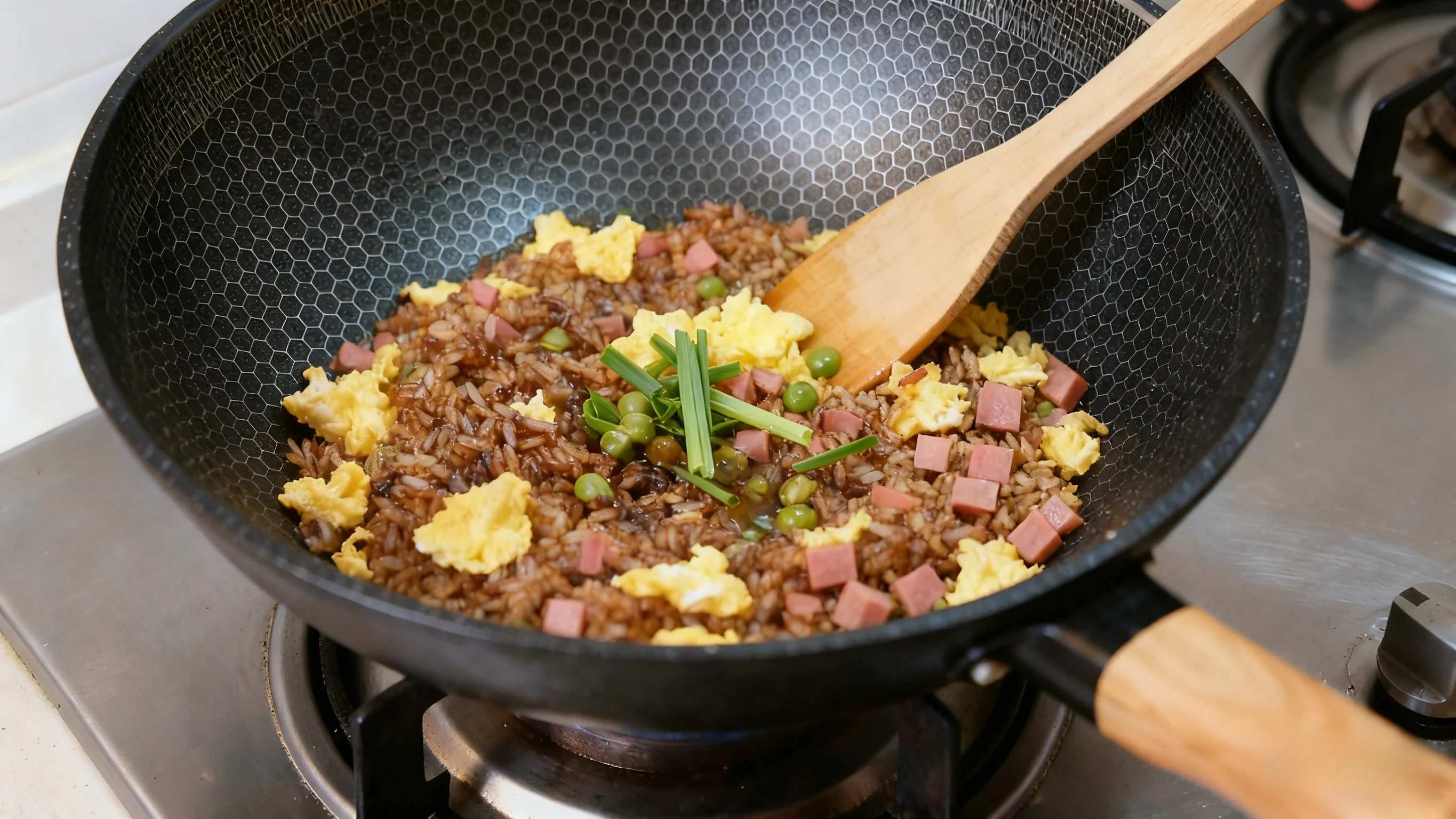 Adding scallions and sesame oil after turning off the heat is the finishing touch that uses residual warmth to unlock their full fragrance.
Exclusive Two Core Secrets
🎯 Secret 1: The Oil-Coating Pre-treatment Method
- Physical Barrier: The oil film wraps each grain, creating a barrier that prevents external sauce moisture from quickly penetrating and softening the rice during frying.
- Even Heat Conduction: Oil helps the rice heat up quickly and uniformly in the wok.
- Enhanced Texture: Results in a glossier, more luxurious-looking fried rice with a superior mouthfeel.
🎯 Secret 2: The “Medium Heat Drizzle, Quick Stir-fry” Method
- Why it Works: Drizzling sauce over high heat can cause the soy sauce to burn and turn bitter; low heat fails to develop its fragrance. Medium heat is the sweet spot for optimal caramelization and Maillard reaction of the sauce.
- The Evenness Secret: Drizzling in a circle distributes the sauce widely. Coupled with rapid stir-frying, it ensures every grain contacts the sauce in the shortest time.
- Aroma Activation: High heat instantly transforms the amino acids and sugars in the soy sauce, producing complex caramelized and savory notes, not just plain saltiness.
Advanced Techniques & Variations
🌟 Rice Selection & Handling:
- Best Choice: Long-grain rice (like Jasmine or Thai Hom Mali) has higher amylose content, resulting in firmer texture after cooling, making it ideal for fried rice.
- Emergency Plan: If you don’t have day-old rice, spread freshly cooked rice on a plate and cool it rapidly with a fan or in the freezer for 15-20 minutes to dehydrate it quickly.
- Moisture Control: Use about 10% less water when cooking rice for a naturally drier result.
🌟 Mastering Heat Rhythm:
- Separating Rice: High heat. Use intense heat and rapid stirring to break apart the grains.
- Adding Sauce & Color: Medium heat. Provides sufficient, sustained heat for the sauce to develop its flavor.
- Final Combination: Return to high or medium-high heat to quickly evaporate any excess steam, resulting in dry, fluffy fried rice.
🌟 Endless Flavor Variations:
- Deluxe Version: Add fresh shrimp, shredded dried scallops, or crab meat.
- Vegetable Version: Add diced carrots, shiitake mushrooms, corn, and peas for more color and texture.
- “Superior Soy Sauce” Fried Rice: Use premium “first extract” or “superior light soy sauce” for a more refined, umami-rich taste.
- XO Sauce Fried Rice: Add a spoonful of XO sauce just before finishing for a spicy, luxurious kick.
Frequently Asked Questions (FAQ)
Q: Do I have to use day-old rice? Can I use fresh rice? A: Day-old rice is highly recommended. During refrigeration, the starch in rice undergoes retrogradation (staling), making the texture firmer and reducing moisture content. This is the physical basis for achieving separate grains. Fresh rice is too moist and soft, easily turning into a mushy mess.
Q: Why is my fried rice dark in color but tastes bland? A: This is usually due to uneven coloring and insufficient stir-frying time. The sauce might have been poured in one spot and not quickly distributed, causing some rice to be stained dark by the dark soy sauce without actually absorbing the flavor. Please follow the “medium heat drizzle, quick stir-fry” step closely.
Q: Can I omit the ham? A: Absolutely. Ham primarily provides savory saltiness and texture. You can substitute it with dried shrimp, Chinese sausage, bacon, or make a simple soy sauce egg fried rice. Just remember to adjust the overall saltiness accordingly.
Nutritional Value (Per serving, approx. 380 kcal)
- ✅ Carbohydrates: Rice provides ample energy.
- ✅ Protein: Eggs and ham are good sources of quality protein.
- ✅ Fats: Mainly from cooking oils, providing essential fatty acids and fat-soluble vitamins.
- ✅ A Quick Complete Meal: Combines carbohydrates and protein in one dish. Pair it with a vegetable side or soup for a perfect meal.
Perfect Pairings
- 🥬 Stir-fried Greens: Such as garlic bok choy or oyster sauce lettuce, to balance texture and add fiber.
- 🍲 Quick Clear Soup: Like seaweed egg drop soup or tomato egg soup, to cut through richness and provide comfort.
- 🥒 Refreshing Pickles/Salads: Like cucumber salad or kimchi, to offer a refreshing, tangy contrast.
A good bowl of soy sauce fried rice is a reflection of fundamental cooking skills and a tribute to humble ingredients. It’s simple but never简陋 (crude). Mastering these two secrets will not only help you solve the leftover rice dilemma but also allow you to serve up a bowl of gleaming, wok-hei-filled, happiness-inducing golden fried rice for yourself and your family anytime.