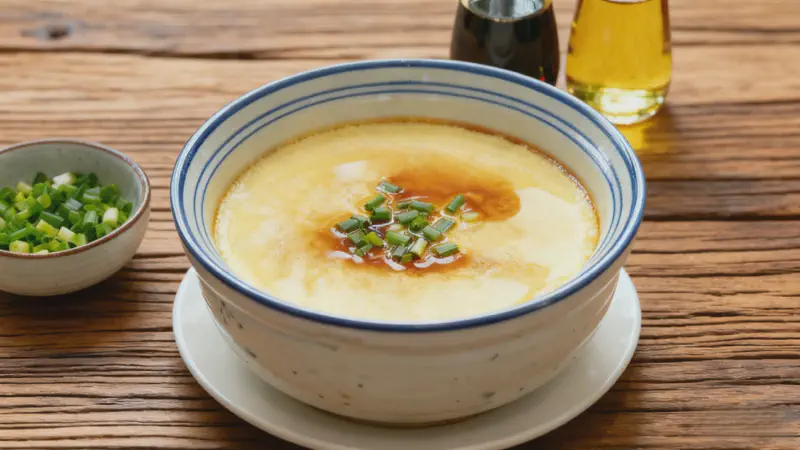
Steamed Egg Custard: Three Secrets to Achieve a Pudding-Level Silky Texture
Hello everyone! Today, I’m sharing a home-style classic that seems simple but holds hidden intricacies—Steamed Egg Custard. A perfect custard should be like pudding: surface smooth as a mirror, interior fine and poreless, texture so silky it melts in your mouth. Many end up with a “honeycomb” texture or rubbery eggs. I’ll share three core secrets to help you bid farewell to failed steamed eggs and achieve perfect silkiness every time!
First, admire this bowl of flawless Steamed Egg Custard!
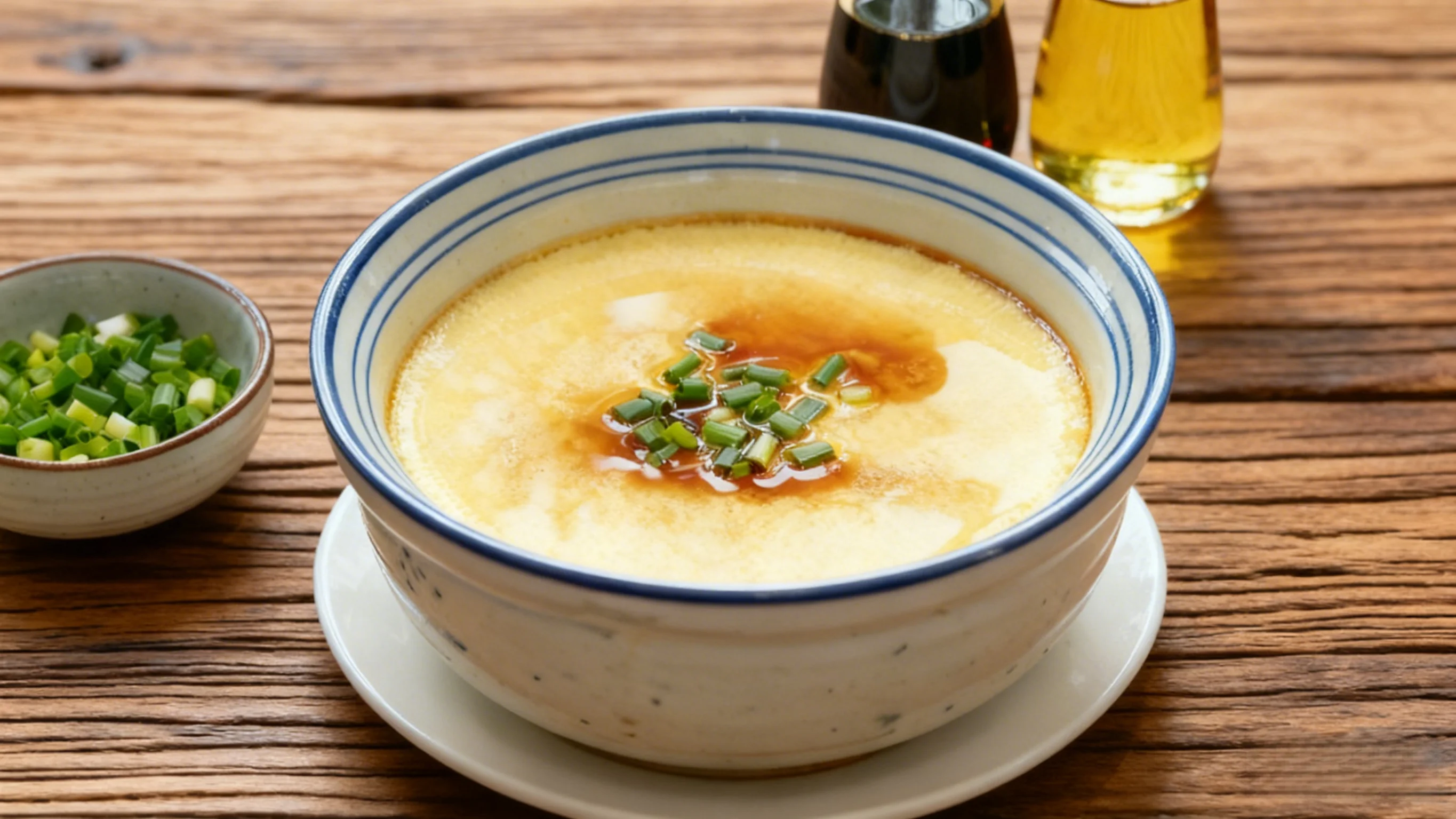 A surface smooth as a mirror, clearly reflecting the spoon’s outline, with a uniform, fine texture. Drizzled with amber soy sauce and vibrant green onions—utterly appetizing.
Detailed Step-by-Step Instructions
Step 1: Precise Ratio (Secret 1, The Golden Ratio)
- The Golden Egg-to-Water Ratio: The volume ratio of egg to warm water is 1:1.5 to 1:2. This recipe uses 3 eggs (~150ml) with 350ml warm water.
- Water Temperature is Key: Must use warm water (40-50°C / 104-122°F). Cold water doesn’t mix well, and hot water will cook the egg into curds.
- Gentle Beating: Gently beat the eggs first before adding water, avoiding vigorous whisking from the start.
 A 1:2 egg-to-water ratio is golden. Using warm water is the first key to perfect texture.
Step 2: Mix the Egg Mixture
- Slowly pour the warm water in a thin stream into the beaten eggs.
- Simultaneously stir gently in a circular motion with chopsticks to combine.
- Exclusive Technique: Use small, slow strokes. The goal is even mixing, not incorporating air.
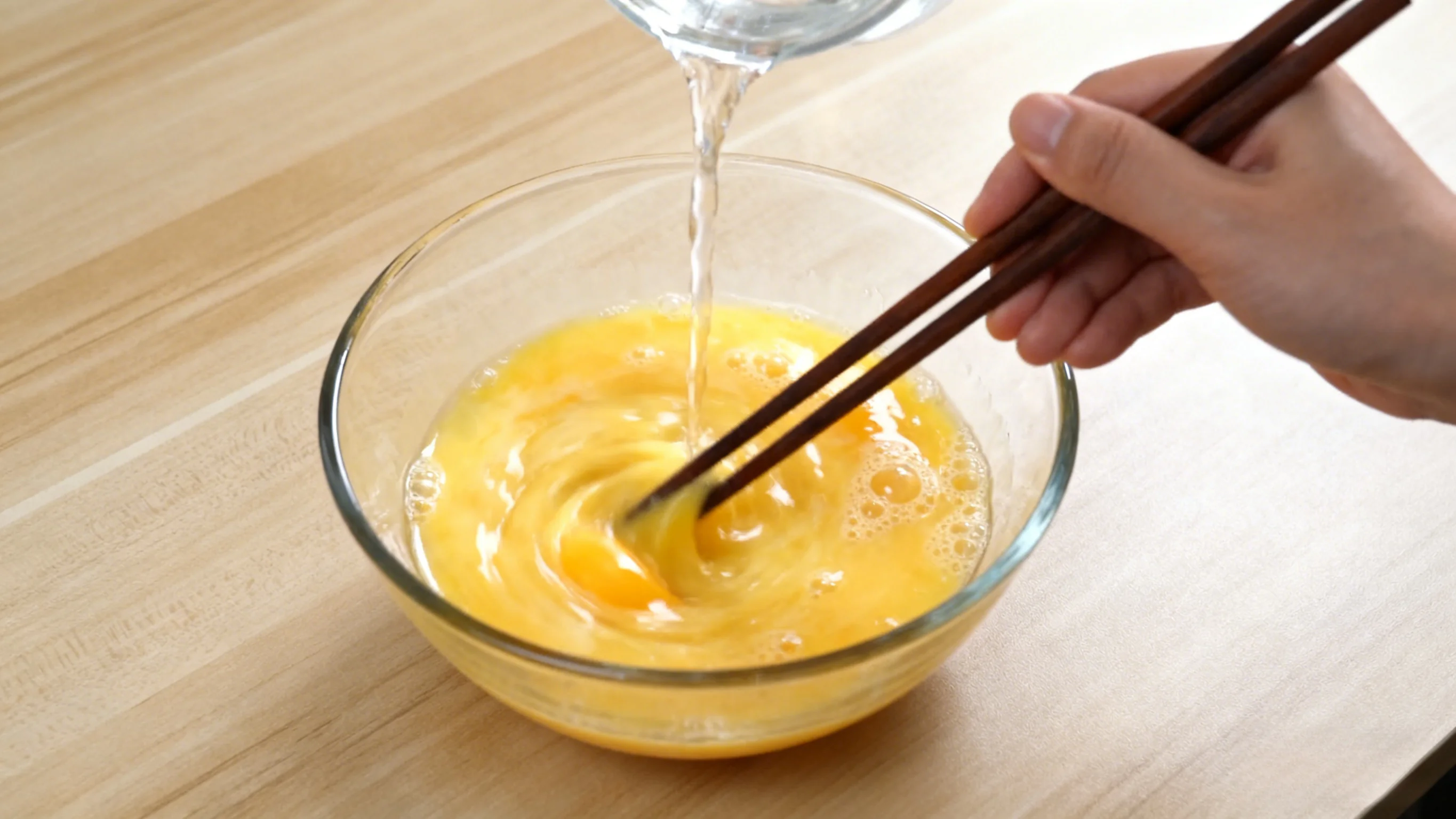 Pour warm water slowly and stir gently to avoid creating excessive bubbles.
Step 3: Strain & Remove Bubbles (Secret 2, The Secret to Smoothness)
- Must Strain: Pass the egg mixture through a fine-mesh sieve into the bowl you’ll use for steaming.
- Purpose of Straining: Removes unmixed bits of egg white (chalazae) and most air bubbles.
- Final Bubble Removal: Gently skim the surface with the back of a spoon or a paper towel to catch the last tiny bubbles.
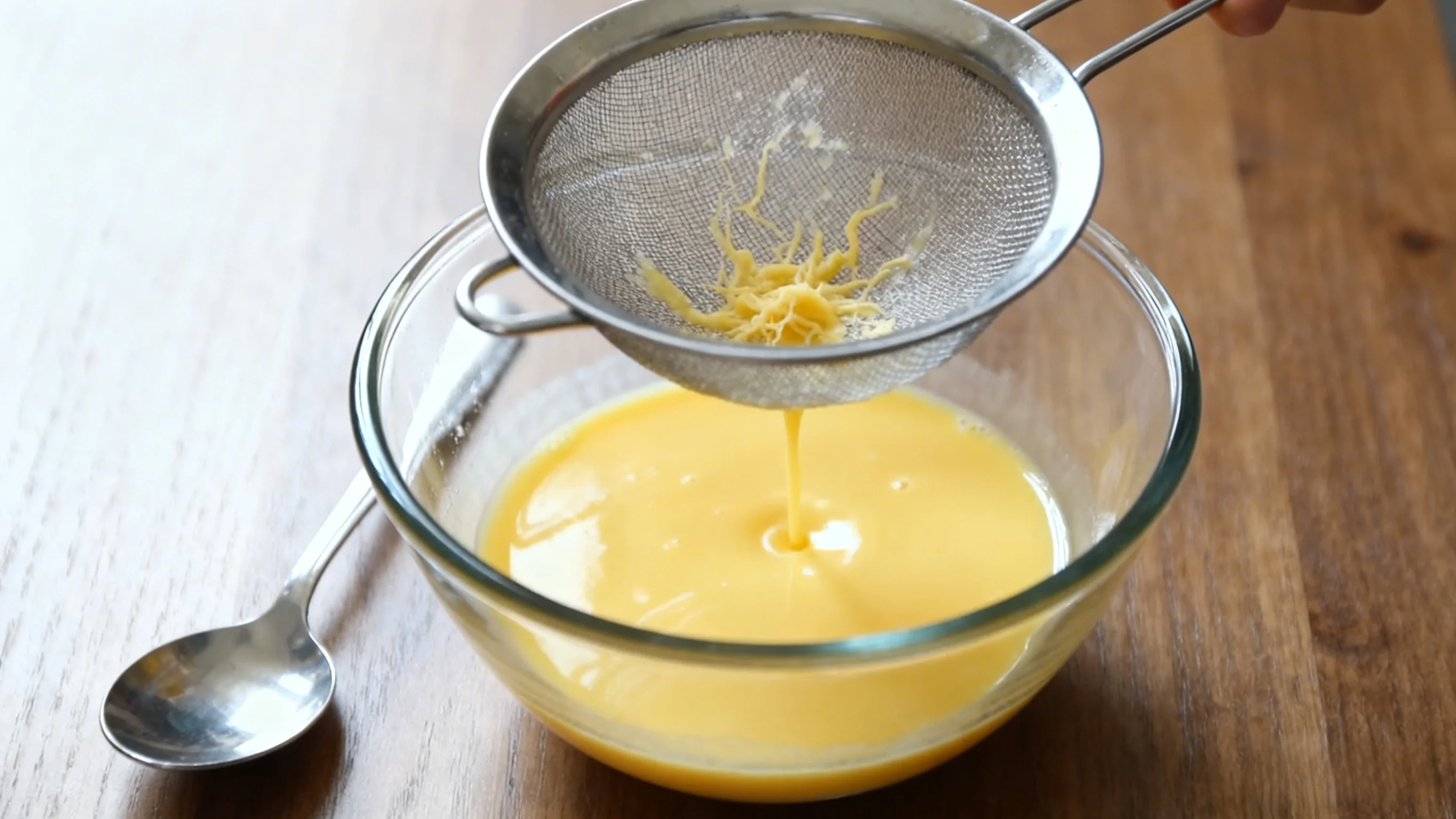 Straining is the core step for a smooth surface, filtering out all impurities that cause holes.
Step 4: Prepare for Steaming
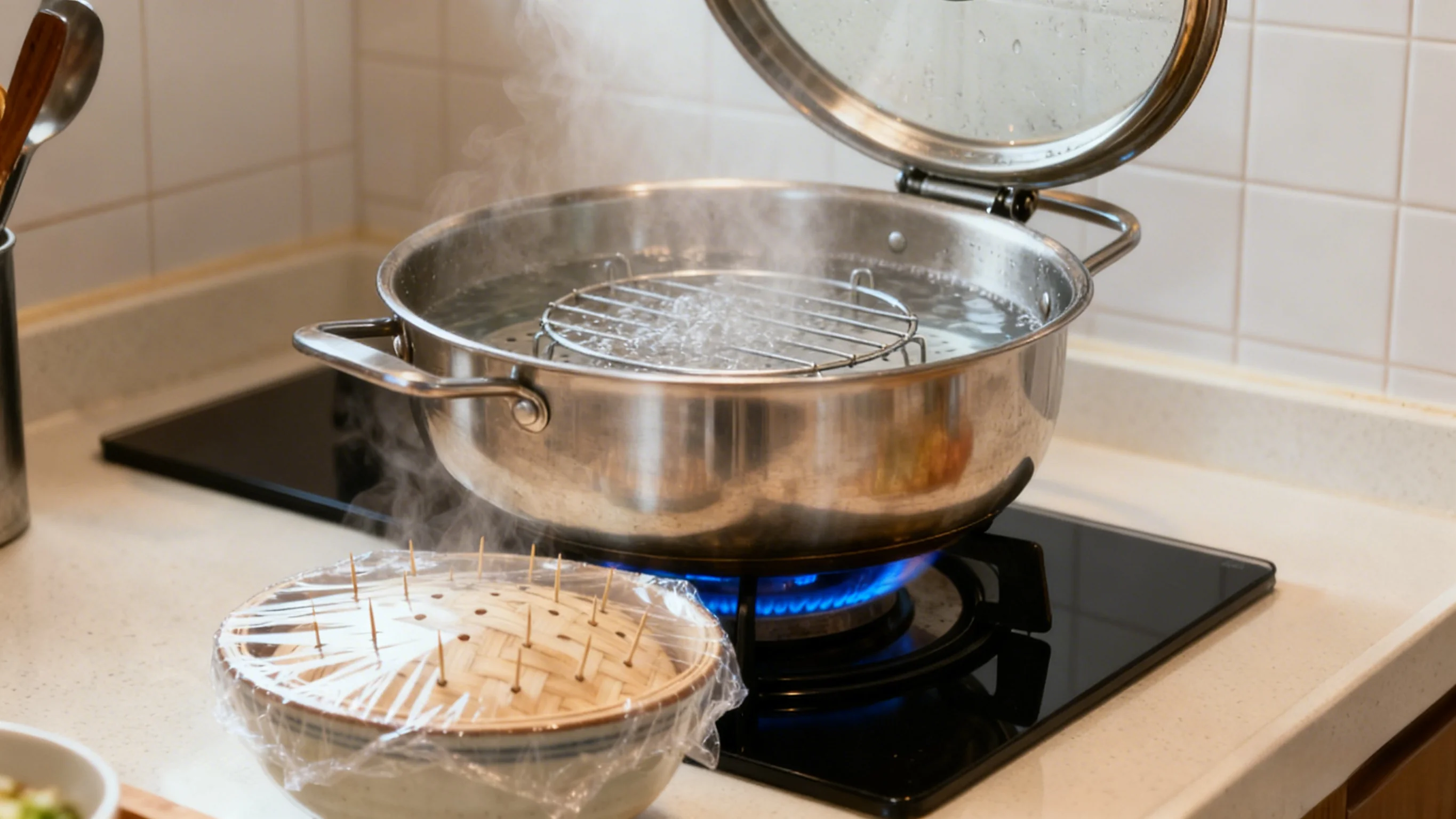
- Add enough water to the steamer and bring to a rolling boil beforehand.
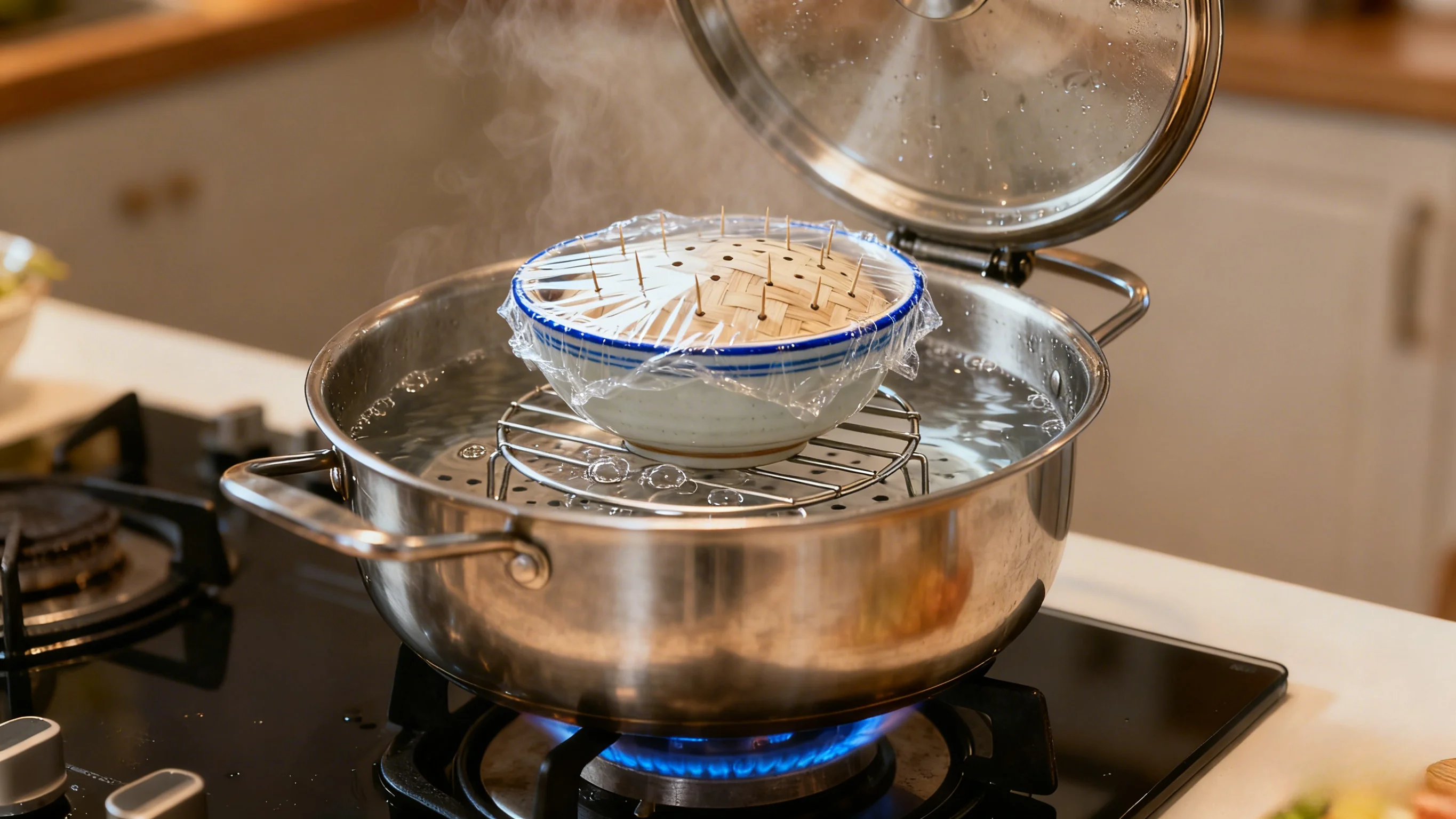
- Cover the steaming bowl tightly with plastic wrap or a suitable plate/lid.
- Prick a few small holes in the plastic wrap with a toothpick to allow minimal steam circulation, balancing pressure.
- The Principle: Prevents condensation droplets from the steamer lid from falling and marring the delicate custard surface.
 Covering with plastic wrap and pricking holes is the “physical barrier” protecting the custard’s smooth surface.
Step 5: Steam over Gentle Heat (Secret 3, The Art of Heat Control)
- Start with Boiling Water: Place the bowl into the steamer only when the water is vigorously boiling.
- Immediately Reduce Heat: As soon as the bowl is in, immediately reduce the heat to low-medium, maintaining a gentle simmer (small bubbles).
- Timing Control: Steam for 12-15 minutes, depending on bowl thickness and amount of egg mixture.
- Rest with Residual Heat: Turn off the heat after the time is up, do not open the lid, and let it sit for 2-3 minutes. The residual heat will complete the setting process.
 Steaming over low-medium heat is the core technique to prevent a honeycomb texture and rubberiness.
Step 6: Season & Serve
- Carefully remove the bowl and peel off the plastic wrap.
- Dilute the light soy sauce with a little warm water (prevents over-salting and improves color).
- Gently pour it over the custard surface.
- Drizzle with sesame oil and sprinkle with bright green chopped onions.
 Diluted soy sauce has a more translucent color. Pour gently to avoid damaging the smooth surface.
Exclusive Three Core Secrets
🎯 Secret 1: The 1:2 Golden Egg-Water Ratio + Warm Water Mixing
- Scientific Ratio: Less than 1.5 times water makes the custard too firm; more than 2 times makes it hard to set. 1:2 is the optimal balance for texture and firmness.
- Warm Water Principle: Warm water reduces the egg liquid’s surface tension, allowing it to bind with water molecules more easily, resulting in a finer texture.
- Practical Tip: If you don’t have a thermometer, mix 1 part boiling water with 2 parts cold water for roughly the right temperature.
🎯 Secret 2: Double-Straining + Thorough Bubble Removal
- Bubbles are the “Honeycomb” Culprit: Air bubbles in the egg mixture expand when heated, creating unsightly holes in the custard.
- The Physics of Straining: A sieve breaks most bubbles and filters out protein clumps (chalazae) that won’t mix in.
- Surface Skimming: The final surface cleanup is crucial for achieving the “mirror” effect.
🎯 Secret 3: Boiling Water Start + Low-Medium Heat Steam + Resting Off Heat
- The Harm of High Heat: Vigorous boiling causes the steamer to shake, disrupting the egg’s internal structure. It also creates more condensation on the lid, which is more likely to drip, and causes the surface to set too quickly, trapping internal gas and forming honeycombs.
- The Benefit of Low-Medium Heat: Gentle heat allows the egg mixture to set slowly and evenly from the outside in. The protein denatures gently, resulting in an extremely silky texture.
- The Purpose of Resting: Utilizes residual heat to cook the center completely, avoiding a “tough outside, runny inside” scenario.
Advanced Techniques & Variations
🌟 Upgrading the Basic Version:
- Stock Version: Replace water with chicken broth, pork bone broth, etc., for a flavor boost.
- Milk Version: Use warm milk instead of water for a rich, creamy flavor and more nutrients.
- Seafood Version: Add a few fresh shrimp or clams to the strained egg mixture before steaming.
🌟 Flavor Innovations:
- Minced Meat Steamed Eggs: Sauté minced meat until fragrant and spread it over the finished custard.
- Dried Scallop Steamed Eggs: Shred soaked dried scallops and sprinkle them into the egg mixture before steaming.
- Japanese Chawanmushi: Add ingredients like shiitake mushrooms, chicken, shrimp, and ginkgo nuts, using dashi (Japanese stock) instead of water.
🌟 Tool Optimization:
- Steaming Bowl Choice: Choose a wide, shallow bowl for more even and quicker heating.
- Steamer Seal: Check if the steamer lid fits tightly. If not, wrap the gap with a damp cloth.
- Alternative Tools: If you don’t have a steamer, use the “steam” function on a rice cooker or place a steaming rack inside a regular pot.
Frequently Asked Questions (Failure Analysis)
Q: Why does my steamed egg custard always have many honeycomb holes? A: This is the most common failure. Check these points one by one: ① Did you create too many bubbles by over-whisking and fail to strain/defoam? ② Was the heat too high during steaming? ③ Did you forget to cover it, allowing water droplets to fall in?
Q: It’s still runny in the middle after steaming for a long time. What to do? A: Possible reasons: ① Too much water, exceeding the golden ratio. ② Heat was too low or steaming time insufficient. ③ The steaming bowl was too deep, making it hard for heat to penetrate. Solution: Adjust the ratio, ensure the water is boiling before adding the bowl, and use a shallow bowl.
Q: Can I skip the plastic wrap? A: If you’re pursuing an extremely smooth surface, its use is recommended. If you don’t have plastic wrap at home, you can cover it with a plate or foil larger than the bowl rim, but leave a small gap. Leaving it completely uncovered lowers the success rate.
Nutritional Value & Suitable Groups
- 👶 Baby Food: Soft texture, easy to digest, an excellent weaning food choice.
- 👵 Elderly Nutrition: Protein is easily absorbed, texture is soft, suitable for seniors with dental issues.
- 🏃 Fitness Enthusiasts: High protein, low fat, a quality protein source.
- 🤒 Post-Illness Recovery: Light and easy to digest, providing necessary nutrients.
Perfect Occasions to Enjoy
- 🌅 Nutritious Breakfast: Paired with congee and buns to start an energetic day.
- 🍼 Baby’s Menu: As a main dish or snack, supplementing with quality protein.
- 🍚 Rice Companion: Silky custard mixed with rice is simple yet delicious.
- 🍲 Family Feast Starter: A bowl of delicate custard showcases culinary skill and care.
A successful bowl of steamed egg custard is the crystallization of patience and meticulousness. It doesn’t require complex seasonings or expensive ingredients but embodies the most fundamental skill in cooking—respect for the ingredients and heat control. Mastering these three secrets will not only allow you to steam perfect egg custard but also help you understand the success principles behind many Chinese steamed dishes.
The Home Flavor Explorer January 18, 2025