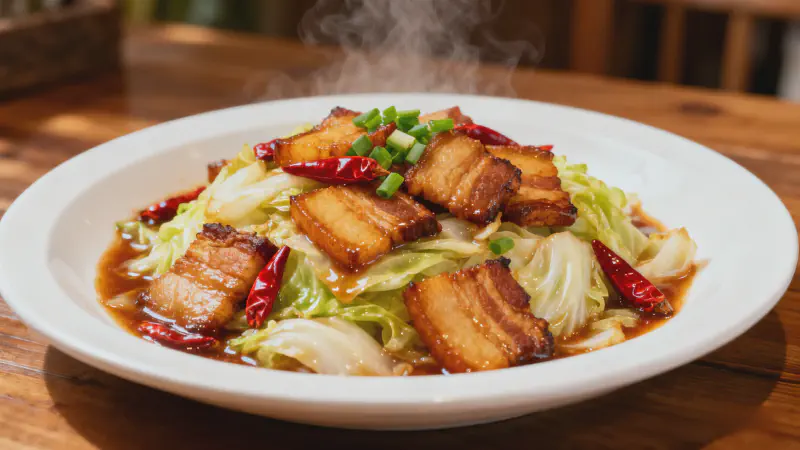
Stir-Fried Cabbage with Pork Belly: The Secret to Making Cabbage More Delicious Than the Meat
Hello everyone! Today, I’m sharing the most heartwarming home-style comfort food for winter—Stir-Fried Cabbage with Pork Belly. The essence of this dish lies in the cabbage fully absorbing the pork belly’s fat and aroma, becoming sweet and tender, while the pork belly is rendered until crispy and non-greasy. Many end up with watery cabbage or overly greasy pork. I’ll share two core secrets to help you achieve the perfect combination: sweet cabbage, fragrant pork, and a sauce that’s incredible with rice!
First, feast your eyes on this steaming plate of Stir-Fried Cabbage with Pork Belly!
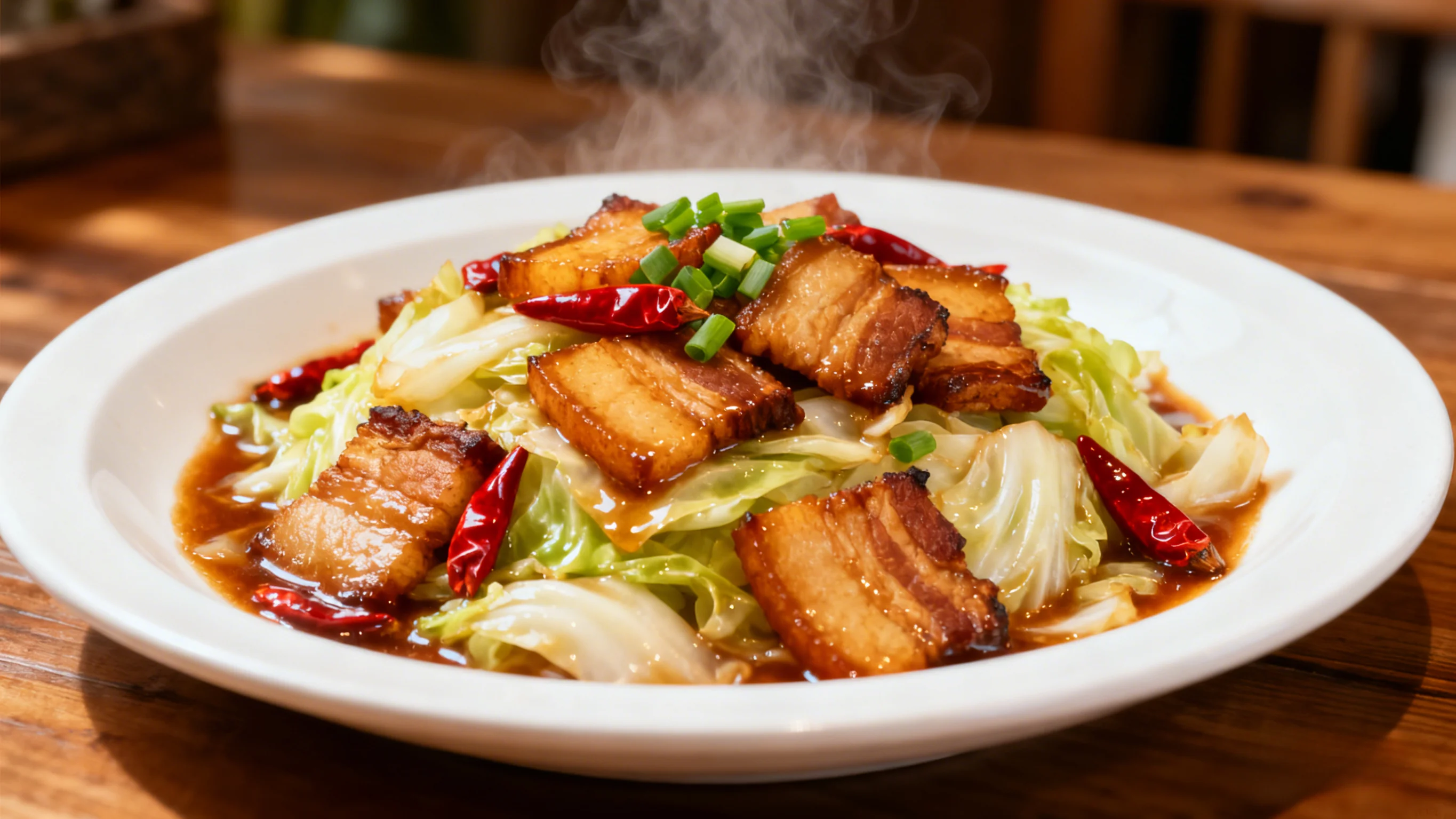 Golden, crispy pork belly slices intermingled with soft, sweet cabbage, all coated in a glossy, rich sauce, accented by bright red dried chilies and vibrant green onions—utterly appetizing.
Detailed Step-by-Step Instructions
Step 1: Prepare Ingredients (Secret 1: Separate Cabbage, Slice Pork Thinly)
- Preparing the Pork: After removing the skin, freeze the pork belly for 20 minutes for easier, uniform slicing (about 3mm thick). Thin slices render fat more easily and achieve a crispy texture.
- Preparing the Cabbage: The white core and green leaves must be separated. The core is fibrous and takes longer to cook; slice it thinly on a diagonal. The leaves cook quickly; tear them into large chunks.
- The Principle of Separate Cooking: This ensures even cooking, preventing the leaves from becoming mushy.
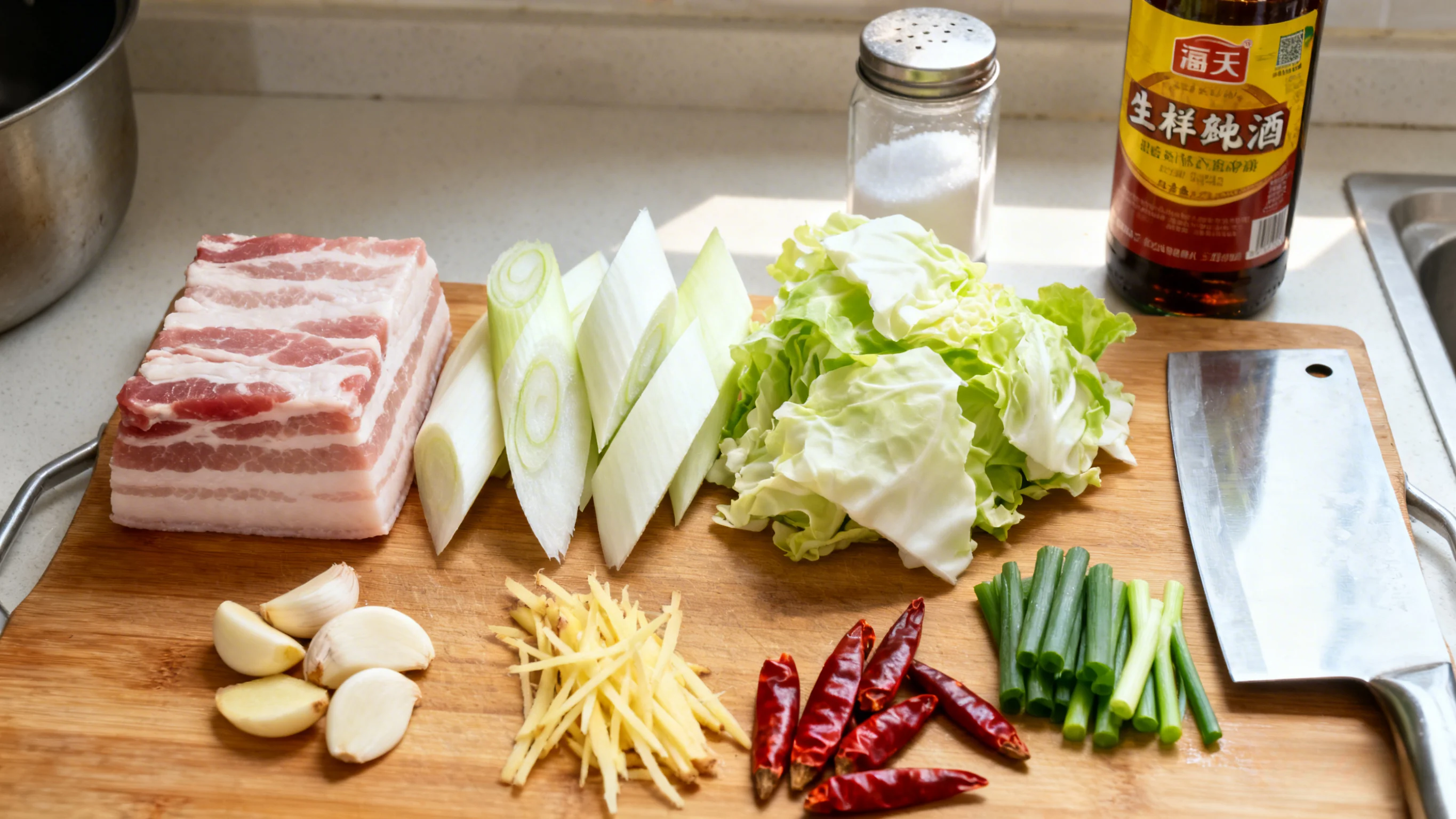 Separating cabbage core and leaves and slicing pork thinly are the foundation for texture and doneness control.
Step 2: Render the Pork Belly (Secret 2: Medium-Low Heat, Patient Rendering)
- Hot Pan, Cold Oil: Heat the pan, then add a small amount of oil. The pork belly will release plenty of its own fat.
- Medium-Low Heat is Key: Once the pork is added, reduce to medium-low heat. High heat will burn the outside before the internal fat renders.
- Patience in Rendering: Gently stir with a spatula until the slices naturally curl, the fat turns translucent and slightly golden, and a significant amount of pork fat is released.
- Pour Out Excess Fat: This is the key to avoiding greasiness! Pour out the excess rendered pork fat from the wok (save it for other uses), leaving only a base amount.
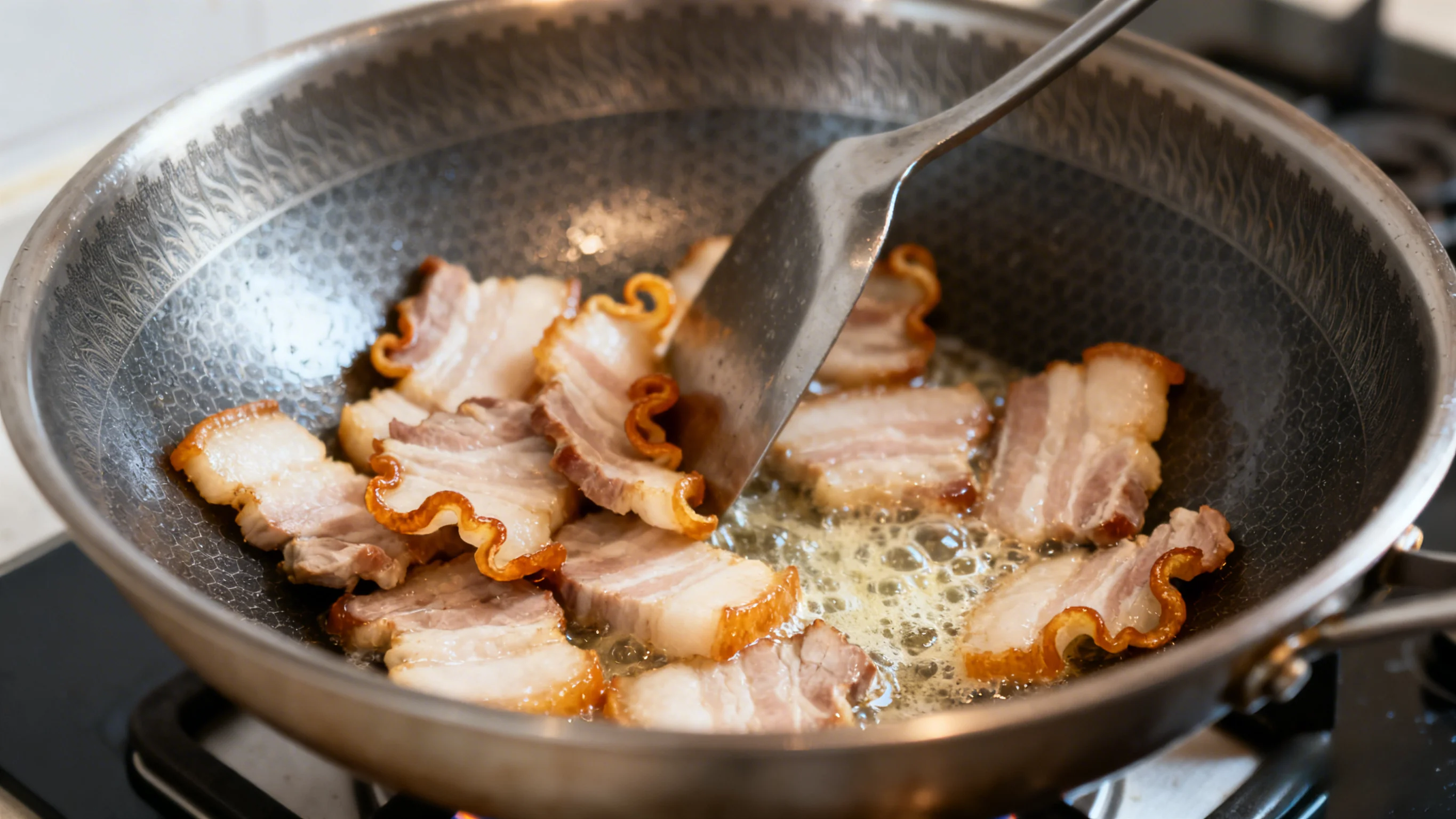 Patiently rendering fat over medium-low heat and pouring out the excess is the soul of achieving crispy, non-greasy pork belly.
Step 3: Caramelize Sugar (Optional Upgrade Step)
- Using the remaining fat and meaty fond in the wok, add a small spoonful of sugar.
- Maintain low heat, stirring constantly with a spatula until the sugar melts and turns a deep reddish-brown (be careful not to burn it, which makes it bitter).
- This caramel adds a layer of toasty aroma and a glossy red color, significantly improving the dish’s appearance.
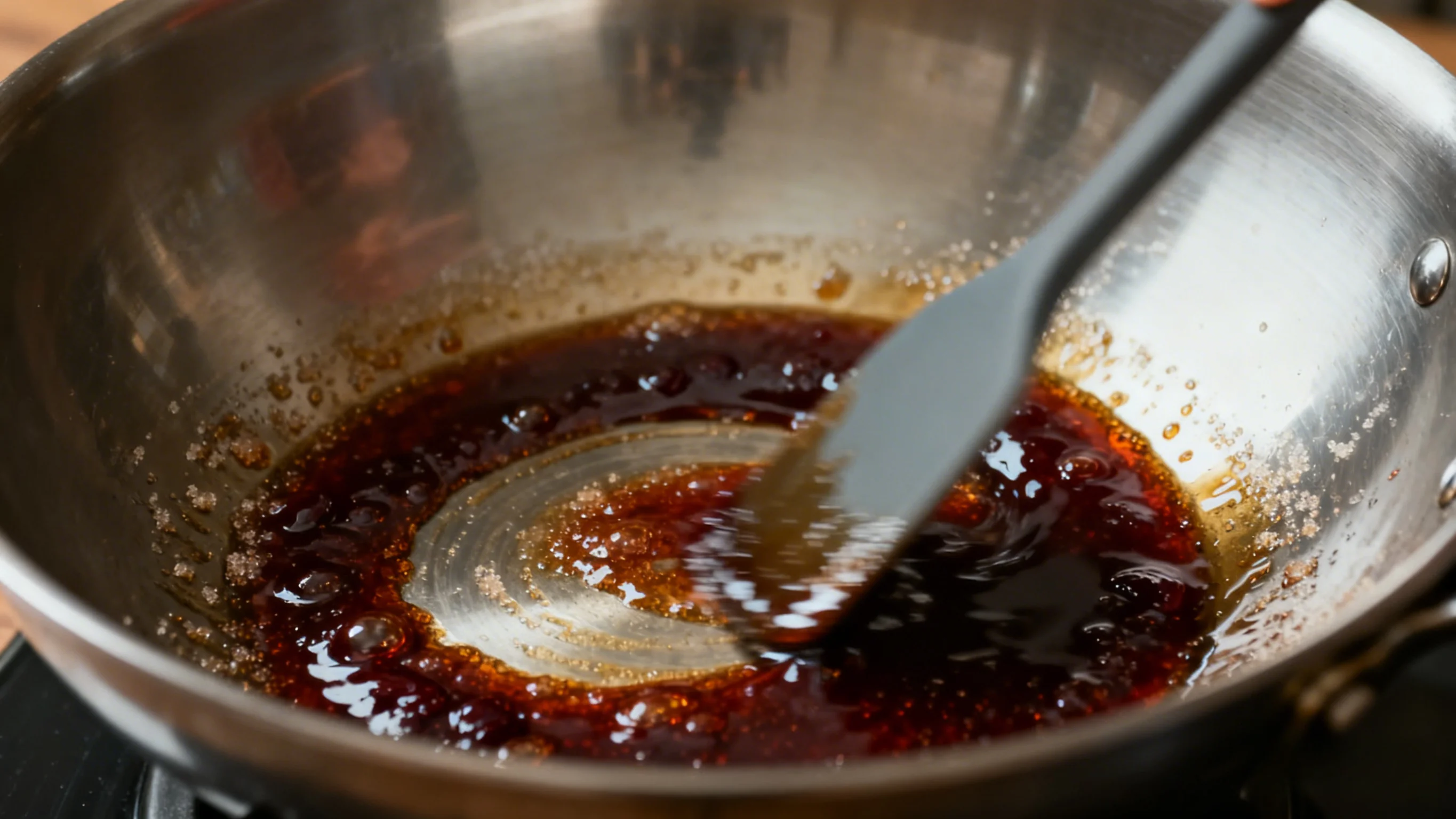 Caramelizing sugar to a reddish-brown over low heat is the “advanced play” to elevate flavor depth and dish color.
Step 4: Sauté Aromatics & Stir-fry Cabbage Core
- To the caramel (or remaining oil), add the garlic, ginger, and dried chili segments. Sauté over low heat to release their complex fragrance.
- Increase heat to high. Add the sliced cabbage core first.
- Stir-fry rapidly over high heat to slightly char the edges, locking in moisture and sweetness.
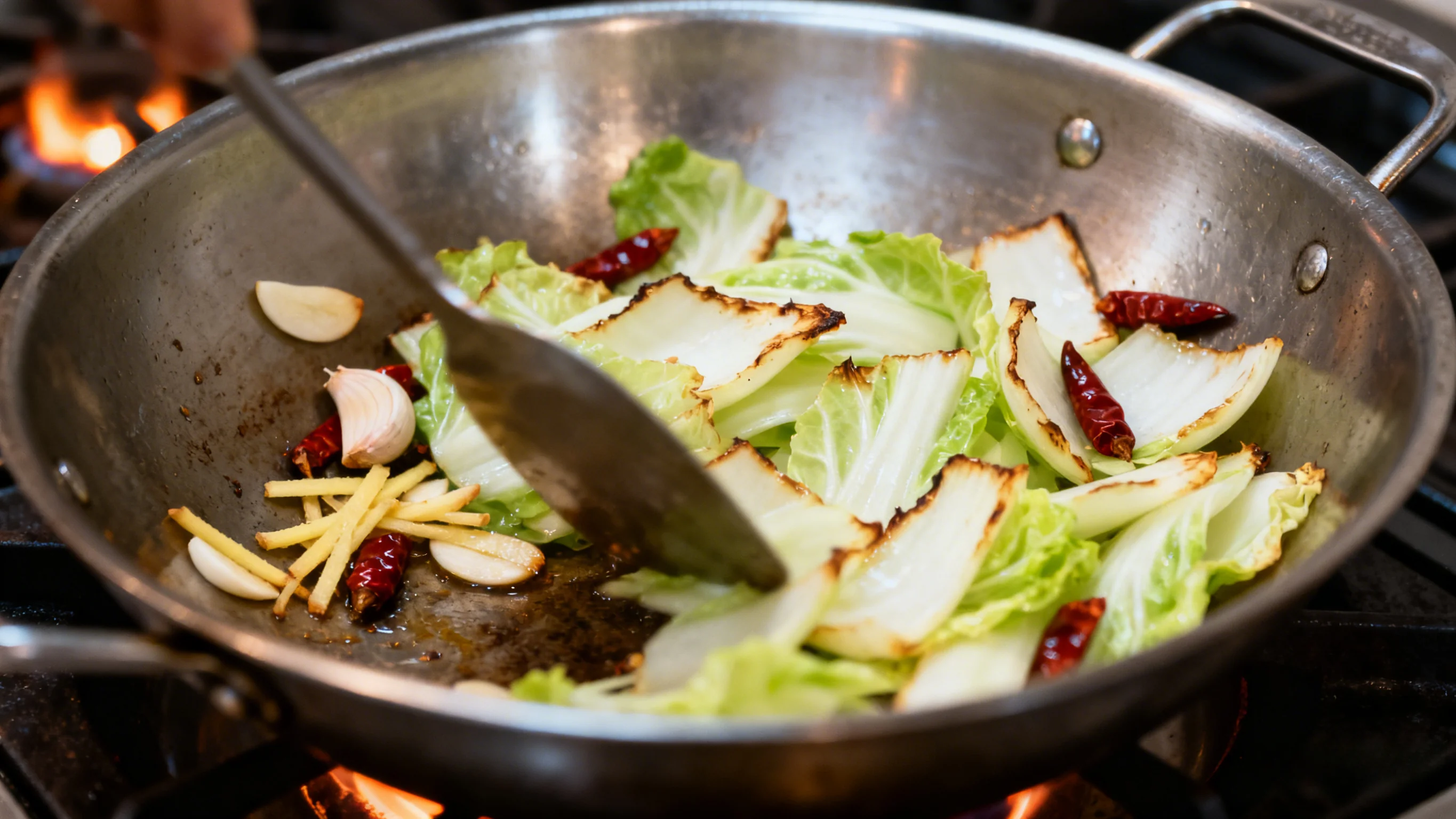 High-heat stir-frying the cabbage core unlocks its natural sweetness and maintains a crisp-tender texture.
Step 5: Combine & Season
- Add the torn cabbage leaves and the previously rendered pork belly slices back to the wok.
- Pour the cooking wine around the edge of the hot wok. The high heat will instantly cook off the alcohol, removing any porky smell and enhancing aroma.
- Pour in the pre-mixed seasoning sauce (light soy, dark soy, oyster sauce, etc.).
- Maintain high heat and stir-fry quickly to coat every leaf and meat slice evenly with the sauce.
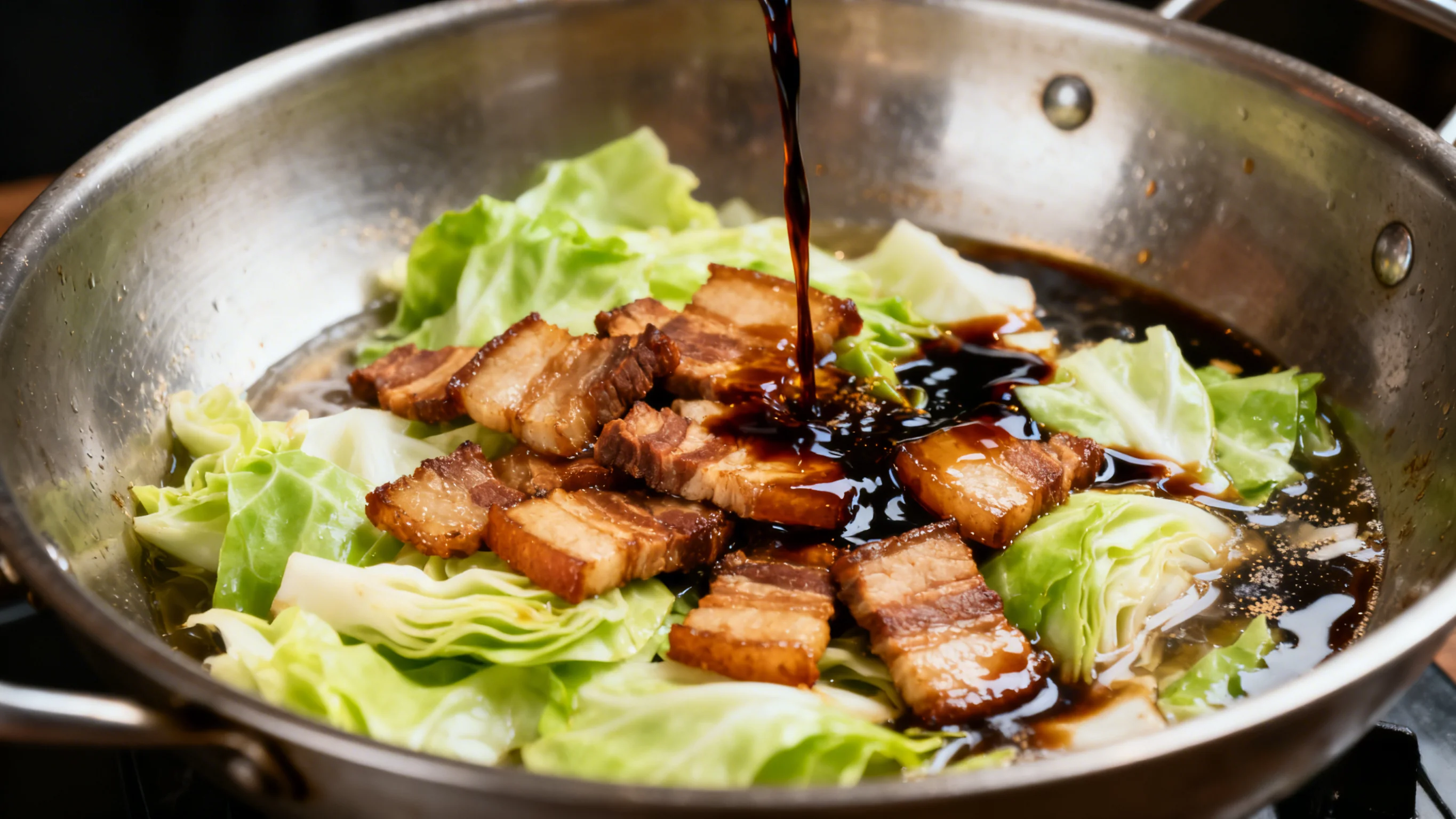 All ingredients are in the wok. Adding the sauce and stir-frying over high heat integrates the flavors.
Step 6: Simmer & Reduce Sauce
- Reduce heat to medium, cover the wok, and simmer for 2-3 minutes.
- This process allows the cabbage to release its own moisture, which melds with the sauce, and the cabbage becomes tender and flavorful.
- Uncover, increase heat back to high, and reduce the sauce until thickened. The sauce will become slightly syrupy and cling to the ingredients.
- Turn off the heat. Drizzle with sesame oil, sprinkle with green onions, and toss using the residual heat.
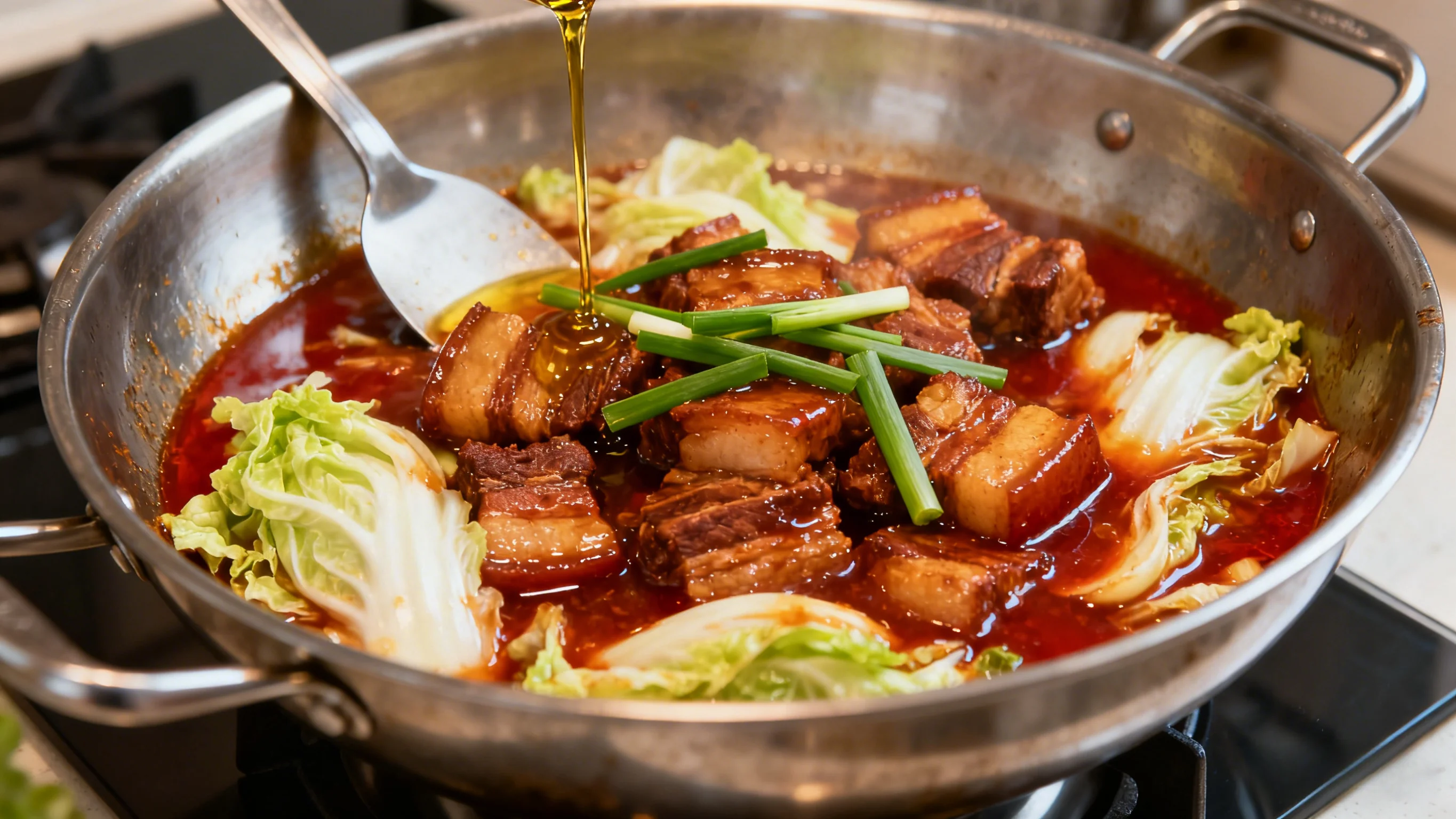 A short simmer tenderizes the cabbage and lets it absorb the meaty flavors. High-heat reduction concentrates the taste.
Exclusive Two Core Secrets
🎯 Secret 1: The “Separate Prep” Method for Ingredients
- Cabbage: Separate Core and Leaves, Treat Differently: The cabbage core is hard and fibrous. It needs to be sliced thinly on a diagonal and added first, stir-fried quickly over high heat to soften while retaining a hint of crispness. The cabbage leaves are high in water content and cook quickly. Adding them later for a short heating time maintains their tender, sweet texture, preventing them from becoming mushy.
- Pork: Skin Off, Thin Slices, Uniform Doneness: Pork skin is tough and doesn’t tenderize quickly during stir-frying, affecting the overall texture—it’s best removed. Slicing it about 3mm thick ensures each piece cooks evenly and more easily reaches the perfect balance of “crispy-fragrant” and “tender” during rendering.
🎯 Secret 2: The “Medium-Low Heat Rendering + Pour Off Excess Fat” Method for Pork
- The Secret of Proper Rendering: The appeal of pork belly lies in its fat. Using medium-low heat for slow rendering allows the fat within the cells to melt and release fully and slowly. This process not only makes the fatty parts crispy and non-greasy but, more importantly, this rendered pork fat becomes an excellent flavor base for the subsequent stir-fry.
- The Necessity of Pouring Off Fat: If the excess pork fat isn’t poured off, the dish will be overly greasy, masking the cabbage’s natural sweetness. Leaving just enough base fat allows the cabbage to be infused with the pork flavor without becoming heavy. The poured-off, cooled pork fat is a treasure—add a spoonful when stir-frying greens or cooking noodles for incredible aroma.
Advanced Techniques & Variations
🌟 Ingredient Upgrades:
- Cabbage Choice: Frost-touched cabbage (yellow heart variety) is especially sweet and a perfect match for this dish.
- Pork Cut: Besides pork belly, pork neck is also a great option, with even fat marbling and a more tender, springy texture.
- Aroma Boosters: Add a few slices of rehydrated dried shiitake mushrooms or a small handful of dried shrimp to enhance umami complexity.
🌟 Flavor Variations:
- Rich Soybean Paste Version: Add half a spoonful of fermented soybean paste or sweet bean sauce to the seasoning sauce.
- Sour & Spicy Appetizer: Drizzle 1 tbsp of aromatic vinegar around the hot wok’s edge before serving and increase the amount of dried chilies.
- Northern Braised Style: Add more water and extend the simmering time to create a soupy “Cabbage and Pork Belly Stew,” perfect with rice or steamed buns—warming and satisfying.
🌟 Precision Heat Control:
- Rendering Pork Stage: Medium-low heat is the only choice—prioritize stability over speed.
- Stir-frying Veggies Stage: Must switch to high heat—prioritize speed and aroma, locking in vegetable moisture and flavor.
- Simmering Stage: Medium heat, allowing time for flavors to penetrate and meld.
- Sauce Reduction Stage: Switch back to high heat to quickly evaporate excess moisture and concentrate flavors.
Frequently Asked Questions (FAQ)
Q: Do I have to remove the pork belly skin? A: Highly recommended. Pork skin doesn’t become tender during the short stir-fry time and can turn tough and chewy, compromising the dish. If you enjoy pork skin, process it separately (e.g., braise it) before adding, or use a long braising method for the entire dish.
Q: Is it necessary to pour out the rendered pork fat? What happens if I don’t? A: If you don’t pour out the excess fat, the cabbage will become overly greasy, losing its refreshing quality, and the sauce surface will have a thick layer of oil, making the dish heavy. Pouring out most of the fat, leaving just a base, is key to achieving “rich but not greasy.” The poured-out fat is a treasure—don’t waste it!
Q: My cabbage releases a lot of water, turning the dish into boiled cabbage. What should I do? A: Two possible reasons: 1. The cabbage wasn’t dried well after washing—shake it dry thoroughly or let it air-dry. 2. The simmering time was too long or the heat was too low. Cabbage has high water content; 2-3 minutes of simmering is enough to soften and flavor it. Always finish by increasing the heat to high to reduce the sauce to a thicker consistency.
Nutritional Value & Culinary Philosophy
This dish embodies the wisdom of Chinese cooking in harmonizing meat and vegetables, complementing flavors. Pork belly provides rich fat and protein; through rendering, greasiness transforms into a crispy fragrance. Cabbage, with its porous texture, acts like a sponge, eagerly absorbing the essence of the meat juices and the richness of the fat, becoming exceptionally delicious. One meat, one vegetable; one rich, one mild—they achieve perfect balance under the influence of heat.
Perfect Occasions to Enjoy
- 🍚 The Ultimate Rice Companion: The rich meat sauce and sweet cabbage are a top-tier pairing with rice, making you want an extra bowl.
- 🍺 Great with Drinks: The crispy pork and savory flavors are a natural match for alcoholic beverages.
- 🍜 Noodle Topping: Pour the dish with its sauce over cooked noodles for an instant upgrade to a simple bowl.
- ❄️ Winter Comfort Food: A steaming hot dish that drives away the cold, warming you from the inside out.
Stir-Fried Cabbage with Pork Belly uses the most humble ingredients to enact the most heartwarming home-style flavor. It teaches us that fat and sweetness can enhance each other, richness and refreshment can be complementary. This is perhaps the greatest charm of home-style cooking: simple, yet directly touching the heart.