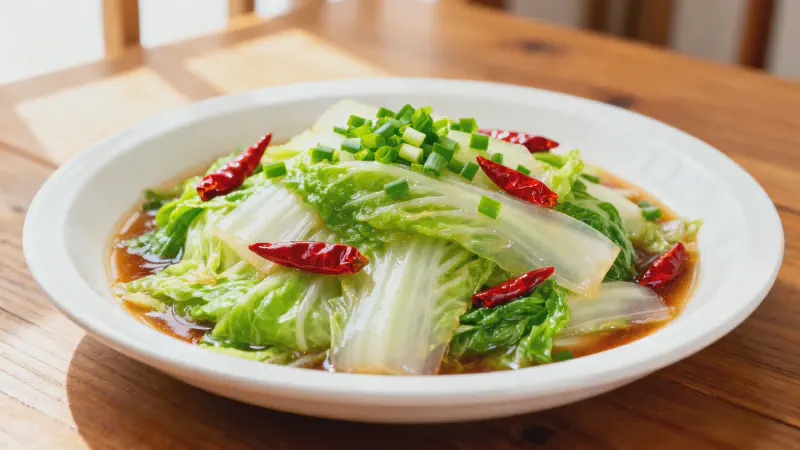
Vinegar-Braised Cabbage: The “Appetizing Star” on Dining Tables
Hello everyone! Today I’m sharing a classic home-style quick dish—Vinegar-Braised Cabbage. This dish may seem extremely simple, but achieving crisp cabbage (not mushy), rich vinegar aroma (not pungent), and balanced sweet-sour-salty-spicy actually requires considerable skill. Master these 3 secrets, and your vinegar-braised cabbage will definitely become the most popular appetizer!
First, admire this tangy, aromatic vinegar-braised cabbage!
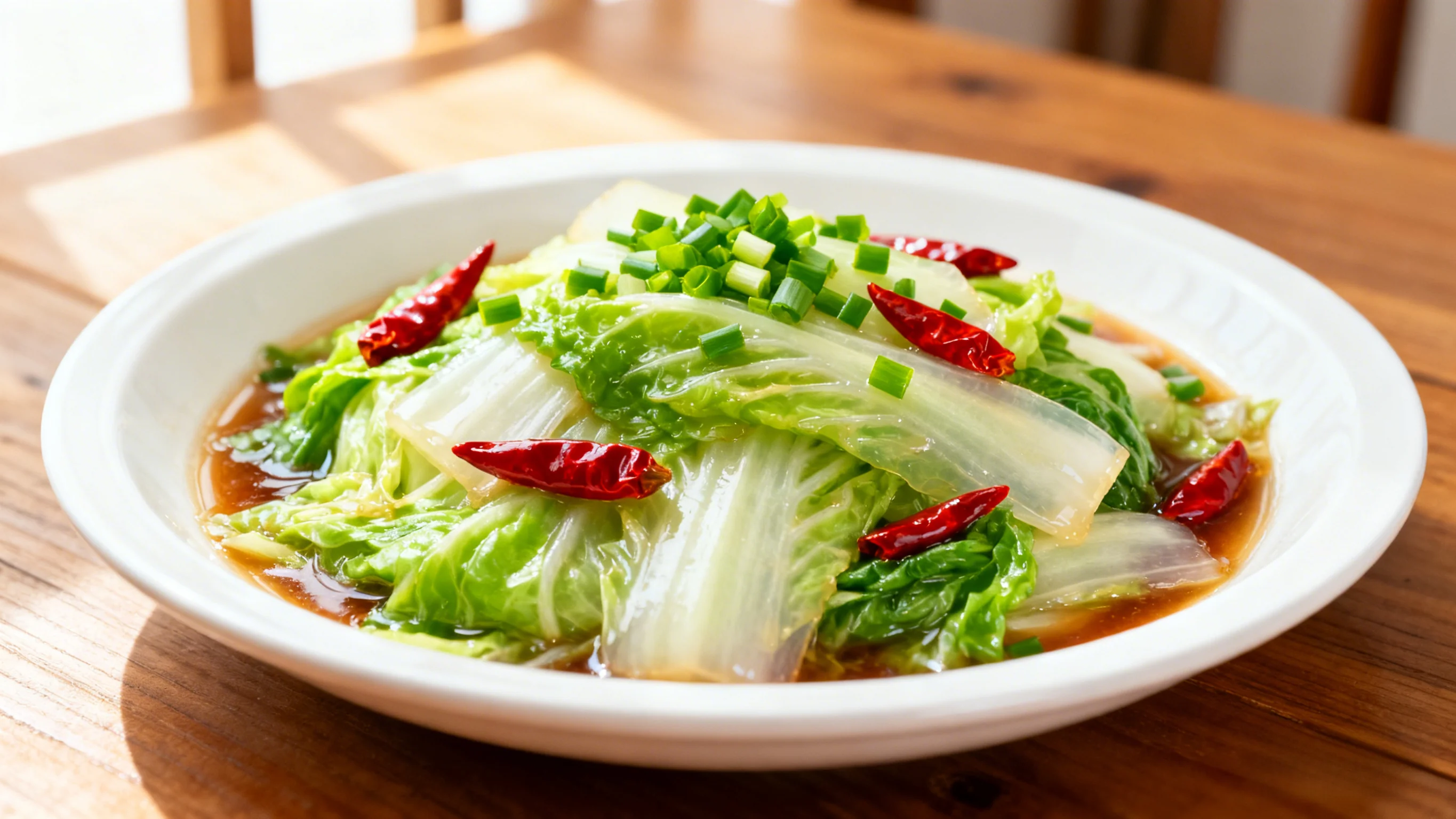 Emerald cabbage leaves, translucent cabbage stems, bright red dried chilies, glossy sauce—appetizing at first sight!
Detailed Step-by-Step Guide
Step 1: Cabbage Preparation (Secret #1)
- Choose cabbage: Select firm, fresh Napa cabbage
- Separate stems and leaves: Key to success
- Stem slicing: Diagonal thin slices increase surface area
- Leaf handling: Tear into appropriate sizes by hand
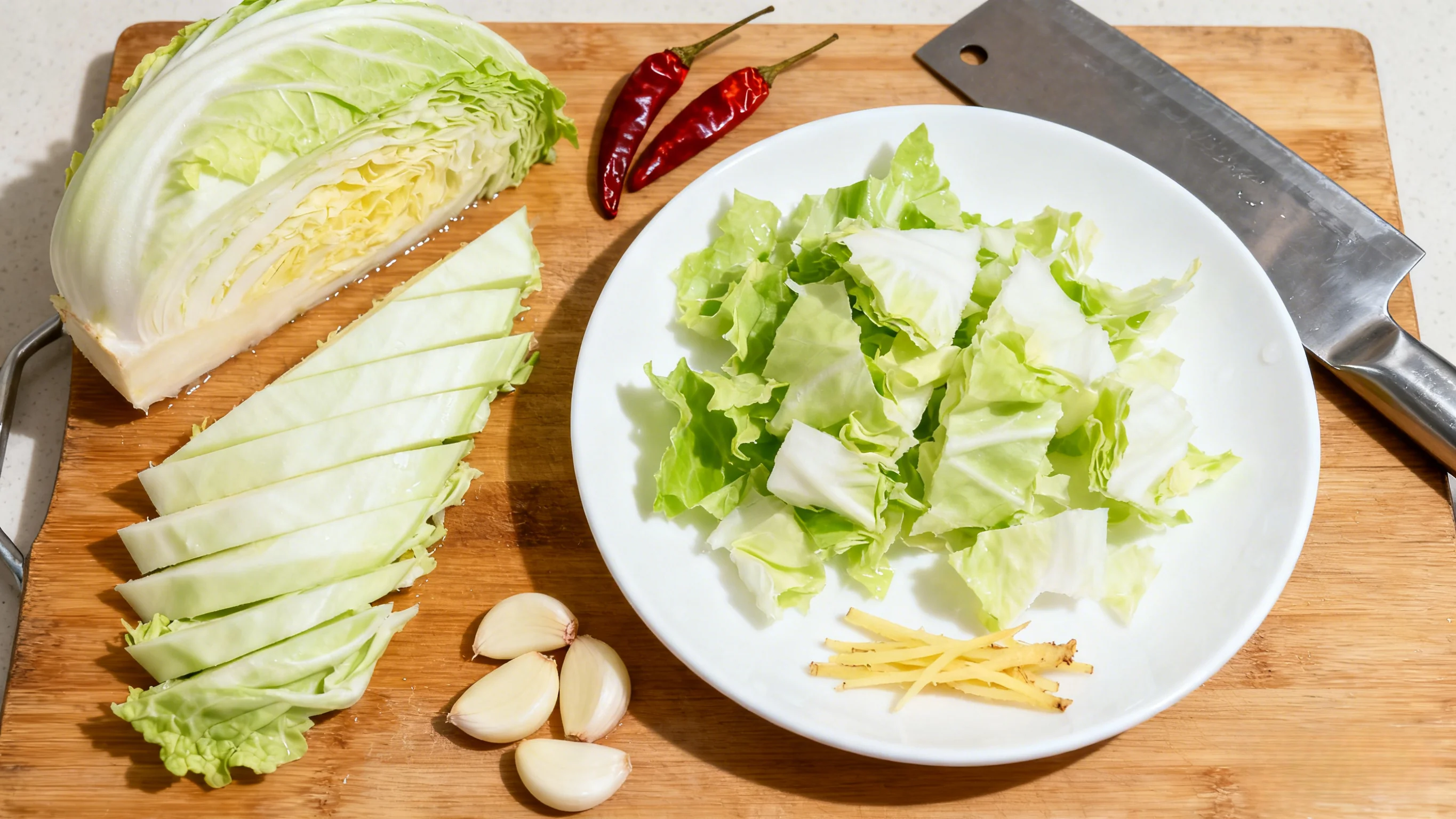 Diagonal slicing makes stems cook faster and absorb flavor better; separate cooking ensures optimal texture
Step 2: Golden Ratio Sauce
- Golden ratio: Vinegar:Soy sauce:Sugar = 2:1:0.5
- Cornstarch slurry: Cornstarch:Water = 1:20
- Mix thoroughly: Ensure sugar and cornstarch fully dissolve
- Pro tip: Prepare sauce in advance to avoid rushing
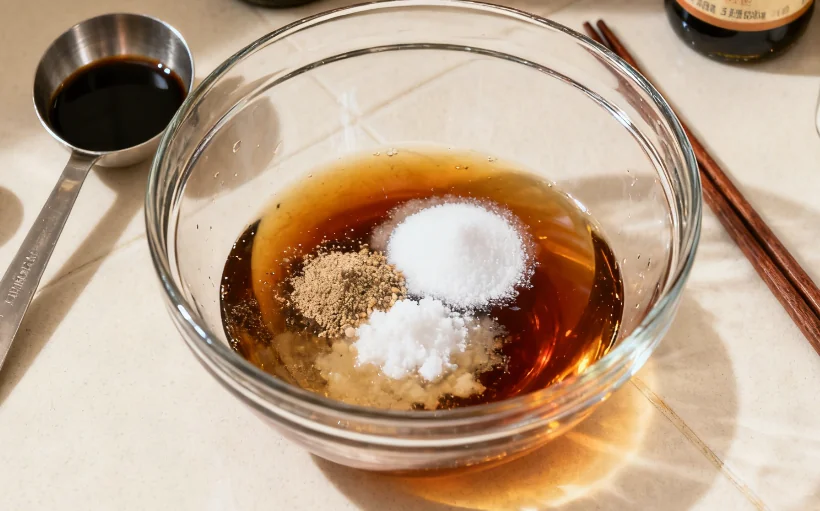 Pre-mixed sauce ensures even flavor; cornstarch slurry thickens sauce for coating
Step 3: Frying Aromatics
- Add dried chilies and Sichuan peppercorns (optional) to cold oil
- Stir-fry slowly over low heat until fragrant
- Key technique: Don’t burn, slightly golden is perfect
- Add garlic and ginger, stir-fry until aromatic
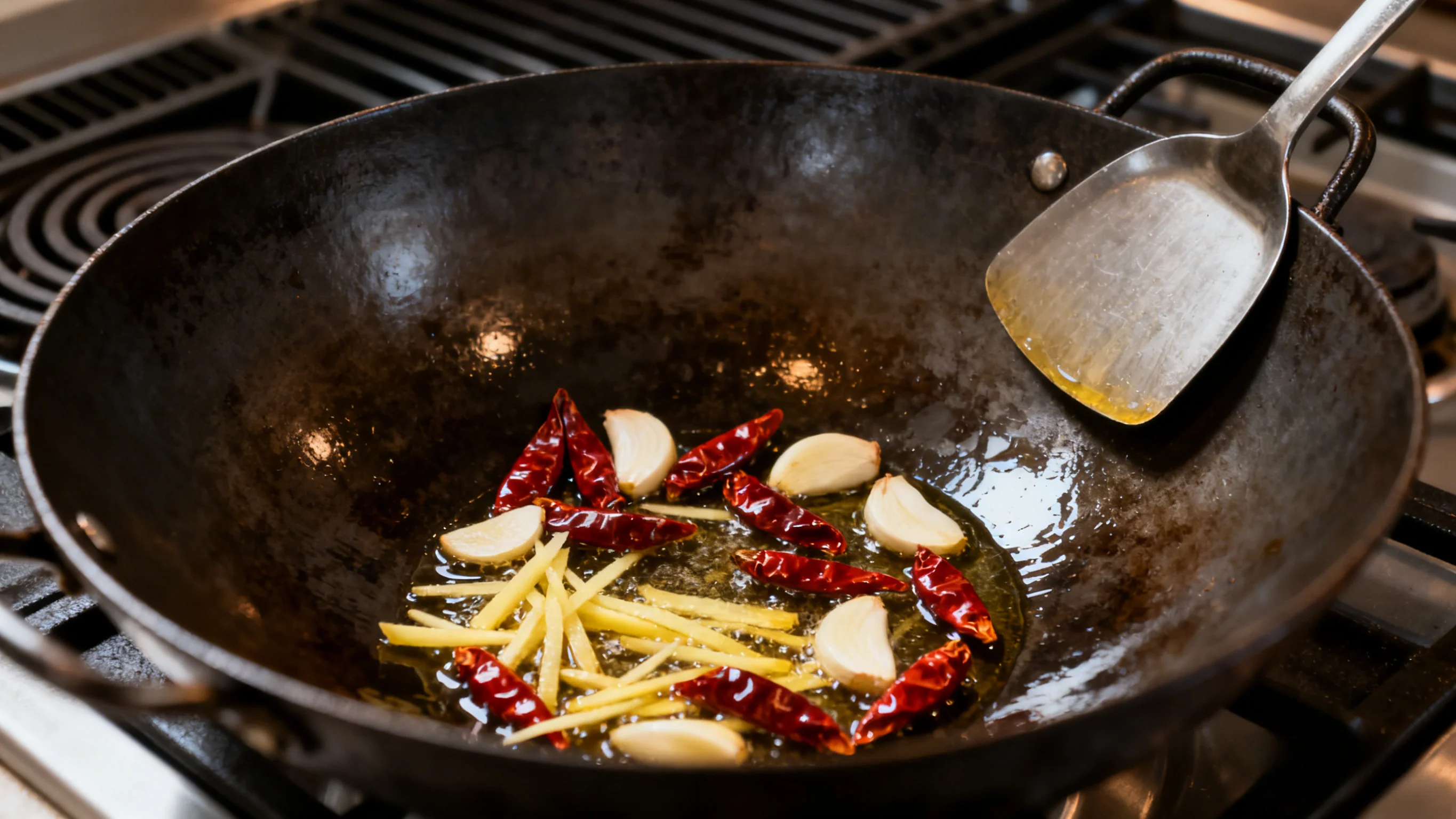 Low heat releases chili aroma, prevents high-temperature bitterness
Step 4: Cooking Stems (Secret #2)
- Increase to high heat, oil temperature rises
- Add cabbage stem slices first
- Quick stir-fry: About 1 minute
- Doneness indicator: Edges become translucent
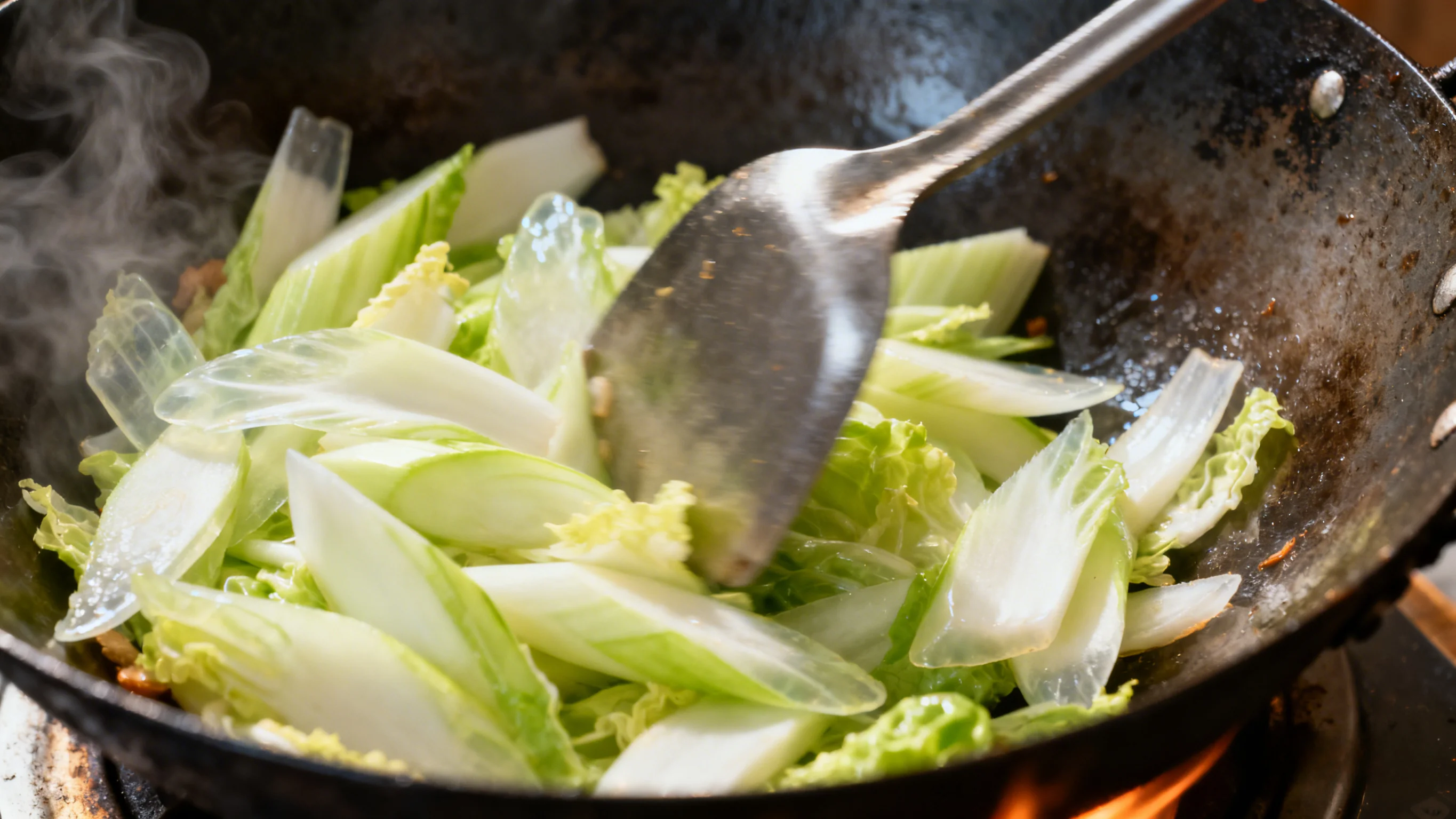 High heat quickly locks in moisture, maintains crisp texture
Step 5: Adding Leaves
- Add cabbage leaves when stems half-cooked
- Continue quick stir-fry over high heat
- Time control: 30 seconds sufficient
- Pro technique: Leaves wilted but not overcooked
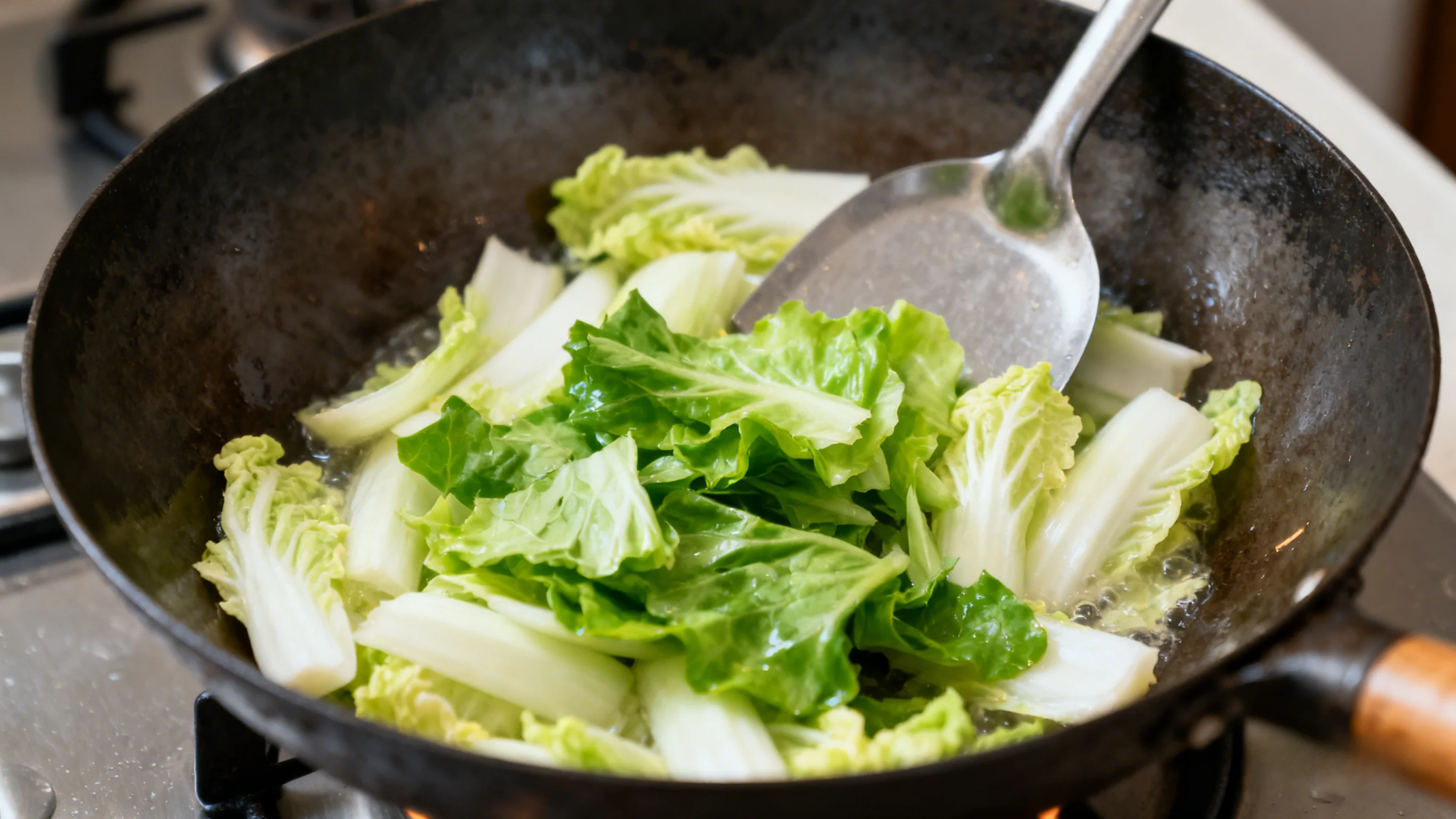 Staggered addition prevents leaf mushiness; maintains emerald color
Step 6: Adding Sauce
- Re-stir sauce thoroughly
- Pour along pan edge: Releases vinegar aroma
- Quick stir-fry: For even coating
- Key timing: When cabbage 80% cooked
 Pan edge high temperature releases vinegar aroma; quick stir-fry prevents water release
Step 7: Quick Serving
- Turn off heat immediately when sauce thickens
- Drizzle few drops sesame oil for aroma
- Pro technique: Add sesame oil after turning off heat
- Mix using residual heat
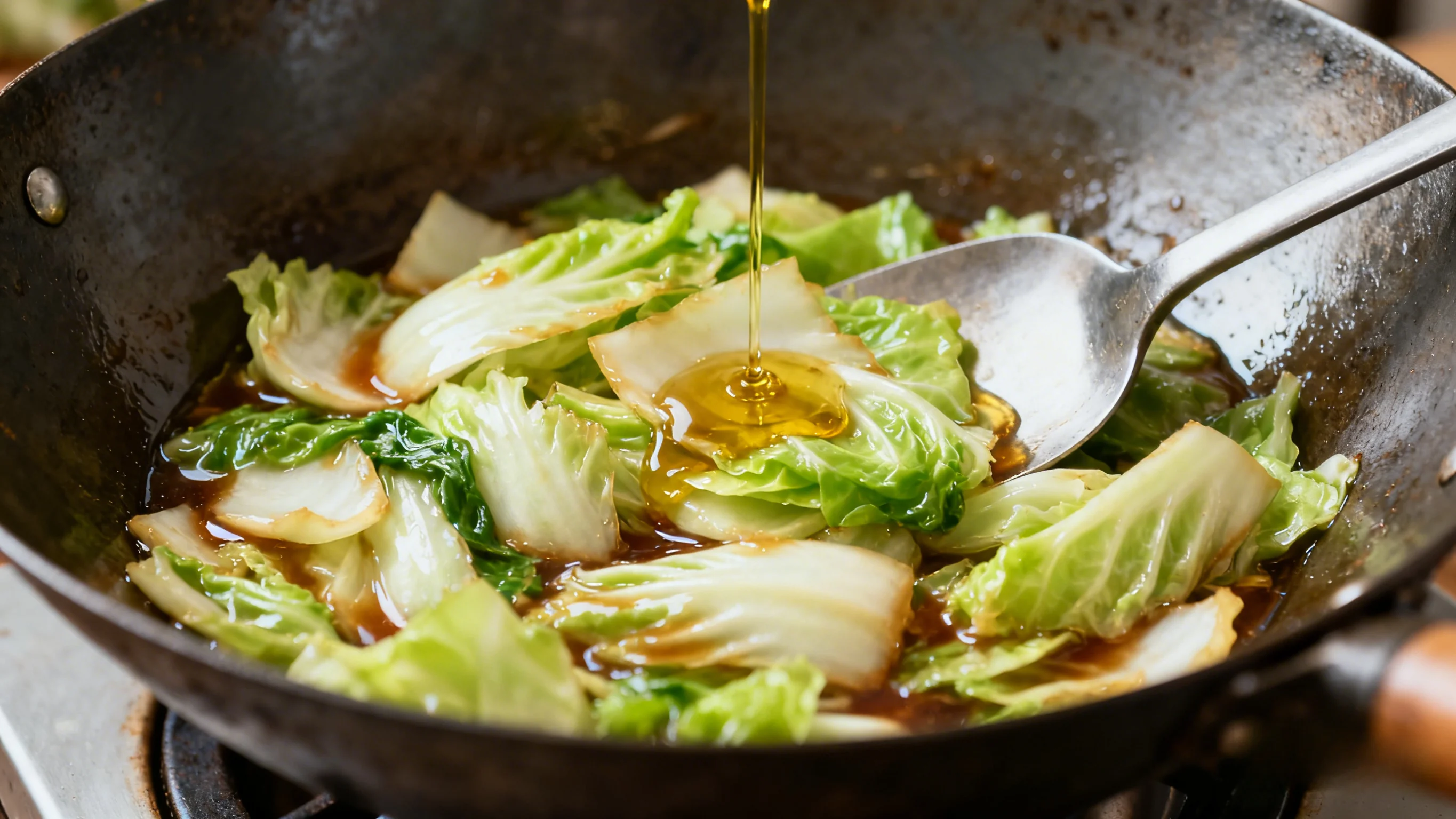 Timely heat-off preserves crispness; residual heat integrates flavors
Step 8: Plating and Garnish
- Transfer to shallow plate or deep bowl
- Sprinkle with fresh scallions
- Serve hot: Temperature affects texture significantly
- Optional: sprinkle white sesame seeds
Shallow plate shows dish beauty; scallions add aroma and color
Exclusive Three Secrets
🎯 Secret #1: Cabbage “Stem-Leaf Separate Cooking”
- Physical difference: Stems thick need longer time, leaves thin need shorter
- Separate handling: Cook stems first, then leaves, each gets optimal treatment
- Diagonal slicing: Stem diagonal slices increase surface area, better flavor absorption
- Hand-tearing leaves: Tear along grain, minimizes cell damage
🎯 Secret #2: Vinegar “Pan-Edge Pouring Aroma Release”
- Along pan edge: High temperature instantly releases vinegar aroma
- Avoid direct pouring: Don’t pour directly on vegetables
- Staged vinegar addition: Can reserve some for final drizzle
- Vinegar choice: Aged vinegar best, aromatic vinegar also works
🎯 Secret #3: Heat Control “Full High-Heat Quick Stir-fry”
- Pan must be hot: Must be hot pan with hot oil
- High heat quick stir-fry: Minimizes cooking time
- Fast operation: From adding ingredients to serving under 3 minutes
- Timely serving: 80% cooked sufficient, residual heat completes cooking
Advanced Techniques
🌟 Cabbage Selection:
- Napa cabbage: Most traditional, crisp texture
- Baby bok choy: More tender and sweet, shorter cooking time
- Yellow-heart cabbage: Sweeter and more tender, suitable for entertaining
- Round cabbage: More substantial texture, requires longer stir-frying
🌟 Flavor Variations:
- Sweet-sour version: Increase sugar, more sweet-oriented
- Sour-spicy version: Increase vinegar and chilies, more appetizing
- Garlic version: Double garlic amount, stronger aroma
- Sichuan pepper version: Add Sichuan peppercorns, adds numbing aroma
🌟 Ingredient Upgrades:
- Add wood ear mushrooms: Adds texture and nutrition
- Add carrots: Adds color and sweetness
- Add pork slices: Make it vinegar-braised cabbage with pork
- Add dried tofu: Adds protein
FAQ
Q: Why does my cabbage release lots of water after cooking? A: Possible reasons: ① Heat not high enough ② Cooked too long ③ Cabbage not drained well after washing
Q: When should vinegar be added? A: Best timing is when ingredients 80% cooked, poured along pan edge. Too early—vinegar evaporates; too late—flavor doesn’t penetrate
Q: Can I omit sugar? A: Yes, but sugar balances sourness, makes flavor milder. Can use small amount MSG or chicken powder for umami instead
Q: Does cabbage need blanching? A: No. Raw stir-frying better preserves crisp texture and nutrients
Nutritional Value
- ✅ Low calorie: Only about 60 kcal per serving
- ✅ Vitamin C: Cabbage rich in vitamin C
- ✅ Dietary fiber: Promotes intestinal motility
- ✅ Antioxidants: Contains various antioxidants
- ✅ Appetizing and digestive: Vinegar stimulates gastric juice secretion
Serving Suggestions
- 🍚 With rice: Classic rice accompaniment, tangy and appetizing
- 🍜 With noodles: As noodle topping, refreshing and cuts greasiness
- 🥟 With dumplings: Classic Northern pairing, tangy complements savory
- 🍺 With beer: Refreshing drinking snack
- 🥘 With meat dishes: Like braised pork, perfect richness cutter
- 🍲 With soup: Like egg drop soup, balances textures
Vinegar-braised cabbage isn’t just a dish—it’s culinary wisdom: using simplest ingredients to create most appetizing flavors. Remember: Good cabbage + good vinegar + good heat control = Perfect vinegar-braised cabbage!
Total Cooking Time: 8 minutes
Difficulty Level: ★☆☆☆☆ (Beginner friendly)
Success Rate: 95% following tips
Best Served: Immediately after cooking, best hot
Pro Tip: Before cooking, gently crush cabbage stems with knife back—makes them absorb flavor easier and reduces cooking time!